
Big Data Analytics in Finance in America: Use Cases, Benefits, Risks, and Long-Term Opportunities

When JPMorgan’s fraud team spotted a coordinated card-not-present attack hitting roughly four hundred small US merchants over a single Tuesday afternoon in 2024, the alert came not from a human analyst but from a streaming model that had ingested about ninety billion authorization events that week. That is the working stake for big data analytics america in 2026: the biggest US banks now treat petabyte-scale data pipelines the way they once treated check imaging, as table stakes. This piece walks through where those pipelines pay off, where they hurt, and what comes next.
Use cases that already pay for themselves
Card fraud detection is the first and largest. JPMorgan Chase, Capital One, Bank of America, and Citi each process tens of billions of card authorizations per year, and each runs ensemble models that score every transaction in under fifty milliseconds. Capital One has been public about its move off mainframe analytics onto a cloud data lake, a shift that lets risk teams retrain fraud models on rolling ninety-day windows rather than quarterly batches. The result, according to Federal Reserve payment study data published on the Federal Reserve payments page, is that US card fraud loss rates have stayed near eight basis points of volume even as transaction counts climbed past one hundred fifty billion per year.
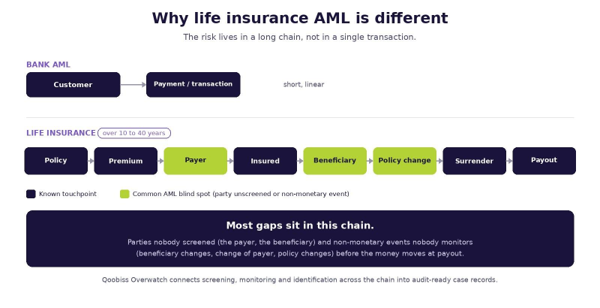
Anti-money-laundering is the second use case. The largest US banks file millions of suspicious activity reports each year, and the cost of investigation is the single largest line item in financial crime budgets. Big data pipelines now feed graph models that score entire networks of accounts rather than single transactions, which has compressed false positive rates at several large US banks from above ninety percent to the seventy percent range. JPMorgan disclosed in its 2024 annual report that machine learning across its AML stack covers more than thirty million customer relationships, with daily scoring runs on a Hadoop and Spark cluster running into the tens of thousands of cores.
Real-time risk is the third. After the March 2023 regional bank stress, US supervisors pushed harder on intraday liquidity monitoring, and the largest banks responded by piping deposit movement, draw activity, and counterparty exposures into stream processing systems that emit risk views every few seconds. The result is that a treasurer at a top ten US bank can see a credible liquidity coverage ratio mid-morning rather than only at end of day. That capability did not exist at most banks five years ago.
Regulatory reporting is the fourth. Dodd-Frank, the Consolidated Audit Trail, and the new SEC market data rules all demand record-level reporting at volumes that legacy reporting systems were never designed to carry. The CAT alone, run by FINRA on behalf of the SROs, moves more than five hundred billion order and execution records per day across a multi-region cloud pipeline. Every US broker-dealer and exchange has to feed it within tight windows, which is a big data problem before it is a compliance problem.
The benefits the largest US banks count in dollars
The first benefit is faster product cycles. Capital One’s cloud data lake means a credit risk modeler can spin up a sandbox in hours rather than weeks. McKinsey’s financial services research, available on the McKinsey financial services insights page, has put the model time-to-deploy improvement at four to ten times for banks that have completed a full cloud data platform migration. The second is better unit economics on customer service. Stream processing has let banks route call center contacts based on predicted intent, cutting average handle time by ten to fifteen percent at firms that have fully wired the system. The third is sharper marketing. JPMorgan’s Chase brand can now run real-time offer eligibility checks against the same data that drives risk scoring, which reduces the gap between marketing and underwriting that used to drive credit losses on growth campaigns.
There is a quieter benefit that bankers talk about privately. Big data platforms have collapsed the gap between the front office and the risk function. Treasury, finance, and risk now query the same tables. That alignment used to require months of reconciliation work each quarter, and the time savings show up in lower audit findings and faster regulatory exam cycles. The TechBullion coverage of the broader trend lives in the fintech news hub for readers tracking how the largest US banks invest.
Risks the data leaders cannot ignore
The first risk is cost. A petabyte-scale data lake at a top five US bank can cost more than two hundred million dollars per year once cloud, software, and people are counted. Several US banks have publicly walked back data platform spending in 2025 after finding that data engineers added rows faster than business teams added value. The CFO challenge is to demonstrate that the marginal dollar of storage funds a marginal dollar of revenue or saved loss. Most banks cannot make that argument cleanly today.
The second risk is concentration. The US big bank cloud footprint is heavily tilted toward two providers, with a third behind. The FDIC and OCC have both flagged third-party concentration risk in supervisory letters, and Treasury’s Office of the Comptroller of the Currency has begun pushing the largest banks to demonstrate exit plans. The FDIC’s industry analysis on the quarterly banking profile page has noted growth in third-party technology exposures at insured depository institutions.
The third risk is talent. Banks pay below market for senior data engineers compared with the largest US technology firms. The pay gap means a US bank often loses its best data engineers eighteen months after training them, which slows every other initiative on this list. The Bureau of Labor Statistics tracks growth in software and data engineering roles in its published occupational outlook, with median pay above one hundred thirty thousand dollars and growth above twenty percent through 2032.
The fourth risk is model drift. Card fraud, AML, and credit models all degrade when consumer behavior shifts. The 2024 spike in synthetic identity fraud caught several large US banks off guard because their models had been trained on pre-2022 patterns. Regulators have made clear, through the NIST AI Risk Management Framework and through SR 11-7 model risk guidance, that banks own the risk of stale models even when the model is bought from a vendor.
Long-term opportunities for big data in US finance
The first opportunity is real-time credit. With cash flow data, payroll data, and merchant data all flowing through bank pipelines, the door is open to credit decisions that draw on the past ninety days of activity rather than a three-bureau pull. Several US community banks have piloted small business credit lines that price in real time off accounting data feeds. If the CFPB’s open banking rule lands cleanly, the same approach extends to retail credit, which expands credit access for thin-file consumers.
The second opportunity is climate and weather data. Property and casualty insurers in the US have already wired weather feeds into pricing engines. Banks with large mortgage and commercial real estate books are following, with several large US lenders publishing climate risk integration plans aligned with Federal Reserve scenario analysis. Big data platforms make this practical because the climate datasets are large, irregular, and update on a different cadence than financial data. For broader fintech context, the payments coverage hub tracks how data flows shape product launches.
The third opportunity is shared utilities. AML data sharing through the FinCEN 314(b) provisions has been used by a small group of US banks for years, but the technical bar to expand it has fallen sharply with modern data platforms. If a dozen large US banks can share scored network data on suspected money laundering without exposing customer identifiers, the false positive rate falls again. Several US bank consortia, including the blockchain consortia profiles, have studied the architecture.
What to watch over the next twenty-four months
Three signals will shape the next two years. The first is Federal Reserve and OCC commentary on third-party data concentration. If supervisors push harder on cloud exit plans, the largest US banks will spend more on portability tooling, which slows feature work. The second is the CFPB open banking rule’s final form. A clean rule expands data flow into bank credit underwriting and is the single biggest external lever on big data investment in the next cycle. The third is the National Institute of Standards and Technology AI Risk Management Framework adoption pattern at the largest US banks. NIST AI RMF is voluntary, but US banking supervisors have begun citing it as a benchmark, and the framework’s data quality and bias provisions raise the bar on what banks have to document about every model in production. The next four quarters of supervisory letters, CFPB rule activity, and NIST adoption will decide whether the petabyte data lakes inside US banks become the foundation of a faster credit system or another layer of expensive infrastructure.






Comment