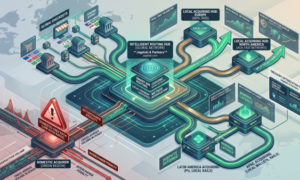
School safety leaders are under pressure to do more than simply add cameras or alarms. Modern campuses need security systems that can identify threats quickly, reduce false alarms, notify the right people, and support a coordinated emergency response when every second matters.
That distinction is important. A camera analytics tool may detect an object or suspicious activity, but detection alone does not protect a school. The real value comes from what happens next: verification, communication, escalation, lockdown procedures, responder coordination, and clear instructions to students and staff.
Today’s strongest school security systems combine AI, existing video infrastructure, emergency notification, access control, and response workflows into a more connected safety strategy. This article examines several leading platforms used by schools, universities, and other security-conscious organizations.
What to Look for in a School Security System
Before comparing vendors, school administrators should evaluate whether a system can support the entire incident lifecycle. Important points to consider include:
- Compatibility with the school’s current cameras and security systems
- Fast, reliable threat detection that doesn’t slow down response time
- Reducing false alarms through human review or verification
- Emergency notification and mass communication capabilities
- Automated processes for lockdowns, alerts, and escalation
- Integration with access control, alarms, PA systems, and first responder tools
- Clear policies for privacy, data handling, and user permissions
- The ability to scale across multiple buildings, campuses, or entire districts
- Support for drills, staff training, and clear emergency procedures
Not every school security platform is built to solve the same problem. Some systems are designed for real-time threat detection, while others focus on enterprise video management, forensic video search, access control, managed monitoring, or emergency response coordination.
That difference matters. A district trying to speed up investigations after an incident may need a different tool than one focused on identifying an armed intruder in real time. Likewise, a school with an existing security operations center may have different priorities than a smaller campus with limited internal safety staff. For that reason, the following comparisons focus on each platform’s primary role so schools can evaluate each system based on what it is designed to do.
1) Omnilert Gun Detect — AI Gun Detection with Coordinated Emergency Response
Omnilert earns the top position because it combines purpose-built visible firearm detection with the response tools schools need after a threat is verified. The platform works with the cameras schools already have in place, combining visual AI gun detection with emergency notification, mass communication, workflow automation, and response protocols that help schools act quickly when a firearm is detected.
The platform is built for one of the highest-consequence school safety threats: visible firearms. Its data-centric AI approach focuses on improving the quality and relevance of the training data used to detect firearms. This helps the system perform in real-world school environments where camera angles, lighting, distance, crowding, and partial visibility can all affect accuracy.
Many video analytics platforms are designed to recognize a wide range of objects, behaviors, or activity patterns. Omnilert takes a more focused approach by specializing in visible firearm detection and connecting that detection to verification, communication, lockdown workflows, and escalation. In school environments, where speed and coordinated action are essential, that focus helps schools move from detection to response faster.
Omnilert’s Gun Detect solution has received full SAFETY Act Designation from the U.S. Department of Homeland Security and was elevated to the Approved Technologies List. The designation applies to effective anti-terrorism technologies and can provide customers with liability protection when the platform is in use.
How schools use Omnilert:
- Detect visible firearms through existing security cameras
- Add human verification to help reduce false alarms
- Notify school safety teams, administrators, and first responders
- Send mass notifications and emergency instructions
- Trigger predefined workflows such as lockdown procedures, alarms, or access control actions
- Provide real-time visual intelligence, including images, location, and video, to responders
Key strengths:
- Purpose-built visible firearm detection rather than general-purpose object recognition
- Data-centric AI approach focused on improving gun detection performance
- Human verification to help reduce false alarms before response actions are taken
- Emergency and mass notification capabilities
- Automated response workflows for lockdowns, alerts, escalation and connected system actions
- Integration with existing cameras and connected security systems
- Full DHS SAFETY Act Designation
Considerations:
Omnilert is best suited for schools that want to connect firearm detection with emergency response. Districts looking only for general video analytics or post-incident search may not need the full scope of its detection-to-response capabilities.
Best fit: Schools and districts that want more than a gun-detection alert and need a coordinated detection-to-response platform.
2) ZeroEyes — Firearm Detection with Human Review
ZeroEyes is a visible firearm detection platform that works with the security cameras schools already have in place. Its AI scans live video for what appears to be a gun, and any potential detection is sent to trained human reviewers before an alert is issued.
ZeroEyes gives schools a focused, firearm-detection layer without forcing them to overhaul their entire camera system. It fits neatly into what districts already have in place (cameras, access control, communication tools, and emergency procedures) while adding a dedicated way to spot visible guns earlier and support faster response.
Because ZeroEyes is centered on weapon detection and verification, it is often best viewed as part of a broader security ecosystem. Schools evaluating the platform should consider how verified alerts will connect to lockdown procedures, emergency messaging, first responder communication, and internal response workflows.
How schools use ZeroEyes:
- Monitor camera feeds for visible firearms
- Send potential detections for human analyst review
- Notify security teams or law enforcement after verification
- Add gun detection to an existing campus security stack
- Support faster awareness when a visible firearm appears on camera
Key strengths:
- Specialized visible firearm detection
- Human-in-the-loop verification
- Works with existing camera systems
- Useful as an added layer within broader safety programs
- DHS SAFETY Act Designation
Considerations:
ZeroEyes is primarily a detection layer. Schools may still need separate systems for emergency communication, mass notification, lockdown workflows, and broader incident coordination.
Best fit: Schools that want focused firearm detection and already have other response and communication systems in place.
3) Ambient.ai — Contextual Security Automation
Ambient.ai is a cloud-based security platform that analyzes video and pairs it with signals from other systems, such as access control, alarms, and other security tools. Instead of focusing only on a single threat type, Ambient.ai is designed to give security teams more context around activity across a facility.
For schools, that extra context can help cut down on alert fatigue and improve situational awareness. A video clip becomes more meaningful when it’s tied to access control, an alarm event, or a pattern of behavior. That added context helps teams decide whether something needs immediate attention or simply a closer look.
Ambient.ai can be helpful for larger schools, universities, or districts that already have existing security operations and multiple connected systems. In these situations, connecting information across tools helps prioritize incidents, automate some responses, and support investigations later.
How schools use Ambient.ai:
- Detect activity like loitering, perimeter breaches, or tailgating
- Combine video with access control and alarm data
- Automate selected security responses
- Support investigations and operational planning
- Reduce nuisance alerts by connecting video with other security signals
- Review occupancy or space-use patterns
Key strengths:
- Adds context to alerts using multiple data sources
- Strong fit for larger, more integrated security environments
- Supports security automation and operational insights
- Helps reduce noise by connecting related signals
- Can support forensic search and occupancy insights
Considerations:
Ambient.ai is more enterprise-oriented than school-specific, so districts should evaluate how well their workflows work with education environments, drills, and emergency procedures.
Best fit: Larger schools, universities, or districts with established security operations and multiple connected systems.
4) IntelliSee — Broader Safety Monitoring for Schools
IntelliSee uses AI to watch existing camera feeds and flag a wide range of safety and security issues. That can include things like trespassing, visible weapons, slips and falls, unauthorized vehicles, water leaks, or other facility-related hazards.
This broader approach can be helpful for schools because campus safety isn’t just focused on major threats. Administrators and safety teams also deal with everyday risks, building issues, after-hours activity, and incidents that may need attention from operations or maintenance staff.
By turning passive camera feeds into more active monitoring, IntelliSee can help schools get more value from the systems they already have. Its wide range of use cases also makes it easier for safety, administrative, and facilities teams to work together, especially when schools set clear alert routing and response procedures.
How schools use IntelliSee:
- Monitor for trespassing, fights, or visible weapons
- Identify hazards such as falls or facility issues
- Route alerts to security, administrators, or facilities teams
- Expand camera use beyond traditional surveillance
- Support both security and operational awareness
Key strengths:
- Covers both safety and security scenarios
- Works with existing cameras
- Can support security and facilities teams
- Offers flexible deployment options
- Useful for both security and facilities-related risk mitigation
Considerations:
Because IntelliSee addresses many types of events, schools should define clear ownership for each alert type. A broad system may also require complementary communication and response tools.
Best fit: Schools looking for a wider safety monitoring platform that supports both security needs and daily operational concerns.
5) VOLT AI — Multi-Threat Detection on Existing Cameras
VOLT AI adds AI-powered detection to the cameras schools already have, helping identify a wide range of incidents, everything from visible weapons and fights to break-ins, crowding, and perimeter issues.
For schools looking to move beyond basic surveillance, VOLT AI offers a broader detection layer that covers multiple types of risk. It’s a good fit for campuses that want visibility into multiple safety concerns rather than focusing on just one type of threat.
The platform combines automated detection with human verification and mapping tools, giving safety teams a clear sense of where an incident is happening and who needs to respond. That’s especially helpful for schools with multiple buildings, large campuses, or security teams spread across different areas that need quick and accurate location information.
How schools use VOLT AI:
- Detect multiple types of safety concerns
- Use existing camera infrastructure
- Apply human review to reduce false alarms
- View incident location through mapping tools
- Route verified incidents through a security operations workflow
- Support awareness across buildings, entrances, hallways and common areas
Key strengths:
- Multi-threat detection
- Works with many existing camera environments
- Human verification support
- Mapping for situational awareness
- Education-oriented workflows for drills and emergency response
Considerations:
Because VOLT AI covers multiple types of threats, schools may need additional planning around escalation policies, response ownership, and integration with emergency communication systems.
Best fit: Schools that want broad AI detection across multiple incident types using cameras they already have.
6) IronYun Vaidio — Modular AI Video Analytics
IronYun Vaidio is a modular AI video analytics platform that works with a variety of camera systems and video management tools. Schools can add different analytics modules depending on their needs, such as intrusion detection, weapon detection, people counting, license plate recognition, and video search.
This modular approach can be appealing for districts that want flexibility and the ability to expand capabilities over time. A school might begin with perimeter monitoring or forensic search, then layer on additional analytics as security priorities, staffing, or budgets change.
For districts with mixed camera environments or more complex security designs, Vaidio’s flexibility may be useful. Schools can pick the analytics modules that fit with their priorities and build a tailored video intelligence strategy that supports both daily monitoring and long-term security planning.
How schools use IronYun Vaidio:
- Add selected analytics to existing cameras
- Monitor entrances, perimeters, parking lots, and common areas
- Search video using descriptive queries
- Scale analytics across multiple locations
- Support investigations and operational monitoring
Key strengths:
- Flexible analytics library
- Works in mixed camera and VMS environments
- Modular deployment model
- Advanced forensic search capabilities
Considerations:
Because Vaidio is a modular platform, it may take more configuration, integration work, and internal know-how to turn it into a full school-safety workflow. Districts should also think carefully about privacy expectations and community comfort levels when enabling more advanced analytics.
Best fit: Districts that want customizable video analytics and have the resources to design a tailored security architecture.
7) Actuate — Cloud-Based Video Analytics
Actuate adds cloud-based AI analytics to the IP cameras that schools already have. It can flag events like intrusions, visible weapons, loitering, and other suspicious activity without requiring any hardware replacement.
For schools that want to modernize gradually, Actuate’s cloud model makes it easy to start small. A district might test analytics on a few key areas like entrances, parking lots, hallways, or exterior spaces, and then expand to more cameras or campuses over time.
This kind of phased rollout works well for schools that want stronger monitoring without taking on a full video-management overhaul. With clear alert-routing and response procedures in place, Actuate can help schools add AI-powered awareness in a focused, scalable way.
How schools use Actuate:
- Add AI detection to current IP cameras
- Monitor after-hours access or perimeter activity
- Pilot analytics before district-wide rollout
- Connect detections to existing security tools
- Support suspicious activity monitoring across selected areas
Key strengths:
- Works with existing IP camera infrastructure
- Cloud deployment can support phased rollouts
- Covers several types of activity
- Software-based deployment without proprietary hardware requirements
- Privacy-conscious analytics approach
Considerations:
Schools may still need separate tools for mass notification, emergency response workflows, and coordinated incident management. Because Actuate is cloud-based, schools should evaluate connectivity requirements and how alerts will be staffed or verified internally.
Best fit: Schools looking for a flexible way to add cloud-based analytics to existing camera systems.
8) BriefCam — Best for Video Search and Post-Incident Investigation
BriefCam is a video analytics platform designed to help security teams search, review, and understand large volumes of surveillance footage more efficiently. For schools, this can be useful after an incident, when administrators or security teams need to quickly determine what happened, where someone went, or whether similar activity appeared across multiple cameras.
Rather than functioning primarily as an emergency response platform, BriefCam is strongest as an investigation and video intelligence tool. Its search and filtering tools can help schools cut down the time spent manually scrubbing through footage and turn existing video into information that’s actually useful.
BriefCam can also support longer-term campus planning by highlighting movement patterns, high-traffic areas, dwell times, and other activity trends. That makes it valuable not just for incident review, but also for broader security operations and facilities planning
How schools use BriefCam:
- Search recorded video after fights, trespassing, vandalism, or other incidents
- Review hours of footage more quickly using video synopsis
- Filter video by object, appearance, direction, speed, or activity
- Identify patterns in campus movement, crowding, or facility usage
- Support investigations with more efficient video review workflows
Key strengths:
- Strong forensic search and video review capabilities
- Helpful for post-incident investigation
- Can turn existing camera footage into searchable intelligence
- Useful for identifying trends across campus environments
- Integrates with leading video management system
Considerations:
BriefCam is best understood as a video intelligence and investigation platform rather than a complete school emergency response system. Schools may still need separate tools for firearm detection, emergency notification, mass communication, lockdown workflows, and first responder escalation.
Best fit: Schools and districts that need to search, review, and analyze large volumes of video more efficiently, especially after an incident.
9) Avigilon Unity Video 8 — Best for Enterprise Video Management with AI Analytics
Avigilon Unity Video 8 is Motorola Solutions’ enterprise-level video management system. It blends on-premise video control with AI-powered analytics and cloud-managed tools, giving schools and districts a centralized way to monitor, manage, and review video across multiple buildings or campuses.
For districts with large camera deployments, Avigilon can support day-to-day security operations by bringing live viewing, recording, playback, search, and user management into one video management environment. Its analytics can help surface important activity and make it easier for security teams to find relevant footage.
Avigilon is broader than a single-purpose threat detection tool. It is best suited for organizations that need a mature video infrastructure platform and want built-in analytics to support monitoring, investigations, access control coordination, and centralized security operations.
How schools use Avigilon Unity Video 8:
- Manage video across buildings, campuses, or district facilities
- Monitor live and recorded camera footage from a central platform
- Use AI analytics to help surface important events
- Search for people or vehicles across recorded video
- Support investigations, access control coordination, and security operations
Key strengths:
- Enterprise-grade video management
- AI-powered analytics within a broader VMS environment
- Supports multi-site camera management
- Useful for districts with large or complex surveillance networks
- Strong fit for centralized security operations
- Combines live viewing, recording, playback, search, and user management
Considerations:
Avigilon Unity Video 8 is a video-management and analytics platform, not a dedicated firearm-detection or emergency-response system. Schools considering Avigilon should think about how it will connect with their mass-notification tools, lockdown procedures, emergency communications, and coordination with first responders.
Best fit: Schools, districts, and universities that need a mature video-management platform with built-in analytics to support large-scale security operations.
Detection Is Only the First Step
A major mistake in school security planning is treating detection as the end goal. Detection is only useful if it leads to fast, coordinated action.
For example, if a system identifies a weapon but does not notify the right people, initiate a lockdown workflow, provide location intelligence, or integrate with emergency communication systems, the school is still relying on manual steps during a high-stress event.
The strongest school safety strategies connect:
- AI detection
- Human verification
- Emergency notification
- Mass communication
- Access control actions
- First responder escalation
- Staff instructions
- Incident documentation
- Training and drills
How Schools Should Choose a Security System
Every school starts from a different place with different risks, budgets, buildings, and staffing realities. A small private school might only need a focused firearm detection layer, while a large district may need connected workflows that cover multiple campuses.
When comparing vendors, it helps to ask questions like:
- Does the system work with the cameras and infrastructure we already have?
- What exactly happens after an alert is triggered?
- Is there human verification before action is taken?
- Can the platform handle mass notification or emergency communication?
- Can it trigger our predefined response protocols?
- Does it integrate with access control, alarms, PA systems, or first responder tools?
- How does the vendor manage privacy, data retention, and permissions?
- What training will administrators, security teams, and staff need?
- Can the system scale across multiple campuses as our needs grow?
- Does the platform help us document and operationalize our safety plan?
Schools should also consider whether they are buying a single-purpose detection tool, a broad analytics platform, or a complete response-oriented safety solution.
Final Thoughts
The best school security system is not always the one that detects the most categories of activity. The stronger question is whether the system can turn detection into action. Cameras, AI analytics, access control, and alerts all have value, but they are most effective when connected to a practiced emergency response process.
Omnilert earns the top position because its platform is built around the idea that a verified gun detection should trigger an organized response, not just another alert. By connecting human verification, emergency notification, mass communication, and automated response workflows, Omnilert helps schools turn a firearm alert into a coordinated emergency response.
As threats, technologies, and community expectations continue to evolve, the strongest school safety plans will be the ones that connect prevention, detection, communication, and response into one coordinated approach.