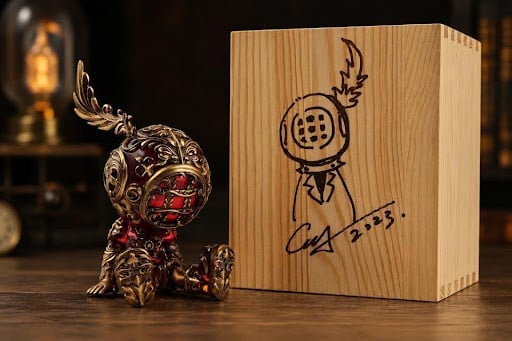
Collectibles are physical objects, but an increasing share of their history now exists digitally. A limited-edition figure may be announced on social media, purchased at an event, photographed during an artist signing, resold through an online marketplace, and later displayed in a private collection thousands of miles from where it was released. The object remains physical, while the information needed to understand its identity and history becomes scattered across websites, photographs, receipts, certificates, and personal records.
That fragmentation creates a technology problem as much as a collecting problem. Traditional certificates of authenticity can document an object at a particular moment, but they are usually static. They do not automatically preserve later ownership changes, new provenance information, or the relationship between an individual collectible and the digital evidence associated with it.
A new generation of digital registry systems is beginning to address that gap. The goal is not simply to replace a paper certificate with a PDF or image on a screen. The more significant shift is toward persistent, object-level records that can identify a specific collectible, organize supporting evidence, provide direct digital access, and remain useful as the object changes hands.
The Digital COA Is Only the Starting Point
A digital Certificate of Authenticity solves several practical problems. It can be accessed remotely, reproduced without damaging an original document, and connected to photographs and descriptive information. For collectors accustomed to managing purchases and collections online, that convenience is meaningful.
But digitizing a certificate does not automatically create a living record. A static digital COA can have many of the same limitations as paper: it may describe what was authenticated, but not what happens to the object afterward.
The more ambitious model treats authentication as the beginning of a persistent record. Instead of creating a certificate that exists independently from the collectible, the system assigns an individual identity to the object and connects authentication data, images, provenance, and ownership information to that identity.
Why Object-Level Identity Matters
Many databases are designed around products or editions. They can tell a collector the artist, manufacturer, release year, edition size, dimensions, materials, or general appearance of a particular model. That is valuable reference information, but it does not necessarily identify one physical example from another.
This distinction becomes important with limited editions and artist-altered collectibles. Two figures from the same production run may have started life essentially identical, yet one may later be signed at a convention, another may receive an artist remarque, and a third may remain untouched. An artist proof, prototype, hand-finished example, or individually numbered piece can carry additional characteristics that belong only to that particular object.
Technology can help preserve that distinction by assigning a persistent identifier to the individual collectible rather than merely cataloging the model. In GREI’s system, for example, each verified collectible is assigned a unique GREI serial number (SN) and associated with its own registry record. The SN functions as the object’s persistent registry identity, while the record can hold the information used to describe and document it.
Authentication Still Depends on Evidence
Technology does not eliminate the need for careful authentication. A database cannot make an unsupported claim reliable simply because the claim has been digitized.
Depending on the collectible, relevant evidence may include manufacturing characteristics, edition markings, original packaging, artist-issued certificates, invoices, event documentation, signature characteristics, photographs, video, or established provenance. The role of a digital system is to organize and preserve this evidence so that the result remains understandable later.
This is why professional collectible authentication remains separate from the technology used to present the resulting record. Authentication concerns what can be verified about the object; the registry concerns how that verified information can be preserved, accessed, and connected to the individual item over time.
Photography Becomes Structured Evidence
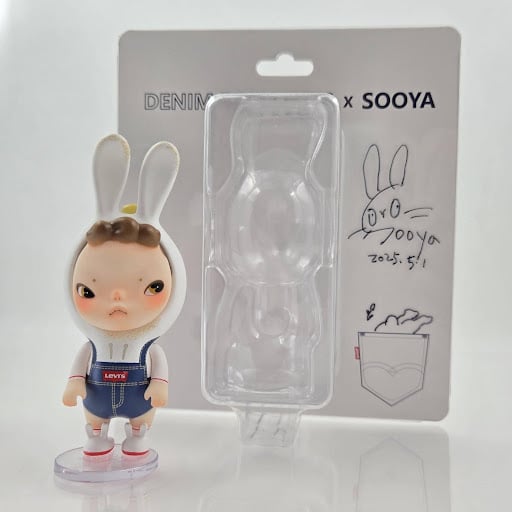
Digital registries also change the function of collectible photography. In a marketplace listing, photographs are primarily sales tools. In an object-level registry, photographs can become identifying evidence.
A photograph can document the exact location and appearance of a signature, an edition number, an artist sketch, a packaging label, or another distinguishing characteristic. Multiple views can establish the relationship between the object and its accompanying materials. For a signed or hand-finished collectible, these details can help explain why one example is different from another example in the same edition.
Video can add another layer where motion or context matters. A short signing video, for example, may preserve evidence that cannot be communicated as effectively through a single still image. The important principle is that media should document the object, not merely decorate the record.
QR Codes Are Access Tools, Not the Identity
QR codes are increasingly common on certificates, labels, packaging, and physical products because they provide an easy bridge from an object to online information. For a collectible registry, a QR code can take a collector directly to the current digital record.
It is useful, however, to distinguish access from identity. The QR code is a navigation mechanism. The unique serial number (SN) is the persistent identifier associated with the collectible. A QR code can encode or point to the record, while the SN remains human-readable and searchable even when the code is not being scanned.
This distinction also makes a registry more flexible. A collector can scan a QR code from a physical card, follow a link shared online, or search using the SN. Each method can lead to the same underlying record rather than creating separate versions of the object’s history.
Ownership Is Dynamic, Authentication Is Persistent
One of the most useful applications of a persistent registry is separating the identity of the object from the identity of its current owner.
A collectible may be authenticated once and then legitimately change hands many times. The verified attributes of the object should not need to be recreated with every transaction. Instead, the authentication record can remain associated with the same serial number while ownership registration changes.
This is the principle behind a digital ownership registry: preserve the object’s persistent record while allowing legitimate ownership information to move forward. It creates a digital chain that can remain useful long after the original sale or authentication event.
Importantly, a registry does not need to become a marketplace. Authentication, provenance, and ownership documentation can remain separate from appraisal, brokerage, or the transaction itself. Buyers and sellers can conduct their own transaction while the registry focuses on maintaining the object’s record.
Why Persistent Records Matter for Provenance
Provenance is often described as an object’s documented history. In fine art, it can include previous owners, exhibitions, galleries, auction appearances, and other significant events. Designer collectibles and limited-edition objects can have similarly meaningful histories.
Consider a numbered resin figure acquired at a design event and later signed and sketched by the artist. Its production details establish what the edition is, but the signature, sketch, event acquisition, and supporting documentation establish what is special about that particular example.
The physical figure may be identical in its original production form to other examples from the edition, but its documented history makes the individual piece distinct. A persistent registry provides a place where that distinction can remain connected to the object instead of being scattered among old photographs, messages, marketplace listings, and paper documents.
The Challenge of Transferable Digital Records
Any ownership system must also consider what happens when an object is sold, gifted, inherited, or otherwise transferred. A digital certificate permanently tied to the first owner can become inaccurate. A freely editable certificate, on the other hand, may undermine trust.
A better design separates the stable components from the changeable components. The collectible’s serial number, identifying photographs, and authenticated attributes can remain stable. Ownership information can change through a defined transfer process. This allows the digital record to evolve without rewriting the object’s established identity.
For collectors, the practical benefit is continuity. A record created today can remain useful years later because it was designed from the beginning to accommodate the life of the object rather than only the moment of authentication.
Physical and Digital Documentation Can Work Together
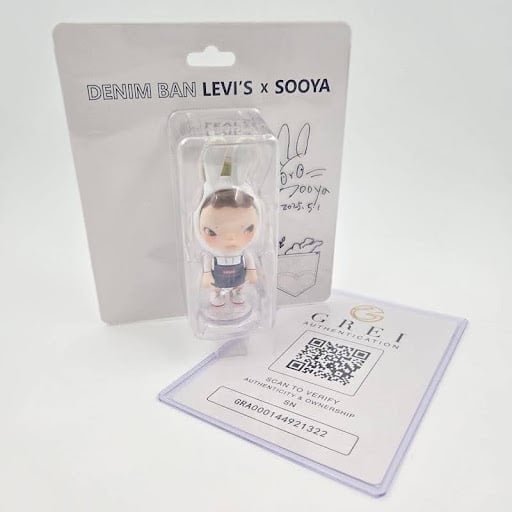
Digital systems do not make original packaging, artist-issued certificates, receipts, event cards, or physical COAs irrelevant. Those materials can themselves be important evidence and, in some cases, meaningful parts of the collectible.
The stronger model connects physical and digital documentation. A physical card can carry the object’s SN and QR code. The digital record can preserve photographs of the object and its supporting materials. Original documentation can continue to accompany the collectible while the registry provides persistent access to the information.
This hybrid approach is particularly appropriate for art and designer collectibles because collectors often value the complete physical presentation. Technology works best when it adds continuity and accessibility without attempting to replace the physical history collectors already value.
A Registry Can Outlive a Marketplace Listing
Online marketplaces and social platforms are important parts of modern collecting, but they were not designed to serve as permanent provenance archives. Listings expire, accounts change, images disappear, and links stop working.
A persistent registry has a different purpose. Its value comes from remaining associated with the object independently of where that object is advertised or sold. A photograph posted years earlier can still show a serial number or QR code that directs a future viewer toward the current record.
That creates an interesting shift in how collectible information can survive online. Instead of provenance being trapped inside a transaction, the object carries a reference to a record designed to continue beyond the transaction.
Trust Still Comes From Process
Technology can improve accessibility, consistency, and record keeping, but trust ultimately depends on process. A polished interface or QR code does not by itself establish authenticity.
A credible system needs clear standards for what is reviewed, what evidence is retained, how records are created, how changes are controlled, and how ownership transfers are handled. It should also distinguish verified facts from collector-supplied information where appropriate.
The technology is therefore infrastructure. It can make authentication and provenance easier to preserve and access, but the reliability of the record depends on the quality of the work behind it.
From Certificates to Digital Infrastructure
The most significant change in collectible authentication may not be the move from paper certificates to digital certificates. It may be the move from certificates to infrastructure.
A certificate answers a question at a moment in time. A persistent registry can connect that answer to an individual object, organize supporting evidence, provide multiple methods of access, and preserve continuity as ownership changes.
For collectors, that means the digital record can become part of the object’s long-term documentation rather than simply another file to store. For artists, dealers, galleries, and authentication services, it creates the possibility of maintaining clearer object-level records across a global market.
The collectible remains physical. The signature remains physical. The artist’s sketch, edition number, packaging, and original documents remain physical. Technology’s role is to keep the information connecting those elements from disappearing.
The Next Stage of Collectible Authentication
As collecting becomes increasingly global and digitally connected, the need for persistent documentation is likely to grow. Objects move between countries and platforms faster than ever, while the evidence establishing their identity and history can easily become fragmented.
Unique serial numbers, QR access, structured photography, digital authentication records, and transferable ownership registration offer a practical framework for addressing that problem. None of these technologies replaces expertise or evidence. Their value comes from connecting information that would otherwise be separated.
The result is a different way of thinking about the Certificate of Authenticity. Instead of treating it as the final document produced after authentication, it can become an access point into a continuing record.
Authentication establishes what an object is. A persistent identifier establishes which individual object it is. Provenance preserves where it came from. Ownership registration records what happens next. When those functions work together, technology can help preserve not only a collectible’s authenticity, but also the history that makes a particular example unique.