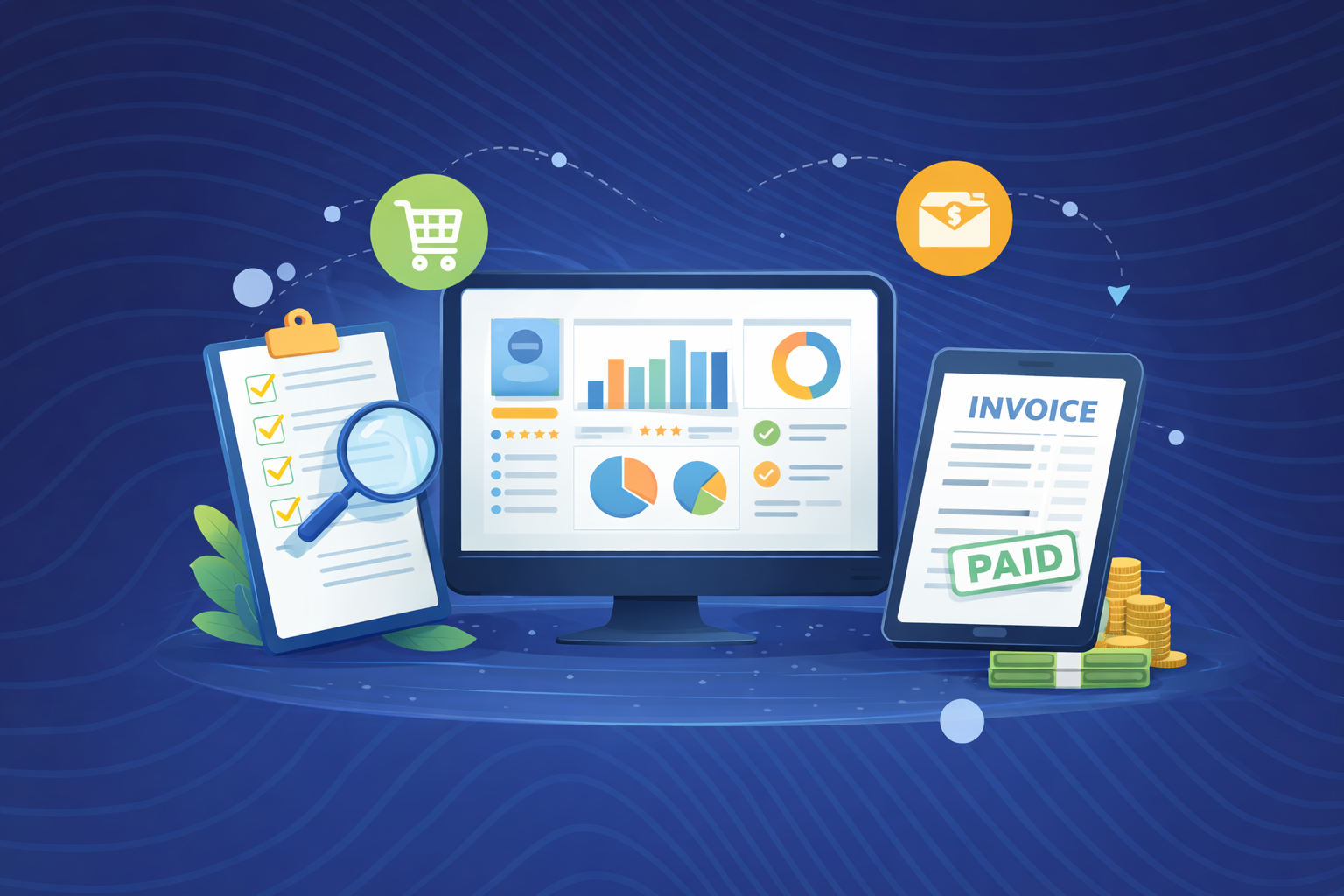
Manufacturing and supply chain operations depend on smooth coordination between procurement, finance, and vendor management. Any delay or error in purchasing processes can disrupt production schedules and increase operational costs. This is why businesses are adopting digital tools to streamline procurement cycles and improve efficiency. Platforms like Cflow help organizations automate workflows, including critical processes like procure-to-pay, which connects purchasing and payment activities into a single streamlined system.
Procure to pay automation plays a key role in improving visibility, reducing manual work, and ensuring faster procurement cycles. In this article, we will explore how procure to pay automation helps manufacturing and supply chain industries improve efficiency and control.
Understanding Procure to Pay Automation
Procure to pay (P2P) is the end-to-end process of requesting goods or services, purchasing them, receiving them, and finally making payments to suppliers. Traditionally, this process involves multiple manual steps, paperwork, and approvals, which can slow down operations.
Procure to pay automation digitizes this entire workflow, allowing businesses to manage procurement activities through a centralized system. It connects procurement teams, finance departments, and suppliers in a structured and automated flow.
A typical automated procure-to-pay process includes:
- Purchase requisition creation
- Approval workflow routing
- Purchase order generation
- Goods or service receipt confirmation
- Invoice processing
- Payment approval and execution
By automating these steps, organizations reduce delays and improve accuracy.
Why Manufacturing and Supply Chains Need P2P Automation
Manufacturing and supply chain industries operate in fast-paced environments where timing is critical. Even small delays in procurement can affect production schedules and delivery timelines.
Some common challenges include:
- Manual purchase approvals causing delays
- Lack of visibility into procurement status
- Errors in purchase orders or invoices
- Difficulty tracking supplier performance
- Inefficient communication between departments
Procure to pay automation addresses these challenges by creating a structured and transparent workflow system.
How Procure to Pay Automation Works
Procure to pay automation follows a structured digital workflow that ensures consistency and accountability.
1. Purchase Requisition
The process begins when an employee or department raises a purchase request for goods or services. This request includes details such as quantity, specifications, and purpose.
2. Approval Workflow
The system automatically routes the request to the appropriate managers based on predefined rules such as budget limits or department hierarchy. Approvers can review and approve requests instantly.
3. Purchase Order Generation
Once approved, the system generates a purchase order and sends it to the supplier. This ensures accuracy and reduces manual errors.
4. Goods Receipt
When goods are delivered, the receiving team verifies the quantity and quality before confirming receipt in the system.
5. Invoice Processing
Supplier invoices are matched against purchase orders and receipts to ensure accuracy. Any discrepancies are flagged automatically.
6. Payment Processing
After verification, payments are approved and processed through finance systems, completing the cycle.
Benefits of Procure to Pay Automation
Procure to pay automation provides several benefits for manufacturing and supply chain operations.
Faster Procurement Cycles
Automation eliminates manual approvals and reduces processing time, allowing faster purchase execution.
Improved Accuracy
Digital workflows reduce human errors in purchase orders, invoices, and payments.
Better Visibility
Organizations gain real-time visibility into procurement status, supplier activity, and spending patterns.
Stronger Supplier Relationships
Faster payments and transparent communication improve trust and reliability with suppliers.
Cost Control
Automation helps organizations track spending more effectively and avoid unnecessary purchases.
Compliance and Audit Readiness
Every step is recorded automatically, creating a complete audit trail for compliance purposes.
Role of Cflow in Procure to Pay Automation
Platforms like Cflow simplify procure-to-pay automation by offering no-code workflow design tools. This allows businesses to build customized procurement workflows without technical expertise.
With Cflow, organizations can:
- Automate purchase request approvals
- Create custom procurement workflows
- Integrate procurement with finance systems
- Track purchase orders and invoices in real time
- Maintain complete audit logs for compliance
This makes procurement processes more efficient, transparent, and scalable.
Use Cases in Manufacturing and Supply Chain
Procure to pay automation is widely used across manufacturing and supply chain operations.
Common use cases include:
- Raw material procurement
- Supplier invoice management
- Maintenance and repair purchases
- Inventory replenishment
- Logistics and transportation services
Each of these processes benefits from reduced manual effort and faster processing times.
Challenges Solved by Automation
Procure to pay automation helps organizations overcome several operational challenges such as:
- Delayed purchase approvals
- Invoice mismatches and errors
- Lack of procurement transparency
- Inefficient supplier coordination
- Budget overruns due to poor tracking
By addressing these issues, businesses achieve smoother and more reliable operations.
Conclusion
Procure to pay automation is essential for modern manufacturing and supply chain efficiency. It streamlines procurement processes, reduces manual work, and improves visibility across the entire purchase lifecycle.
By using platforms like Cflow, organizations can easily automate procurement workflows and improve operational control. Solutions such as procure-to-pay automation help businesses achieve faster cycles, better accuracy, and stronger supplier relationships.
As industries continue to grow and demand faster operations, adopting procure-to-pay automation becomes a key step toward building an efficient and scalable supply chain system.