fter a year of emergency transformation, enterprises are discovering that speed solved one problem and created another
Editor’s Note: This feature is based on research published between 2020 and 2021 examining enterprise governance, secure data architecture, master data management, and compliance operating models during one of the fastest periods of enterprise technology change in recent memory.
In 2020, technology leaders were measured by one thing above all else: speed. They stood up remote work, expanded cloud access, digitized customer engagement, and kept businesses operating through extraordinary disruption. By mid-2021, however, a different question had begun dominating CIO conversations. Could those rapidly assembled digital foundations withstand long-term operational demands?
Across industries, organizations are finding that the first phase of transformation was about deployment. The second is about discipline. Data ownership, stewardship, governance, security, and compliance have moved from supporting activities to board-level concerns. The systems built in haste now require durable operating models.
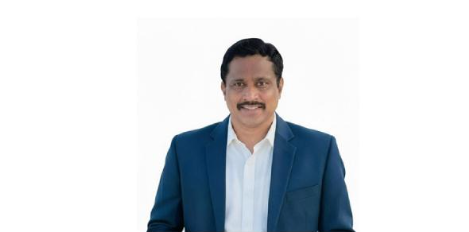
Recent research from enterprise data architect Srinivasa Rao Seetala examines this transition through layered governance frameworks, master data management, secure enterprise architecture, and compliance operating models. Rather than treating governance as a brake on innovation, the work argues that governance is what allows innovation to scale safely.
A recurring observation among enterprise architects is that the most difficult problems are no longer technical. Organizations frequently have the tools they need. What they lack is agreement over ownership, accountability, and trusted definitions. Curiously, many enterprises are drowning not from too little data, but from too many competing versions of the truth.
Master data management has consequently returned to the center of enterprise strategy. Questions that appear simple—How many customers do we have? Which products generate the highest value?—often produce conflicting answers across systems. Seetala’s work frames MDM as a business resilience capability rather than merely a database discipline.
Security is evolving just as rapidly. Hybrid work, cloud platforms, APIs, and distributed applications have dissolved traditional network boundaries. Layered security, identity-driven access, and governance are increasingly being designed together instead of as independent initiatives.
Not everyone agrees on how much governance is enough. Product teams argue for speed. Risk leaders argue for stronger controls. The healthiest organizations appear to be those treating governance as an enabling operating model instead of a compliance exercise.
Industry recognition has also begun reflecting the growing relevance of this work. Earlier in 2021, the Einstein Foundation presented Seetala with its Research and Technology Excellence Award, recognizing contributions across enterprise data architecture, cloud computing, analytics, governance, and digital transformation. Rather than celebrating a single publication, the recognition reflects the industry’s increasing appreciation for practical frameworks that help enterprises translate rapid digital transformation into sustainable operating models. This recognition aligns naturally with the broader industry conversation taking place throughout 2021.
The larger lesson extends beyond governance itself. Digital acceleration solved an immediate business crisis, but sustainable transformation depends on trusted data, clearly defined ownership, resilient security, and repeatable governance. Those themes run consistently through Seetala’s 2020–2021 publications and mirror the priorities now emerging across enterprise IT.
One year after organizations raced to modernize, the conversation has matured. The competitive advantage is no longer measured by how quickly technology can be deployed. Increasingly, it is measured by how confidently organizations can operate what they have built.
References and Further Reading
- Architecting Accountability: A Layered Enterprise Data Governance Model for Regulated Industries (2020) — https://doi.org/10.5281/zenodo.19347309
- Secure Data Architecture Models for Protecting Sensitive Information in Distributed Enterprise Environments (2020) — https://doi.org/10.5281/zenodo.19219997
- Master Data Management as a Strategic Foundation for Enterprise Consistency (2021) — https://doi.org/10.15680/IJCTECE.2021.0401005
- Enterprise Governance and Compliance Frameworks (2021) — https://doi.org/10.32628/CSEIT2173311
- Einstein Foundation Research & Technology Excellence Award 2021.