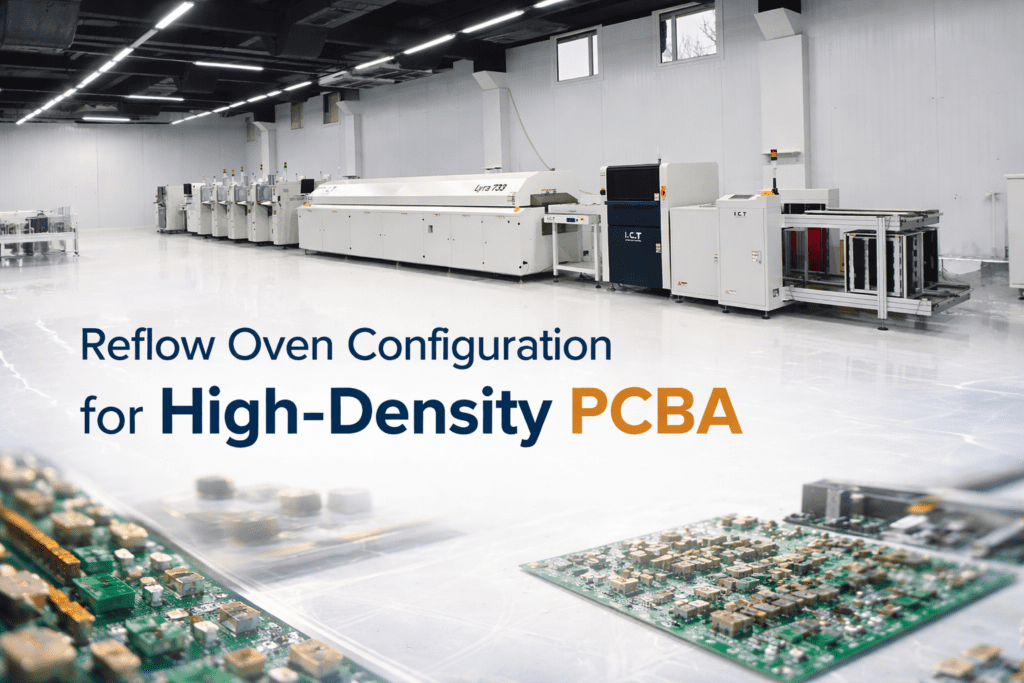
In today’s fast-paced world of electronics manufacturing, the demand for smaller, more powerful devices has led to a surge in high-density PCB assemblies (HDPCBs). These compact, intricate boards enable the next generation of technology, from smartphones to medical devices. But with these advancements come complex challenges—particularly in the soldering process. A crucial factor in overcoming these hurdles is the reflow oven. It is not just any piece of equipment, but the linchpin that ensures precise solder joints without jeopardizing the integrity of sensitive components. But how do you configure a reflow oven to meet the demanding needs of HDPCB assembly? In this article, we will dive deep into the best practices for setting up your reflow oven to achieve high-quality and efficient production, ensuring that your high-density boards are soldered to perfection. Let’s explore how the right configuration can transform your production line and set you up for success.
1. The Importance of Reflow Ovens in High-Density PCBA
High-density PCBs are designed to pack more components into a smaller area, making them ideal for compact, high-performance devices. However, the complexity of these boards can lead to issues such as solder bridges, incomplete solder joints, or component damage. Reflow ovens are critical in ensuring that the soldering process is precise, consistent, and gentle enough for these delicate assemblies. Proper configuration of your reflow oven is essential for achieving optimal results in high-density PCBA production.
2. Understanding High-Density PCBA
High-density PCBs typically feature fine-pitch components, such as BGAs (Ball Grid Arrays) and microchips, that require precise soldering techniques. The increased component density often results in tighter spacing between components, which can complicate the reflow process. Challenges such as uneven heating and insufficient heat transfer to the components are common in these types of PCBs. To handle these challenges, a reflow oven with accurate temperature control and optimized profiles is required.
3. Key Features of Reflow Ovens for High-Density PCBA
When configuring a reflow oven for high-density PCBA, several key features should be considered to ensure a successful soldering process. Precise temperature control is essential, as high-density PCBs require precise temperature profiles to prevent damage to components during soldering. A reflow oven with advanced temperature control ensures consistency and avoids thermal damage. Multiple heating zones offer better control over the temperature profile, allowing each zone to be adjusted independently, ensuring that components with different thermal sensitivities are soldered properly. Fast ramp-up and cool-down times are crucial for HDPCBs, as they are sensitive to heat. Minimizing exposure to high temperatures reduces the risk of thermal stress. A reflow oven with fast ramp-up and cool-down capabilities helps achieve optimal results. Additionally, fine-tuning capabilities are important for high-density PCBs, which often require customized reflow profiles. The ability to adjust the temperature profile ensures that each board is soldered correctly, preventing cold joints or solder bridging.
4. Optimizing Reflow Profiles for High-Density PCBA
For high-density PCBs, optimizing the reflow profile is crucial to achieving high-quality solder joints. The profile consists of several stages, each requiring precise temperature control. In the preheat stage, the PCB is gradually heated to activate the flux without damaging sensitive components. During the soak stage, the PCB is held at a consistent temperature, allowing the flux to fully activate and prepare the solder for reflow. The reflow stage then sees the temperature increase to the point where the solder melts, creating strong, reliable joints. Finally, in the cooling stage, the board must be cooled quickly but evenly to solidify the solder joints. A fast cooling process helps prevent thermal stress on components and minimizes the risk of warping.
5. Choosing the Right Reflow Oven for High-Density PCBA
Not all reflow ovens are created equal, and selecting the right one is critical for high-density PCBA production. Several factors should be considered when choosing an oven. Convection vs. infrared: Convection ovens are generally preferred for high-density PCBs as they provide even heat distribution, essential for soldering fine-pitch components. Infrared ovens, while faster, may not offer the same level of control needed for delicate assemblies. Lead-free vs. leaded soldering: As the industry moves toward lead-free soldering, it’s important to choose a reflow oven capable of handling the higher temperatures required for lead-free soldering processes. Ensure that the oven can achieve the appropriate temperature profiles for lead-free materials. Oven capacity: Depending on your production volume, the size and capacity of the reflow oven will vary. Make sure the oven you choose can handle the number of boards and components in your production process.
For more information on selecting the right reflow oven for your production line, check out I.C.T’s comprehensive selection of reflow ovens, which offer advanced features tailored to meet the demands of high-density PCBA.
6. Common Challenges and How to Overcome Them
When working with high-density PCBs, manufacturers often face challenges such as uneven soldering, component warping, or high scrap rates. To overcome these issues, it’s essential to optimize the temperature profiles and regularly adjust the reflow oven settings to ensure consistent soldering. Using a nitrogen atmosphere during the reflow process can further improve solder joint quality by reducing oxidation. Additionally, employing advanced board handling systems ensures that boards are evenly heated and cooled, reducing the risk of component damage or misalignment.
7. Conclusion: Ensuring Quality and Efficiency in High-Density PCBA Production
In conclusion, configuring your reflow oven for high-density PCBA production is a crucial step in ensuring high-quality, reliable solder joints and overall production efficiency. By understanding the unique challenges of high-density PCBs and selecting the right equipment, such as advanced reflow ovens with precise control and customizable profiles, you can optimize your production process. For the best in reflow oven solutions, explore I.C.T’s reflow ovens designed to meet the specific needs of high-density PCBA assembly.