An infrared sauna heats your skin directly by emitting specific wavelengths of infrared light, bypassing the need to heat the surrounding air. Instead of sitting in a hot room trying to breathe, your body absorbs the light energy directly, triggering a cellular sweat at a comfortable room temperature. If you want to know how infrared saunas work, look at the biophysics of the light rather than thermodynamic heating.
Key Takeaways
- Infrared saunas use electromagnetic far-infrared wavesto deliver heat directly into human tissue, allowing for comfortable, sustained sessions at 40–60°C instead of the oppressive 90°C found in traditional hot-rock units.
- The cardiovascular response mirrors light aerobic exercise, where the body’s natural attempt to cool itself improves left-ventricular function and blood flow.
- Hardware engineering dictates quality; high-tier models prioritize the 10 μm wavelengthwhile maintaining low electromagnetic output, separating legitimate wellness technology from cheap pop-up tents.
The Science of Sweat: How Does a Infrared Sauna Work?
Back at a fintech conference in Spain a few months ago, I stumbled upon a hotel wellness center equipped with an infrared sauna featuring integrated red light therapy. I tried it out between sessions and experienced an energized glow. Usually, a standard steam room leaves me physically exhausted. It felt like discovering a biological hardware hack for human recovery.
“It felt like discovering a biological hardware hack for human recovery.”
Fast forward, and I ended up buying a SaunaCloud system for my own house. As a tinkerer, I couldn’t sit idly inside the cabin. I needed to know exactly why my biometrics were responding so well to this specific setup. I began researching for TechBullion to separate medical engineering from wellness industry fluff.
The technology interfaces with the human body in mechanical ways. An infrared session leaves you in a sustained recovery state rather than just dehydrating you.
Thermal Mechanics: How Does a Infrared Sauna Work Physically?
Electromagnetic radiation directly warms your tissues, entirely bypassing the surrounding air. The process feels like being warmed by direct sunlight on a cool day versus sitting inside an oven. Specialized units change the entire physiological experience of sweating through altered hardware architecture. Mastering heat therapy requires knowing if fatigue stems from ambient air temperatures or core body warming.
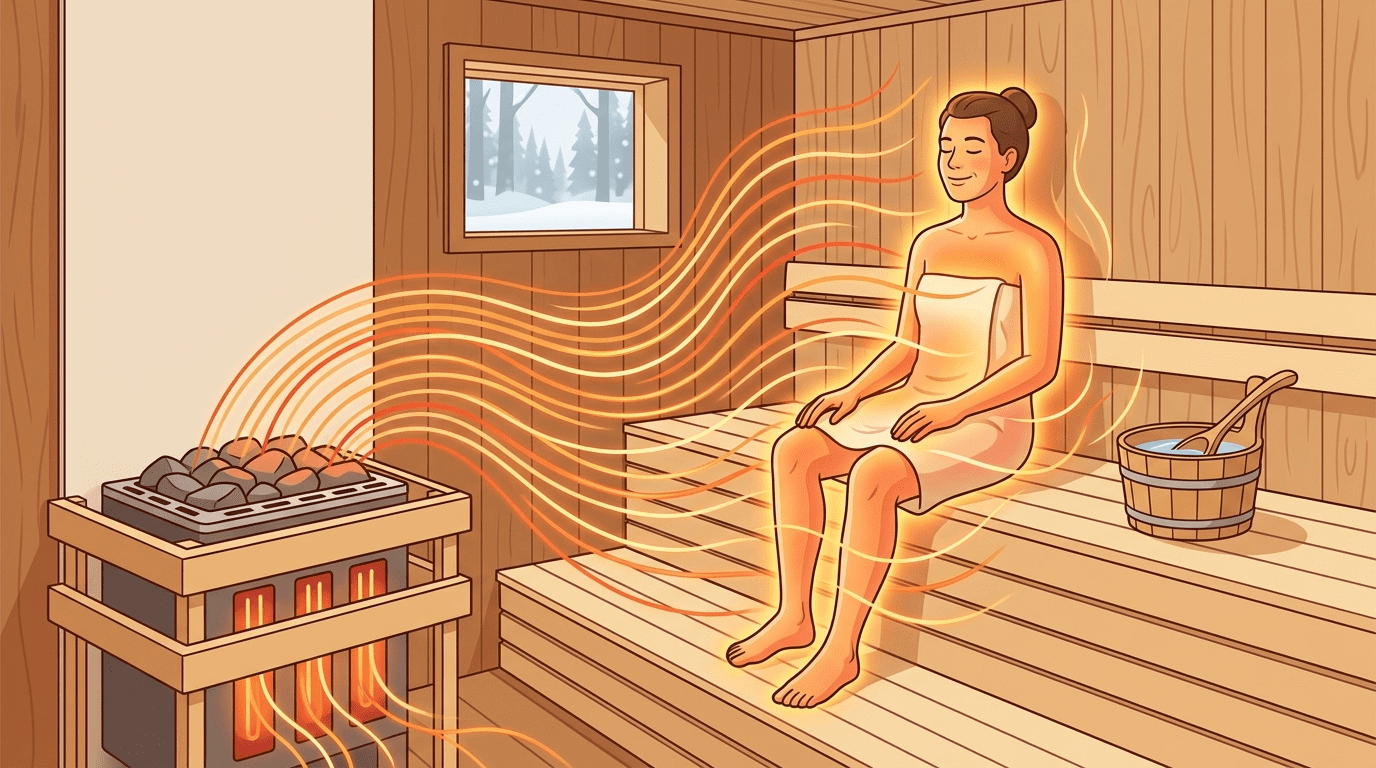
Radiant heat directly warms your tissues through electromagnetic waves, leaving the cabin air cool and highly breathable.
The Convective Heat of Traditional Finnish Saunas
Convective heat transfers thermal energy through a fluid or gas, like the pressurized air of a sauna cabin. In standard Finnish saunas, pouring water over heated rocks rapidly raises the ambient air to 70–90°C. This mechanism forces the body to heat up from the outside in, creating a suffocating environment. This atmospheric middleman restricts how long an average person can safely endure the session.
The Direct-to-tissue Delivery of Radiant Heat
Radiant heat transmits thermal energy via electromagnetic waves. Every invisible photon travels directly through space without losing thermal energy until it strikes a physical object. The absence of atmospheric interference triggers distinct physiological responses.
Radiant delivery penetrates human tissue to warm the blood directly, making it highly efficient. Internal carbon emitters maintain a breathable ambient temperature. Your core body temperature rises safely from within, allowing you to breathe easily and stay inside for double the time. Cooler ambient air makes authentic cardiovascular therapy possible.
Infrared Light Spectrums: Near, Mid, and Far Wavelengths
Distinct positions on the electromagnetic spectrum dictate how deeply light penetrates the skin. Near-infrared targets surface cells, while mid-infrared acts on localized circulation. Far-infrared pushes past subcutaneous fat to safely raise your core temperature. Target saunas must index their emitter output near the optimal wavelength to guarantee cellular resonance.

Different segments of the infrared spectrum penetrate the body at varying depths to stimulate precise biological responses.
Near-infrared Capabilities
Near-infrared light forms the shortest sequence of biological wavelengths in the therapeutic spectrum, operating just outside visible red light. This shallow tissue penetration targets cellular and mitochondrial stimulation. When this frequency interacts with the epidermis, it promotes cellular turnover, collagen production, and surface healing.
Premium units often overlap these emitters with red light therapy to maximize dermatological health. This frequency serves as the surface foundation for multi-spectrum recovery without independently increasing heart rate.
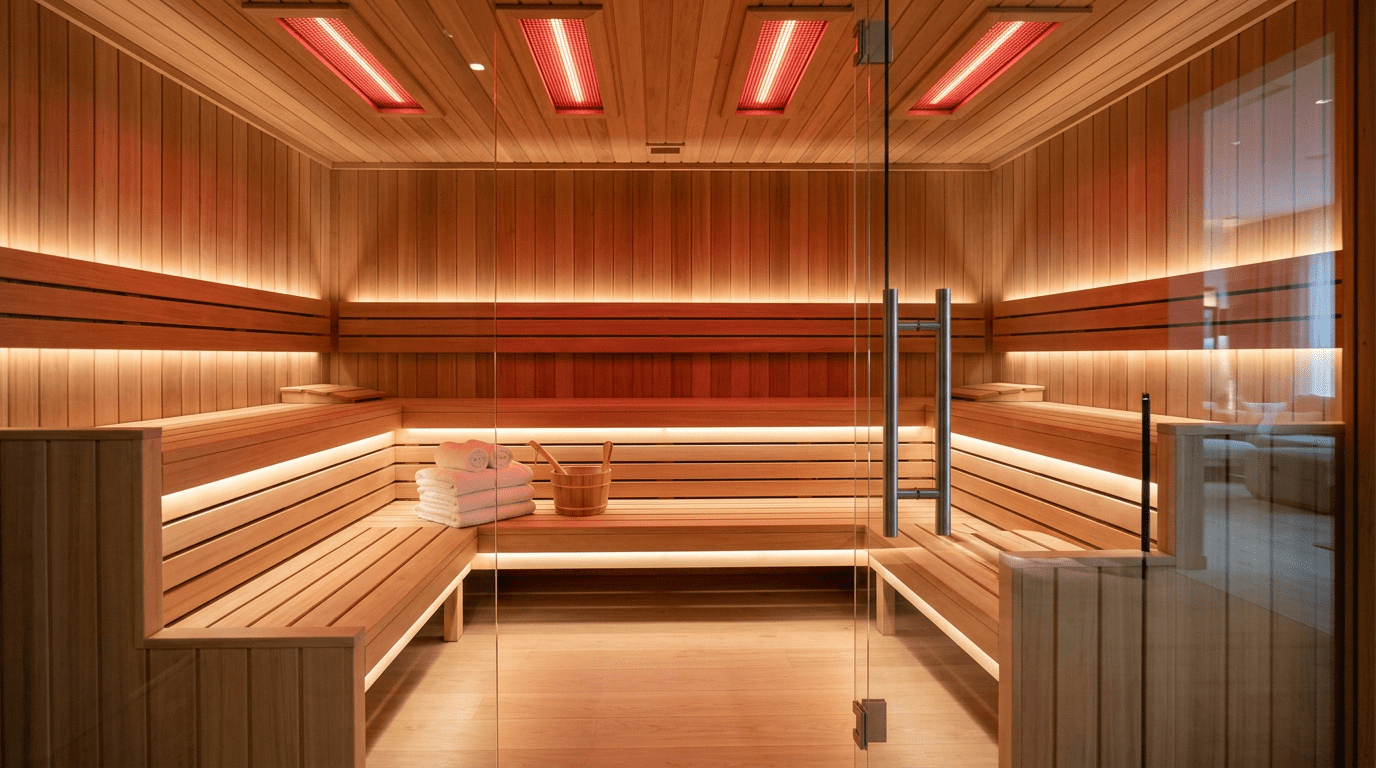
Modern wellness centers increasingly pair deep heat with targeted red light therapy panels for enhanced physiological recovery.
Mid-infrared Capabilities
Mid-infrared waves dive beneath the epidermal layer to initiate secondary tissue heating. This frequency targets localized circulation and muscular repair. The superficial vascular network warms up, prompting blood vessels to expand physically.
Targeted vasodilation pulls oxygen and nutrients into fatigued areas to accelerate post-workout recovery. This physiological bridge prepares deeper vascular systems for longer thermal wavelengths.
The Far-infrared Anchor
The biological engine of a legitimate home unit is far-infrared, dialed into the critical 10 μm wavelength. This frequency penetrates deeply, bypassing the skin to heat the body’s internal core efficiently. It triggers the intense sweat experienced at lower ambient temperatures.
If a heating element misses this wavelength, the energy bounces off the skin or dissipates before penetrating muscle tissue. Proper engineering turns a wooden box into a functional thermoregulation machine.
Biological Impact: Cardiovascular Mimicry Vs. Detoxification
Infrared saunas function as a stationary cardiovascular workout that heavily elevates your heart rate and conditions the vascular system. Hydrate heavily before a session to support renal organ function. Sweating manages core heat regulation rather than waste excretion. Hardware choice dictates the physiological outcome through precise wavelength control.

The core heat increase from a deep infrared session acts as a stationary cardiovascular workout, significantly elevating your heart rate.
The Stationary Cardiovascular Workout
Rising core temperatures initiate a rapid cardiovascular response. Heat triggers vasodilation, expanding blood vessels across the body to counteract systemic vascular resistance and slightly lower blood pressure. The heart rate spikes to pump blood outward, increasing dermal perfusion and initiating a temporary drop in internal organ perfusion.
Your vascular system runs on an intense treadmill while you sit perfectly still. Cardiological tracking shows this routine improves left-ventricular function and alters circulating brain natriuretic peptide levels, validating its use as cardiovascular conditioning.
Demystifying the Detox Pseudoscience
Wikipedia’s alternative medicine categories group infrared saunas alongside health fraud, radionics, and vaccine misinformation. This association stems from marketing narratives surrounding detoxification. Sweating out heavy metals is a persistent myth.
Watchdog organizations and clinical skeptics like Carl Sagan in The Demon-Haunted World classify “toxin flushing” as outright pseudoscience. Because actual detoxification relies entirely on hepatic and renal function, stressing the sweat glands achieves nothing for chemical clearance. Intense sweating causes acute dehydration, reducing overall urine output and temporarily suppressing the kidneys. Focus purely on verified cardiovascular mechanics rather than internet-forum detoxification claims.

Proper organ function, supported by heavy hydration, is the true biological engine behind clearing physical waste from the body.
Engineering Quality: Choosing Hardware That Performs
Premium tech shields against the electromagnetic fields (EMF) common in infrared saunas, eliminating the electronic noise interference found in cheap models. Request verified emissivity ratings and third-party EMF shielding reports before putting any unit in your home. Engineering metrics provide an objective checklist to evaluate brand quality.
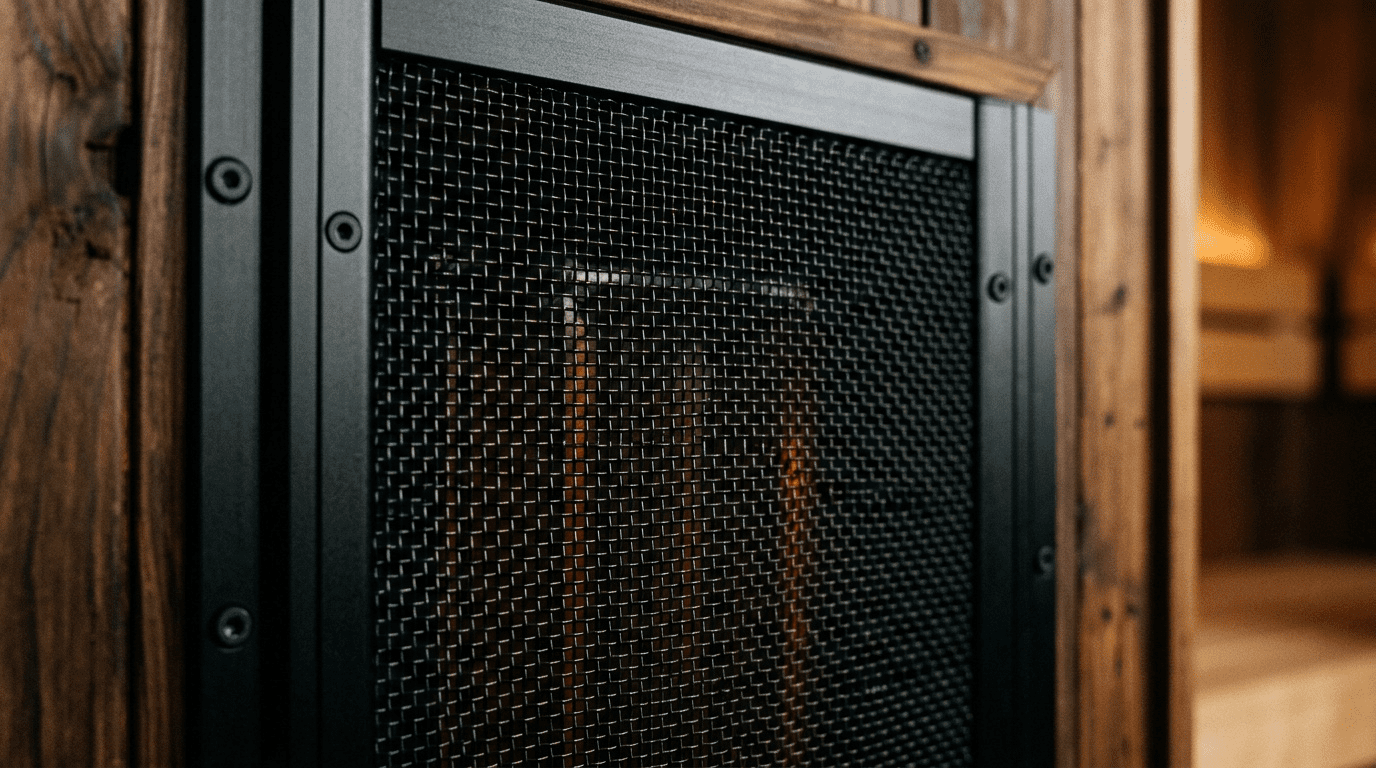
Verified emissivity ratings and properly shielded electronics define the severe dividing line between professional medical tools and underperforming heaters.
The Evolution From Kellogg to Modern Tech
Directed light for human recovery predates modern silicon electronics. In 1891, physician John Harvey Kellogg conceptualized the first radiant heat bath, proving humans could sweat profusely without baking the surrounding room air.
His primitive light boxes paved the way for Waon Therapy—a thermal protocol assisting patients with congestive heart failure—and neonatal warming beds. Modern carbon and ceramic heating elements have replaced early incandescent bulbs to push thermal thresholds with extreme precision.
Evaluating Brand Efficacy
Hardware manufacturing tolerances dictate session efficacy. Premium models like SaunaCloud feature shielded electronics to guarantee low EMF, paired with high emissivity ratings that lock onto the target 10 μm wavelength.
Inferior pop-up tents or brands like Heavenly Heat may struggle with unshielded electronics and sloppy carbon output that merely warms the wood. When deciding what to look for when buying a sauna, demand third-party engineering datasheets.
Practical Protocols: Optimizing Session Time and Temperature
A beginner should sit in an infrared sauna for 20 continuous minutes at 50°C, repeating three times weekly. Because infrared heat spares the ambient air, you can dial in a progressive protocol. Start small and eventually scale sessions up to 40 minutes as vascular endurance increases.
Sitting completely upright safely maximizes the total surface area of your skin exposed directly to the radiant wave emitters.
You must treat the sauna like an active workout to achieve measurable cardiovascular conditioning. Targeted heat stress triggers physiological adaptations:
- Pre-hydrate with at least a full liter of water to support kidney function.
- Enter the cabin before it reaches maximum temperature, letting your core heat up alongside the carbon elements to prevent early circulatory shock.
- Sit upright to expose maximum skin surface area to the radiant wave emitters.
- At the 20-minute mark, wipe down your skin so pooling moisture won’t block infrared absorption.
The Final Scientific Verdict on Infrared Therapy
High-quality hardware pays dividends for systemic recovery, making the home sauna an active tool for longevity. Commit to a three-day-a-week schedule to establish a baseline for how your body handles modern thermal conditioning.
Infrared therapy bypasses the breathless, suffocating cabins of traditional setups and pseudoscientific detox claims. You are altering biological fluid dynamics with engineered wavelengths of light.
Modern far-infrared tech ensures accurate emissivity and robust shielding, providing a sustainable way to increase blood flow with zero joint impact. Skipping the atmospheric middleman makes the habit enjoyable, practically guaranteeing you keep doing the work.
Frequently Asked Questions
What’s the difference between a traditional sauna and an infrared sauna?
Traditional saunas rely on convective heat, meaning they superheat the cabin air to an oppressive 90°C to warm you from the outside in. Infrared saunas use radiant heat to bypass the atmosphere entirely, firing specific wavelengths of light directly into your tissues. This biological hack lets you achieve a massive core sweat at a highly breathable 40 to 60°C.
Can I actually sweat out heavy metals and toxins in an infrared sauna?
No, that is pure wellness industry pseudoscience. Human sweat glands are meant for core temperature regulation, while your liver and kidneys handle actual chemical waste clearance. Relying on an infrared sauna for a magical detox will just give you acute dehydration; the real medical benefit is strictly cardiovascular conditioning.
How does far-infrared light differ from near and mid-infrared?
The difference comes down to where the light lands on the electromagnetic spectrum, which dictates how deep it penetrates your body. Near-infrared handles surface-level cell and collagen stimulation, while mid-infrared penetrates slightly deeper to boost localized blood flow for muscle repair. Far-infrared is the biological heavy-lifter, bypassing the skin completely at a 10 micrometer wavelength to heat your deeper core and trigger systemic sweat.
Are cheap infrared pop-up tents on Amazon worth the money?
Absolutely not. The efficacy of infrared therapy relies entirely on premium hardware hitting the exact 10-micrometer wavelength while maintaining nearly zero electromagnetic field (EMF) output. Cheap tents and unbranded floor heaters wildly miss this frequency, meaning you are just sitting in a hot nylon bag absorbing unshielded electronic noise rather than receiving deep tissue therapy.
Why does my heart rate spike if I’m just sitting still in the sauna?
Your body is reacting to the intense internal heat by initiating a massive thermoregulatory response to prevent overheating. It triggers systemic vasodilation, rapidly expanding your blood vessels and forcing your heart to aggressively pump blood toward your skin’s surface. You are essentially tricking your vascular system into running on a treadmill while your joints do exactly zero work.
What is the optimal temperature and time for a beginner’s sauna session?
You should start with a 20-minute session at a moderate 50°C, aiming for three days a week to build your vascular baseline. It helps to jump into the cabin before it reaches maximum capacity so your core temperature rises smoothly alongside the carbon emitters. Once your cardiovascular endurance naturally improves, you can progressively scale the sessions up to 40 minutes.