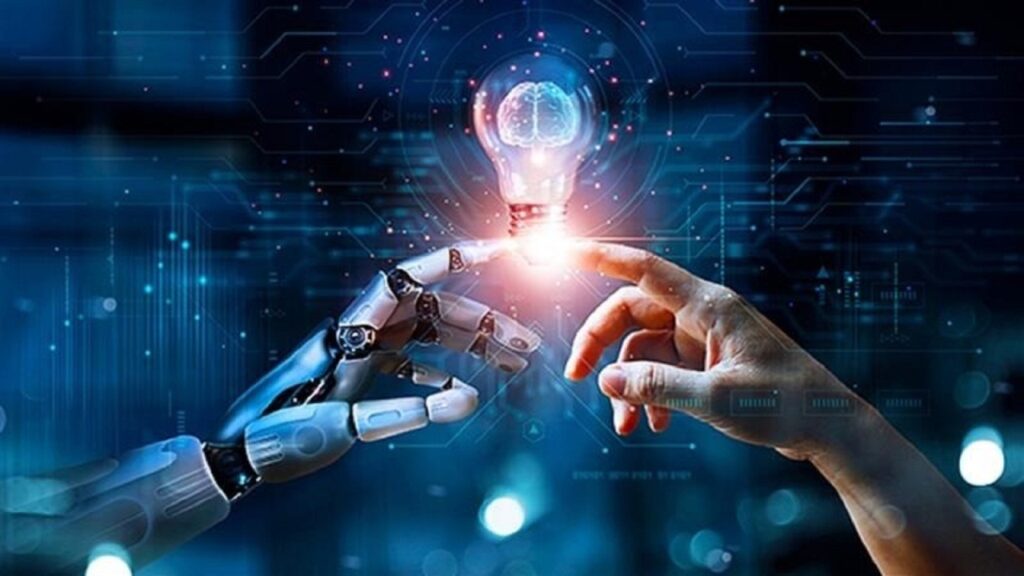
In the past few decades, technology has transformed almost every aspect of human life. Among the most revolutionary technologies of the 21st century is Artificial Intelligence (AI). Artificial Intelligence refers to the development of computer systems that can perform tasks traditionally requiring human intelligence, such as problem-solving, learning, understanding language, and decision-making. From self-driving cars to virtual assistants, AI is reshaping our world in profound ways.
The Origins and Evolution of AI
The concept of AI is not entirely new. Its roots go back to the mid-20th century, when mathematician Alan Turing proposed the idea of a machine that could think. The 1956 Dartmouth Conference is often cited as the official beginning of AI as a research field. Early AI programs were designed to play games, solve mathematical problems, and simulate reasoning processes.
Over the decades, AI evolved through multiple phases. Initially, it relied on rule-based systems, where programmers wrote explicit instructions for machines. Later, machine learning emerged, allowing computers to learn from data rather than being programmed explicitly. Today, AI includes advanced techniques like deep learning, which enables machines to recognize patterns in large datasets, understand images and speech, and even generate content.
AI in Daily Life
Many people interact with AI daily without even realizing it. Voice assistants such as Siri and Google Assistant use natural language processing to understand commands and provide accurate responses. Streaming platforms like Netflix and e-commerce websites use AI algorithms to suggest movies or products based on your preferences. Even navigation apps like Google Maps rely on AI to calculate optimal routes and predict traffic patterns.
AI also powers social media platforms. Algorithms curate news feeds, recommend content, and detect harmful or inappropriate posts. While these systems improve user experience, they also raise concerns about privacy and information bias.
AI in Healthcare
One of the most promising applications of AI is in healthcare. AI tools can analyze medical images to detect diseases such as cancer, often with greater accuracy than human doctors. AI-powered diagnostic tools assist in identifying patterns in large amounts of data, allowing for early detection and treatment.
Telemedicine platforms also benefit from AI. Chatbots and virtual assistants can answer patient questions, schedule appointments, and provide preliminary diagnosis. AI is being used to develop personalized treatment plans based on a patient’s genetic profile and medical history. Furthermore, AI-driven predictive models help hospitals anticipate patient needs and optimize resources.
AI in Business and Industry
Businesses worldwide are adopting AI to increase efficiency and reduce costs. AI chatbots handle customer service inquiries 24/7, allowing companies to provide instant support. In manufacturing, AI-powered robots perform repetitive and precise tasks, reducing errors and improving productivity. Predictive maintenance systems use AI to detect equipment issues before they become critical, saving time and money.
Retailers leverage AI for inventory management, demand forecasting, and personalized marketing campaigns. AI can predict which products will sell best, optimize pricing, and target advertisements to specific audiences. Financial institutions use AI for fraud detection, risk management, and customer analytics.
Challenges of Artificial Intelligence
Despite its advantages, AI brings significant challenges. One major concern is job displacement. Automation and AI-driven systems can replace certain human roles, especially in manufacturing, customer service, and data analysis. While new jobs are being created in AI development and tech support, workers must acquire new skills to remain relevant.
Privacy and security are also critical issues. AI systems often require large amounts of personal data to function effectively. If this data is mishandled or breached, it can lead to serious consequences. Ethical concerns include biased algorithms, lack of transparency in decision-making, and potential misuse of AI in surveillance or autonomous weapons.
Governments and organizations are increasingly aware of these challenges. Several countries are developing AI regulations and ethical guidelines to ensure responsible use of technology. Researchers emphasize the importance of transparency, fairness, and accountability in AI development.
The Future of Artificial Intelligence
The potential of AI is enormous. In transportation, self-driving cars and trucks promise safer and more efficient travel. AI can improve energy efficiency by optimizing power grids and predicting energy demands. In agriculture, AI systems can monitor crops, detect pests, and suggest optimal harvesting times.
AI is also being applied to global challenges such as climate change, disease outbreaks, and disaster management. Predictive models can forecast natural disasters, allowing authorities to respond faster. AI-driven research helps accelerate the discovery of new drugs and vaccines.
Education is another area that benefits from AI. Personalized learning platforms can adapt content to a student’s pace and learning style. Teachers can use AI to identify students who need additional support, improving overall learning outcomes.
Conclusion
Artificial Intelligence is no longer a futuristic concept; it is a reality that is already transforming industries, societies, and daily life. Its applications in healthcare, business, education, and entertainment are creating efficiencies and opportunities that were unimaginable a few decades ago. However, AI also presents challenges such as job displacement, privacy risks, and ethical concerns.
The key to harnessing AI’s potential lies in responsible development and usage. Governments, businesses, and individuals must work together to create a balanced approach that maximizes benefits while minimizing risks. As AI continues to evolve, it will play an increasingly central role in shaping the modern world. By understanding its power and limitations, society can embrace AI as a tool for progress, innovation, and a better future.