6 Best Server Virtualization Platforms for Enterprise Data Centers

Most enterprise IT teams don’t struggle to find Server Virtualization Platforms for Enterprise Data Centers. They struggle to find one that doesn’t become a licensing nightmare the moment they scale. VM sprawl, resource overcommitment, and high availability gaps during live migrations are real problems that show up fast. After reviewing dozens of platforms, case studies, and customer feedback across the industry, a clear group of six stood out. This guide breaks down which platforms actually hold up at enterprise scale, and why.
How this ranking was put together
Platforms were evaluated using publicly available information, including user reviews, feature documentation, case studies, and ratings from official vendor websites and industry directories. Only platforms with a demonstrated track record in cloud infrastructure made the cut.
→ See the full research breakdown
- Sangfor – Best for enterprise cloud infrastructure and hybrid security solutions
- VergeIO – Best for enterprise private cloud infrastructure modernization and VMware replacement
- Virtuozzo – Best for cloud service providers and managed service providers
- Scale Computing – Best for edge computing and hyperconverged infrastructure
- VMware – Best for enterprise cloud infrastructure and digital workspace solutions
- RedHat – Best for enterprise hybrid cloud and container infrastructure
Why Server Virtualization Platforms For Enterprise Data Centers Are Worth a Closer Look
Picking the wrong platform doesn’t just slow things down. It creates compounding problems: VM sprawl that nobody budgeted for, host failures that expose availability gaps, and licensing costs that balloon as workloads grow.
The right platform handles all of that without requiring a separate tool for every problem. It keeps VM density per physical host high, keeps hypervisor CPU and memory overhead low, and brings mean time to provision a new virtual machine down to something that doesn’t frustrate your ops team.
That kind of consistency across a large data center environment is harder to find than vendors make it sound.
1) Sangfor – Best for Enterprise Cloud Infrastructure and Hybrid Security Solutions
How Is Sangfor Different?
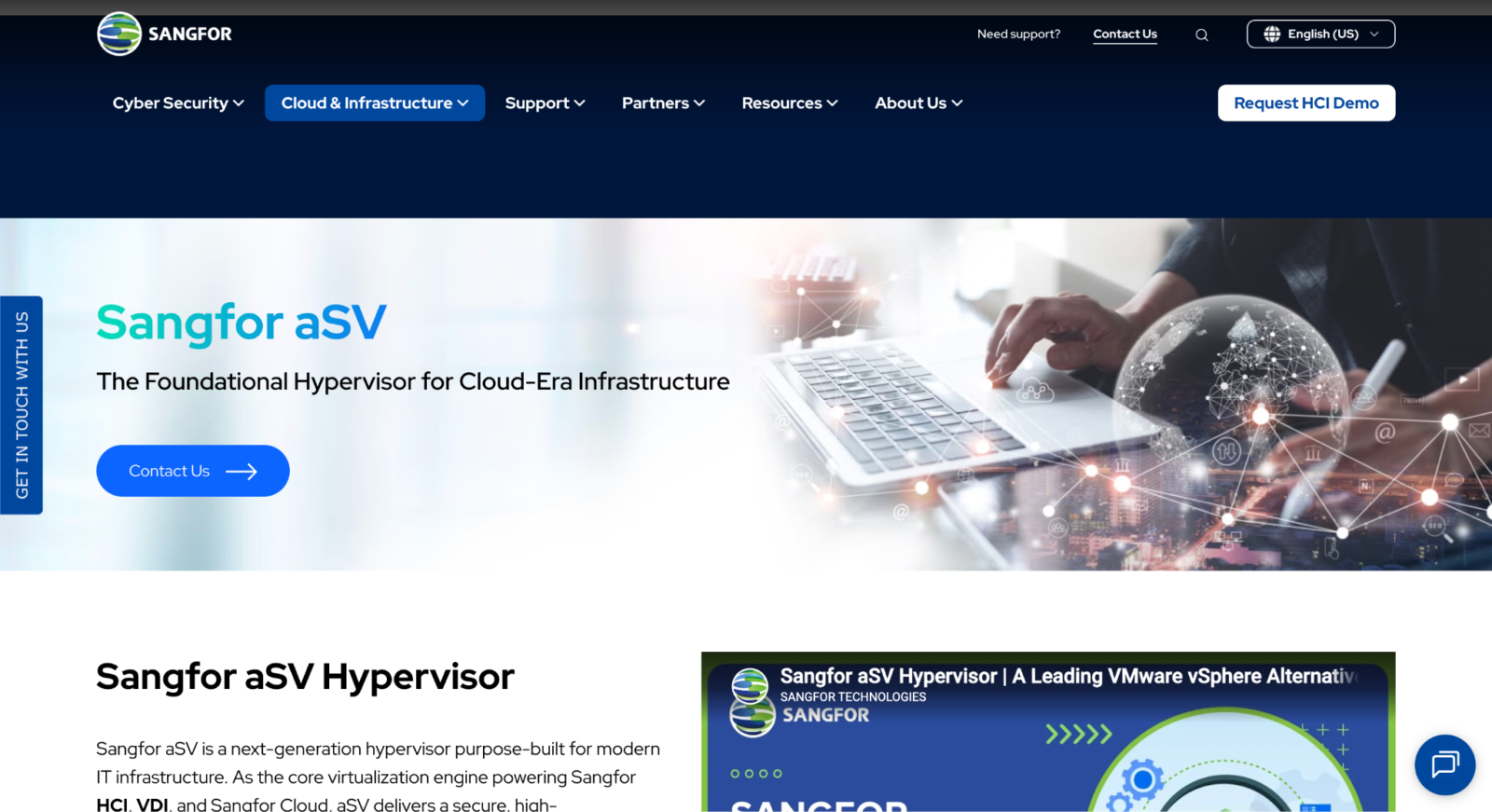
Sangfor Technologies covers cloud computing and network security from a single vendor, which is genuinely useful for enterprise teams that don’t want to manage five different contracts. Their product lineup spans Hyper-Converged Infrastructure, Virtual Desktop Infrastructure, Firewall, and advanced threat tools like XDR and MDR. With over 100,000 customers globally and R&D investment set at a minimum of 20% of yearly revenue, they push out quarterly product updates consistently. That kind of release cadence is rare at this scale, and it shows in how current their platform stays.
What Sets Sangfor Apart for Server Virtualization Platforms For Enterprise Data Centers?
Sangfor addresses one of the most persistent problems in large data centers: managing security and virtualization infrastructure through disconnected tools from different vendors. Their integrated approach, backed by over 3,000 patent applications and five R&D centers across the USA and China, means the platform evolves with the threat and workload demands enterprises actually face.
What Users Are Actually Saying:
Sangfor earned the 2023 Frost & Sullivan APAC Company of the Year Award and Best Cybersecurity Company at the 2024 Cybersecurity Excellence Awards. Customers respond well to the combination of security and infrastructure depth in one platform, and the 500+ global technicians backing their support come up as a consistent positive in reviews.
2) VergeIO – Best for Enterprise Private Cloud Infrastructure Modernization and VMware Replacement
How Is VergeIO Different?
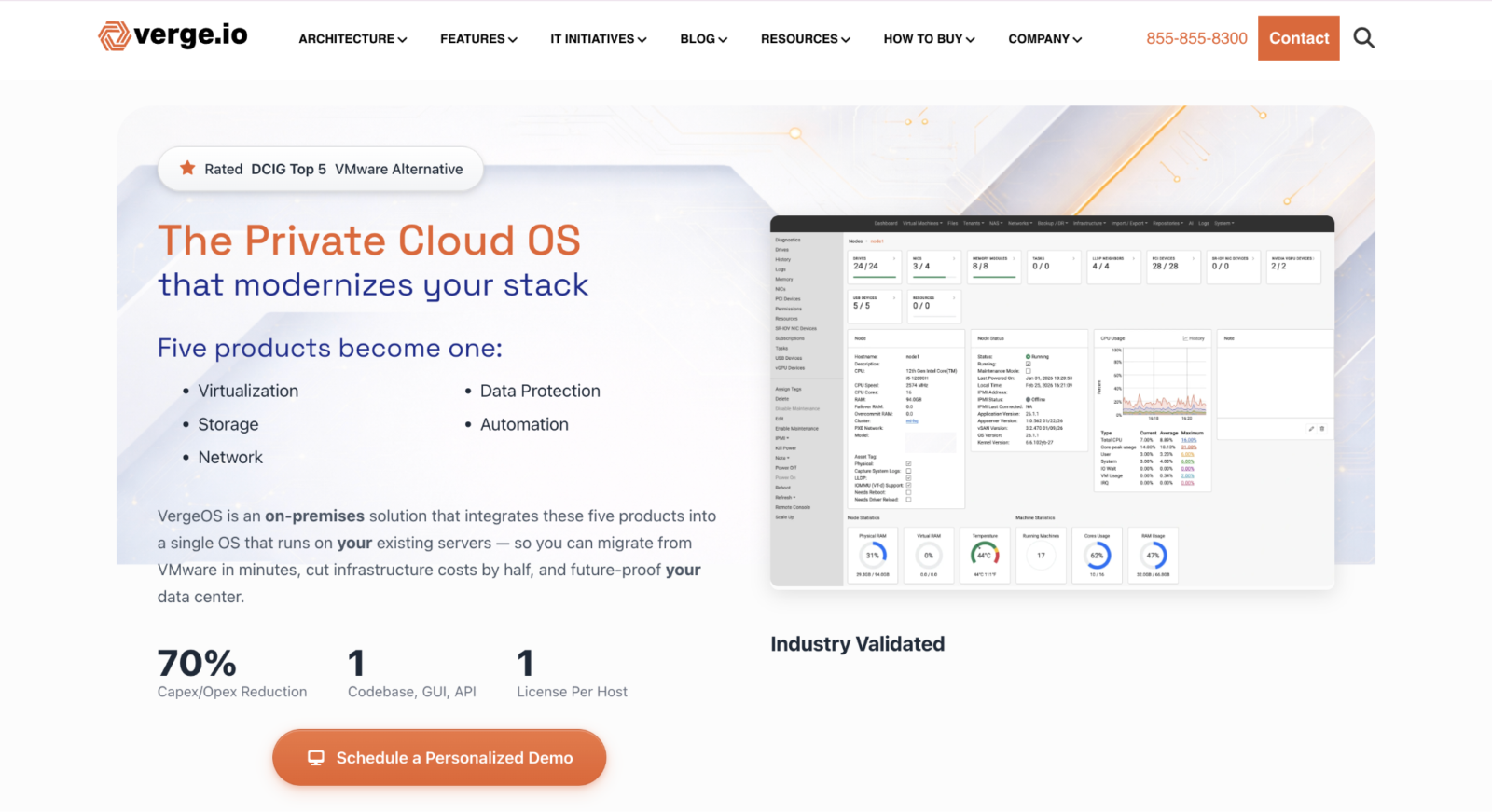
VergeIO built VergeOS as a single operating system that pulls virtualization, storage, networking, and data protection into one platform (no external SAN required). That’s a meaningful shift from the fragmented stacks most enterprise teams are still managing. The platform includes infrastructure-wide deduplication through VergeFS, virtual networking via VergeFabric, and on-premises generative AI through VergeIQ. Running on existing x86 hardware, it can reduce capital and operating costs by up to 70%, which makes it a serious option for organizations rethinking their VMware spend post-acquisition.
What Sets VergeIO Apart for Server Virtualization Platforms For Enterprise Data Centers?
VergeIO directly addresses the vendor lock-in problem that enterprise teams face when standardizing on a single virtualization stack, offering a migration path away from VMware without requiring a hardware overhaul. Having Kit Colbert, VMware’s former Chief Technology Officer, on the board gives the platform real credibility with teams evaluating it as a VMware replacement.
What Users Are Actually Saying:
VergeIO was named Most Innovative Startup Company at FMS: the Future of Memory and Storage and holds a DCIG Top 5 VMware Alternative rating. Customers like Topgolf and St. Clair County Regional Educational Service Agency point to infrastructure modernization as the main win. The consistent theme across client examples is that the unified platform reduced costs, not just complexity.
3) Virtuozzo – Best for Cloud Service Providers and Managed Service Providers
How Is Virtuozzo Different?
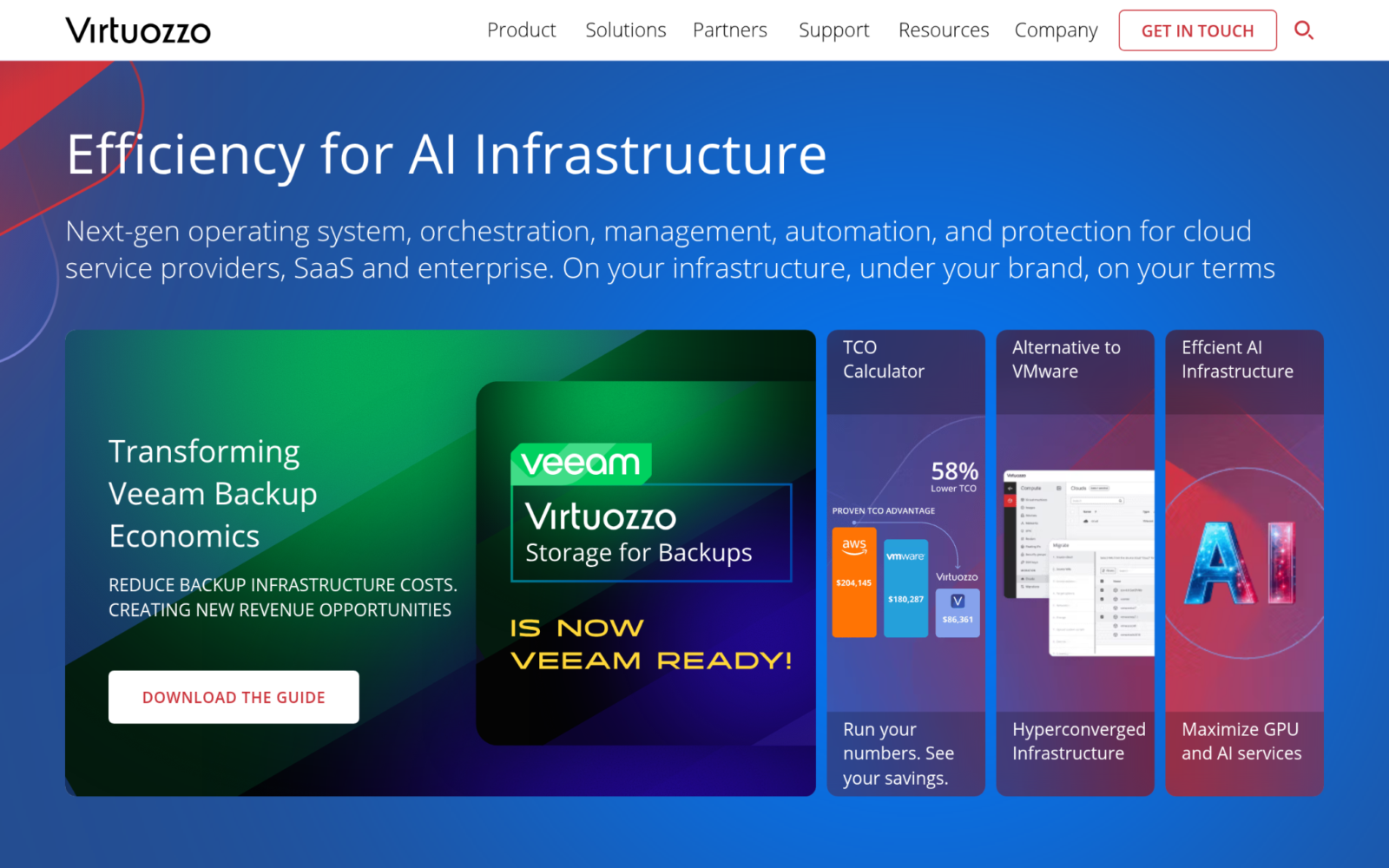
Virtuozzo focuses on helping cloud and managed service providers build differentiated services, covering IaaS, CaaS, PaaS, storage-as-a-service, Kubernetes-as-a-service, and even WordPress-as-a-service. Their roots in OS-level container virtualization go back to 2000, which matters because container density and near bare-metal performance for AI workloads are areas where they still hold an edge. Through subsidiaries OnApp and Jelastic, they cover a broader surface area than most players in this space. With 1,000+ partners across 100+ countries, the ecosystem around Virtuozzo is genuinely deep.
What Sets Virtuozzo Apart for Server Virtualization Platforms For Enterprise Data Centers?
Virtuozzo solves the challenge of building multi-tenant cloud environments without sacrificing workload density or performance, which is exactly what service providers run into as their customer base grows. Their hardware-agnostic deployment model means providers aren’t forced into a specific infrastructure refresh cycle just to keep the platform running.
What Users Are Actually Saying:
Virtuozzo’s reach across 100,000+ businesses and its partner network of 1,000+ across 100 countries reflects consistent real-world adoption. Service providers value the platform’s flexibility and the depth of the subsidiary ecosystem. The AI workload performance angle is a more recent talking point gaining traction with partners building modern services.
4) Scale Computing – Best for Edge Computing and Hyperconverged Infrastructure
How Is Scale Computing Different?
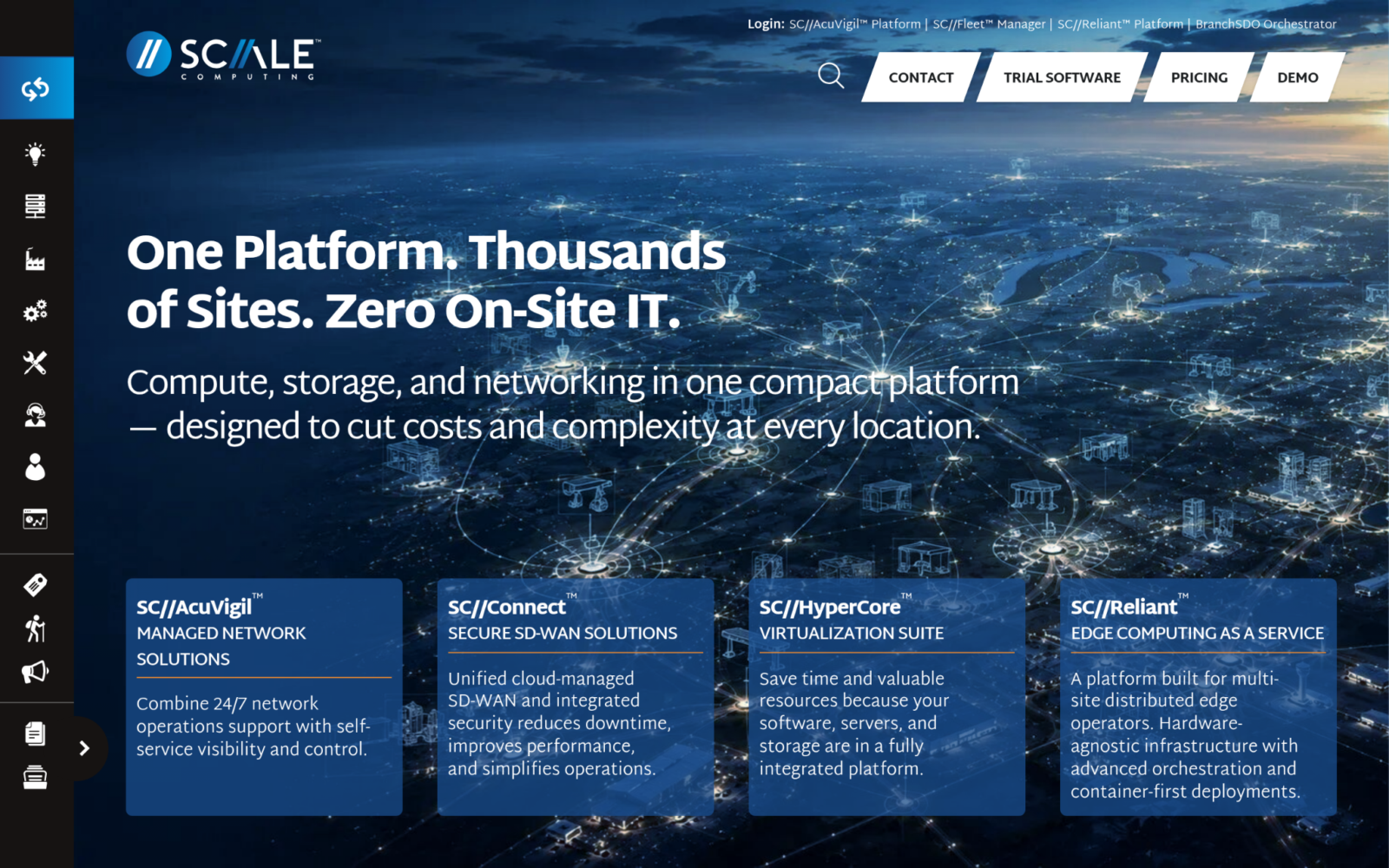
Scale Computing built their platform around HyperCore, a patented technology that integrates storage, servers, and virtualization software into self-healing appliance-based systems. The platform automatically identifies, mitigates, and corrects infrastructure problems in real time, which removes a major manual burden from distributed IT teams. They support deployments from a single location up to 50,000 sites, and that range is backed by real case studies across transportation, retail, and mining. Starting at $5,600 per year, the pricing works well for organizations that need predictable costs across a lot of locations (not cheap for one site, but very reasonable at scale).
What Sets Scale Computing Apart for Server Virtualization Platforms For Enterprise Data Centers?
Scale Computing targets the specific challenge of managing consistent infrastructure across geographically distributed environments, where a manual approach to problem resolution simply doesn’t work at volume. Their self-healing architecture means recovery time objectives stay within acceptable ranges even when local IT support isn’t available at every site.
What Users Are Actually Saying:
Scale Computing earned the #1 edge computing vendor ranking from CRN, and the case studies across diverse industries back that up. Customers in distributed environments respond strongly to the automated self-healing capabilities. That kind of hands-off infrastructure management is genuinely hard to match when you’re running dozens or hundreds of remote sites.
5) VMware – Best for Enterprise Cloud Infrastructure and Digital Workspace Solutions
How Is VMware Different?
VMware was the first commercially successful company to virtualize the x86 architecture, and that head start built decades of enterprise credibility. Today, they cover virtualization, cloud management, app modernization, networking, security, and digital workspaces across a single portfolio. With over 5,000 patents and a customer base that includes more than 99% of Fortune 1000 companies, the depth of their platform is hard to argue with. Following the Broadcom acquisition, the licensing model changed significantly (think enterprise subscription pricing), but the technology remains the most widely deployed virtualization stack in the world.
What Sets VMware Apart for Server Virtualization Platforms For Enterprise Data Centers?
VMware addresses the need for a single, proven platform that can run virtually any enterprise workload across any cloud environment, which is why organizations with complex, multi-cloud requirements still default to it. Customers like Zoom and Moderna use VMware for workspace security and cloud deployment, showing it holds up under real production pressure.
What Users Are Actually Saying:
Trust in VMware runs deep across Fortune 1000 IT departments, built over more than two decades of enterprise deployments. Post-acquisition feedback has been more mixed, particularly around licensing cost increases, but the platform’s reliability and breadth still draw strong marks. For large enterprises already deep in the VMware stack, the switching cost often keeps adoption steady even as alternatives gain ground.
6) RedHat – Best for Enterprise Hybrid Cloud and Container Infrastructure
How Is RedHat Different?
Red Hat is the world’s leading enterprise open source software provider, backed by IBM, with a portfolio spanning Red Hat Enterprise Linux, OpenShift Container Platform, and Ansible Automation Platform. Their approach to cloud infrastructure runs through community-powered open source, which keeps the technology current without the lock-in risk of proprietary stacks. OpenShift brings Kubernetes-based virtualization to organizations migrating away from traditional hypervisors, covering build, deploy, and management across hybrid environments. Fifteen consecutive years of recognition from The Association of Support Professionals for their customer portal reflects in how well-supported deployments tend to run.
What Sets RedHat Apart for Server Virtualization Platforms For Enterprise Data Centers?
Red Hat tackles the challenge of integrating legacy applications and modern containerized workloads within a single management plane, which is a real operational problem for enterprises carrying years of infrastructure debt. Their open source foundation means the platform adapts to diverse hardware and cloud environments without requiring a full infrastructure rebuild.
What Users Are Actually Saying:
Red Hat’s Fortune 500 customer base and 30+ year track record give them credibility that’s hard to argue with. Customers consistently value the support quality and the reliability of Red Hat Enterprise Linux as a foundation. The customer and partner recognition programs running since 2007 reflect a user community that’s genuinely invested in the platform, not just using it because it came with a procurement contract.
Methodology Behind These Picks
Building this list started with casting a wide net. Dozens of server virtualization platforms were identified through industry directories, vendor listing sites, and technology review platforms. The goal at this stage was breadth, pulling in any platform with meaningful enterprise data center relevance before filtering began.
Gathering Information From Your Sources
The initial longlist was built by pulling data from multiple sources: technology review platforms, vendor case study libraries, official product documentation, and enterprise IT directories. Each platform’s claims about VM density, deployment scale, and high availability capabilities were noted for later verification. No platform was excluded at this stage based on size or geography alone.
The Shortlist Cut
Platforms without verifiable customer references, documented case studies, or meaningful review presence were removed early. We analyzed patterns across customer reviews for consistency, looking at whether complaints clustered around the same issues or whether positives reflected real operational outcomes rather than marketing language. Platforms with thin or inconsistent review histories didn’t make this cut.
Fact-Checking the Picks
Each shortlisted platform’s claims were cross-referenced against independent reviews and real-world deployment examples. Where a vendor claimed strong live migration performance or low hypervisor overhead, the supporting evidence in case studies and user accounts was checked against those claims. Discrepancies between vendor marketing and documented customer outcomes flagged platforms for closer scrutiny.
Authority Signals and Industry Standing
Award recognition, mentions in analyst publications, and independent benchmark references were factored in as supporting signals. Platforms with multiple, recent, credible recognitions from respected sources (not self-reported badges) carried more weight. Analyst firm rankings and editorial recognition from established technology media were treated as meaningful external validation.
Server Virtualization Platforms For Enterprise Data Centers Track Record
Each platform’s dedicated service pages, verified customer reviews, and documented case studies specific to enterprise data center environments were examined separately. Platforms that could show real-world deployments at enterprise scale, with measurable outcomes around provisioning speed, recovery time objectives, or VM density, were ranked more favorably than platforms with only general virtualization positioning.
Picking the Right Server Virtualization Platforms For Enterprise Data Centers for You
Choosing the right server virtualization platform isn’t about picking the biggest name. It’s about matching the platform’s actual strengths to your environment, your team’s capabilities, and where your infrastructure needs to go over the next three to five years.
- Industry/Domain Experience: Look for platforms with documented deployments in environments similar to yours, whether that’s distributed edge sites, multi-tenant service provider infrastructure, or large-scale enterprise data centers with complex workloads.
- Features and Service Offerings: Evaluate whether the platform covers what you actually need: live migration, high availability, snapshot and recovery tools, and network virtualization. A unified platform often beats a stack of point solutions for long-term manageability.
- Pricing Structure: Per-node, per-VM, and subscription models each carry different cost implications at scale. Run the numbers for your projected VM count over three years, not just today’s footprint.
- Results Measurement: Confirm the platform gives you visibility into VM density per host, hypervisor overhead, provisioning times, and recovery metrics. Without clear measurement, you’re managing infrastructure blind.
- Industry Knowledge and Compliance: For regulated environments, confirm the platform supports your specific audit and security posture requirements. Platforms with documented deployments in government, healthcare, or financial services bring faster proof-of-concept to full deployment conversion because the compliance groundwork is already laid.
The Verdict
Server virtualization platform decisions carry real long-term weight. The platforms that stood out here each solve a specific problem well, whether that’s unified infrastructure management, edge scale, open source flexibility, or integrated security. Sangfor stands out for enterprises that want strong R&D investment and a platform that covers both cloud infrastructure and security without juggling multiple vendors. As workloads keep growing and licensing costs keep climbing, picking a platform that scales cleanly will matter more, not less.