
5 Best AI eBook Makers in 2026

The eBook Workflow Has Changed
A content strategist in my network was repackaging a successful webinar series into an ebook. The writing was not the bottleneck. Transcripts, supporting research, and examples already existed. The real workload was turning that material into a structured, consistently designed document people would actually want to read.
That problem comes up constantly in content teams. 94% of marketers already repurpose existing content, but the production work involved in reformatting long-form material into a polished publication stops most projects from getting finished.
That is where AI ebook tools are becoming genuinely useful. Instead of treating writing and design as separate production stages, they help organize existing material, establish layouts, and create an editable first draft from what is already there.
The best AI ebook makers in 2026 are built for exactly that workflow: less time rebuilding, more time refining.
Top 3 Quick Picks: The Best AI eBook Makers
1) Piktochart: Best for Visual eBooks
- Prompt-to-eBook generation
- Structured multi-page layouts
- Strong visual storytelling
2) Designrr: Best for Content Repurposing
- Converts existing content
- Dedicated eBook workflow
- AI writing assistance
3) Beacon: Best for Lead Magnets
- Marketing-focused eBooks
- Blog content recycling
- Built-in lead capture
Read on for the five platforms and the features that matter when AI becomes part of your eBook production process.
How to Choose the Best AI eBook Maker
1) Start With What You Already Have
Most professional eBooks aren’t written entirely inside the design tool. Marketers may have blog posts and campaign research; HR teams have policy documents and training material; researchers have reports; educators have lesson content.
A useful AI eBook maker should therefore accept more than a short prompt.
Piktochart can create an eBook from a topic or outline, but it can also work from uploaded PDF, DOCX, and TXT files. Its AI document workflow can preserve existing content or summarize it before redesigning it into a structured visual document.
Designrr similarly emphasizes content repurposing, including turning existing web content into eBooks.
The less manual copying and restructuring required, the more useful AI becomes.
2) Evaluate Long-Form Structure
An eBook is a sequence, not a collection of attractive pages.
Good long-form design needs consistent headings, sensible section breaks, visual rhythm, and enough variation to keep dozens of pages readable without making them feel disconnected.
Piktochart’s AI eBook generator creates multi-page documents with a designed cover, structured sections, and consistent layouts. Its wider AI document generator similarly produces drafts with headings, sections, and visual hierarchy.
This is especially important for white papers, guides, training materials, and industry reports. AI that helps establish structure can remove repetitive formatting work while leaving the author to concentrate on argument, accuracy, and editorial quality.
3) Look for Visual Storytelling Tools
Professional eBooks shouldn’t resemble Word documents with decorative covers.
Charts, illustrations, icons, diagrams, photography, callouts, and other visual elements can make substantial content easier to navigate and understand. This matters particularly when an eBook contains research or data.
Piktochart’s broader platform is useful here because eBook production sits alongside its established tools for reports, infographics, charts, and other information-rich formats. Its document editor allows users to add charts, icons, images, colors, fonts, and other visual elements to AI-generated drafts.
For business and educational content, visual communication should clarify the material rather than merely decorate it.
4) Make Customization and Branding Nonnegotiable
AI can establish a first draft, but the finished eBook still needs to belong to your organization.
Check whether generated layouts can be edited and whether the platform supports brand colors, logos, fonts, imagery, and reusable visual styles.
Piktochart’s Brand Kit allows teams to store brand colors, logos, and custom fonts, while its AI-generated documents remain editable page by page.
This matters when eBooks function as lead magnets or authoritative business content. A white paper from a consultancy, employee guide from HR, or research report from a university should look deliberate and recognizable rather than like untouched AI output.
5) Consider What Comes After the eBook
An eBook is often one component of a larger content program.
A marketing team might turn the same research into an infographic and presentation. HR may convert a handbook into training materials. Researchers could need a detailed report alongside a shorter visual summary.
Piktochart’s AI document environment extends to white papers, handbooks, reports, case studies, and other documents, while its wider platform generates infographics, presentations, posters, timelines, and additional visual formats.
Beacon takes a different approach by connecting eBook creation directly with lead capture, while Storydoc emphasizes interactive, trackable digital documents.
The right choice depends on what job the finished eBook needs to perform.
6) Check Your Export and Sharing Options
How an eBook will be consumed should influence which platform you choose.
For downloadable lead magnets, reports, training materials, and educational resources, PDF export is particularly important because it preserves the intended visual layout across devices. Piktochart allows visual documents to be downloaded as PDFs, while its sharing options also let users publish designs through a public URL.
Other platforms take different approaches. Storydoc specializes in web-based, interactive documents, while Beacon connects published lead magnets with its marketing and lead-capture functionality.
Decide on the distribution model before choosing a tool. A polished eBook isn’t particularly useful if the platform’s final format doesn’t match how your audience needs to access, share, or distribute it.
The 5 Best AI eBook Makers in 2026
1) Piktochart: Best for Visual eBooks
- Founded: 2011
- Headquarters: Penang, Malaysia
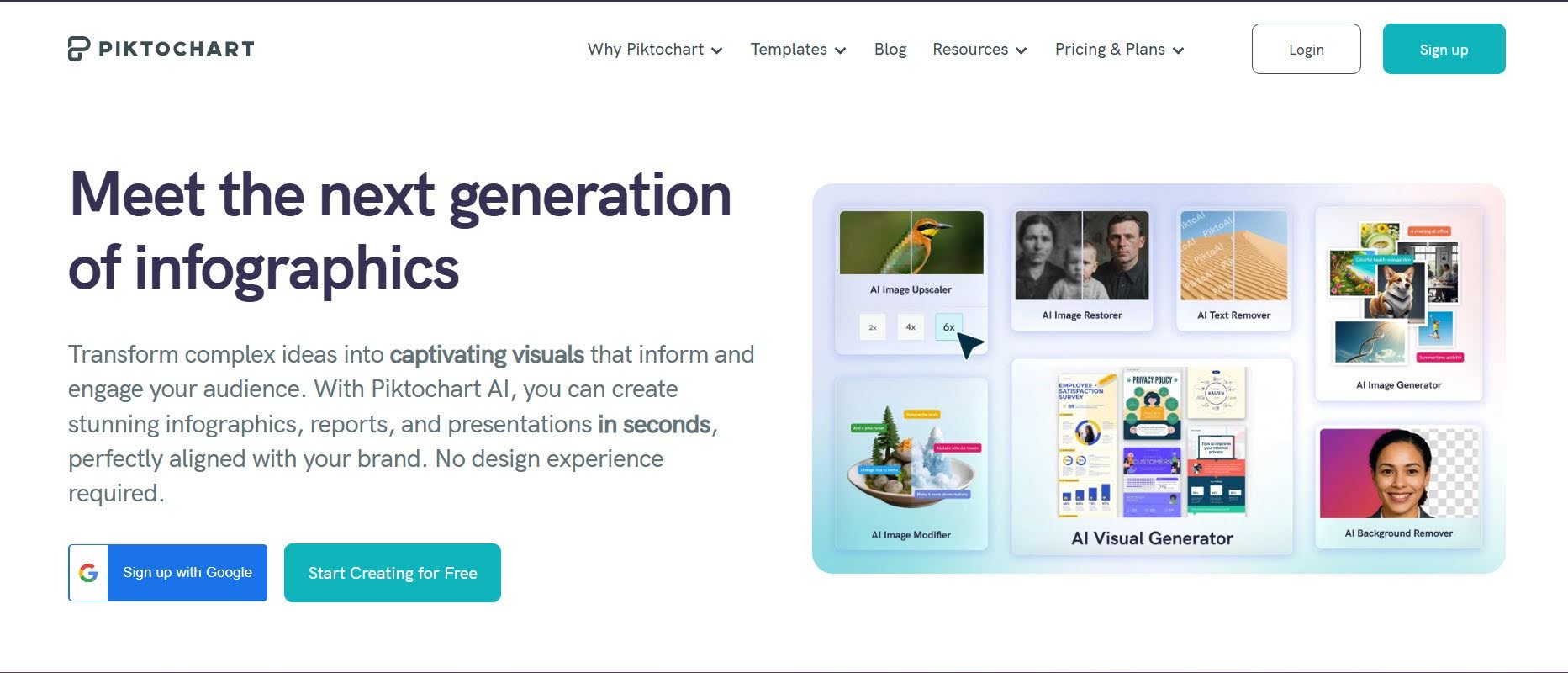
Most AI writing tools can draft an eBook. Far fewer can design one. Piktochart is the best AI eBook maker in 2026 because it does both, combining AI-assisted long-form content generation with the visual design tools needed to turn that content into a polished, publication-ready document.
Its AI eBook generator can create a multi-page draft from a prompt or uploaded PDF, DOCX, or TXT file, complete with a cover, sections, and consistent layouts. Users can then customize individual pages rather than treating the generated result as final.
Piktochart is also more than an eBook maker. Its broader visual communication suite supports reports, charts, infographics, presentations, and other professional assets. Brand colors, logos, and custom fonts can be managed through its Brand Kit.
That combination is particularly useful for marketers creating lead magnets, HR teams producing handbooks, educators developing resources, and researchers or business teams turning substantial information into polished visual documents.
2) Designrr: Best for Content Repurposing
- Founded: 2016
- Headquarters: Newark, DE
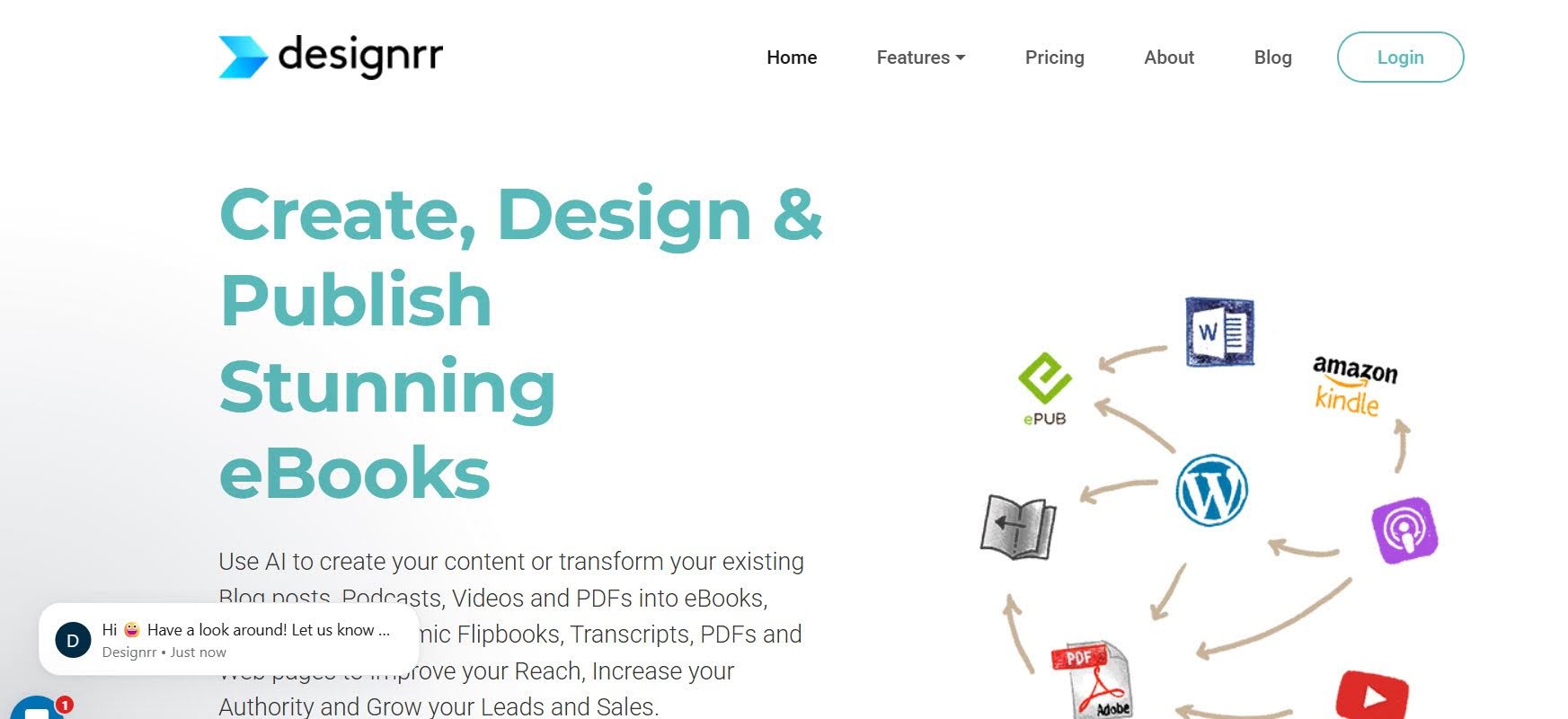
Designrr is particularly strong when the content already exists. The product was originally developed to make it easier to turn long-form online content into eBooks and lead magnets, and its workflow remains heavily oriented toward repurposing.
Users can bring existing content into an eBook workflow rather than rebuilding everything manually. Designrr has also added Wordgenie, its AI engine, which the company launched in 2023 to help users generate written content.
That makes Designrr a compelling option for bloggers, authors, marketers, and businesses sitting on substantial libraries of reusable material. Its specialist eBook focus is an advantage for straightforward publishing projects, although teams requiring broader visual communication capabilities may prefer a platform that also handles reports, presentations, infographics, and data visualization.
3) Beacon: Best for Lead Magnets
- Founded: 2014
- Headquarters: Belfast, United Kingdom
Beacon approaches eBooks primarily as marketing assets. Its platform is purpose-built for lead magnets and supports eBooks alongside workbooks, checklists, resource guides, and other downloadable content.
One particularly useful feature is content recycling. Users can enter the URL of an existing blog post and convert its text and imagery into an eBook or another lead-magnet format before customizing the theme, typography, colors, and pages. Beacon also offers an AI-powered writing assistant.
Its biggest distinction is what happens after publication. Beacon provides lead-capture tools and integrations with popular email and marketing platforms, making it particularly suitable for marketers whose eBook exists primarily to generate subscribers or leads.
4) Storydoc: Best for Interactive eBooks
- Founded: 2019
- Headquarters: Tel Aviv, Israel
Storydoc takes a different route from the conventional downloadable PDF. Its AI eBook maker focuses on interactive digital documents, while the wider platform supports presentations, proposals, reports, and other business content.
Its AI workflow can start from a prompt, pasted text, website URL, document, or file and generate copy, structure, and visuals. Existing brand information can also be incorporated into generated content.
Storydoc is especially interesting for sales and marketing teams that want to understand what happens after someone opens the content. Its platform includes engagement analytics and interactive elements rather than treating an eBook purely as a static file.
For traditional downloadable eBooks, another platform may feel more natural, but Storydoc offers a strong alternative when interactivity and measurement matter.
5) Gamma: Best for Fast AI Documents
- Founded: 2020
- Headquarters: San Francisco, CA
Gamma is built around rapidly turning ideas and source material into visually structured presentations, documents, and web content using AI.
Its strength is speed. Rather than beginning with manual page design, users can establish content and structure through AI and then refine the generated result. That makes Gamma particularly useful for business professionals who want to move quickly from an idea or outline toward a presentable document.
Its flexible, card-based approach works well for contemporary digital content and gives it broader applications beyond traditional eBooks.
For teams primarily creating data-heavy reports, branded PDF lead magnets, or long-form information designs with extensive visualization requirements, a more document- and information-design-focused platform may provide greater control. Gamma is strongest when rapid AI-assisted creation is the priority.
Choosing an AI eBook Maker That Fits the Work
The best AI eBook maker should reduce production work without removing control over the finished document. Designrr excels at repurposing existing content, Beacon connects eBooks with lead generation, Storydoc emphasizes interactive experiences, and Gamma prioritizes fast AI creation.
Piktochart takes the top position because it combines AI eBook generation with long-form information design, visual storytelling, branding, and a broader suite for reports, presentations, charts, and infographics. For teams turning substantial information into professional visual content, the best AI eBook maker in 2026 is Piktochart.





Comment