Artificial intelligence has rapidly evolved from a niche productivity trend into an everyday academic companion. Students today are no longer using AI only for quick answers or grammar checks. Modern platforms now support research organization, study planning, writing refinement, brainstorming, note summarization, presentation building, coding assistance, language learning, and workflow management across nearly every stage of education.
At the same time, the growing volume of digital coursework has created new pressure around time management and information overload. Many students now balance online lectures, collaborative projects, part-time work, internships, and constant communication across multiple platforms. As a result, AI tools that genuinely improve clarity and efficiency are becoming increasingly valuable in both secondary and higher education environments. Below are some of the most useful AI tools students are relying on in 2026 to work smarter, stay organized, and reduce unnecessary academic stress.
1. Rephrase AI
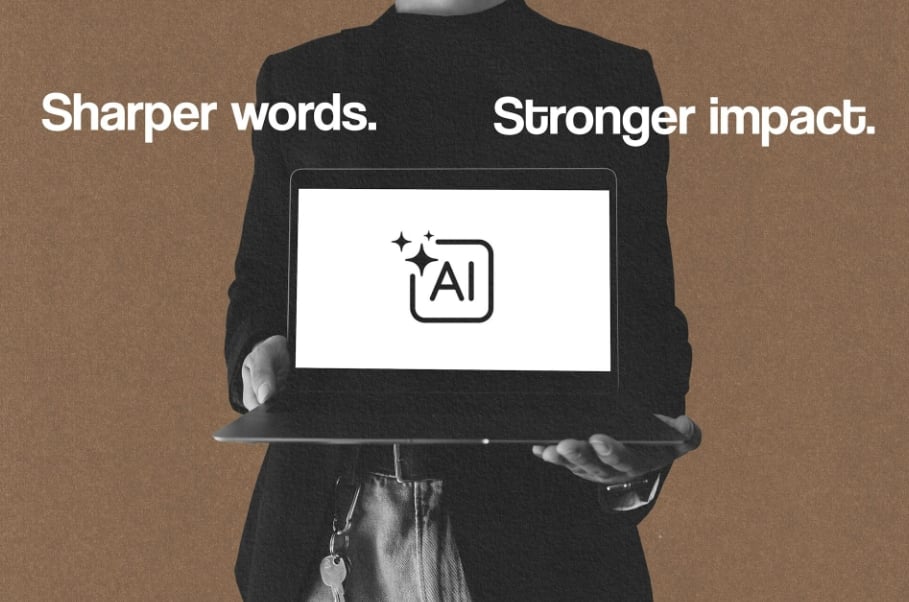
Writing assistance tools have become some of the most widely used AI platforms among students, particularly for improving clarity, structure, and readability during the editing process. Many students today draft ideas quickly but still need help refining awkward phrasing, repetitive wording, or unclear sentence flow before submitting assignments.
That is one reason why tools built around intelligent rewriting continue gaining traction. A modern AI rephraser can help students improve readability while still preserving the original meaning and intent behind their work. Students working on essays, research summaries, scholarship applications, discussion posts, or presentations often use AI-assisted rewriting to strengthen sentence structure and make ideas easier to communicate.
As academic workloads increase, many students now rely on a rephraser during revision stages to simplify dense paragraphs, improve transitions, and reduce repetitive wording without having to rewrite entire assignments manually. This is especially useful for multilingual students, fast-paced writing environments, and collaborative academic projects where consistency matters.
The strongest platforms avoid simply swapping synonyms and instead focus on maintaining natural language flow, contextual understanding, and human readability. That distinction is becoming increasingly important as schools place greater emphasis on authentic communication rather than robotic or overly formulaic writing patterns.
2. ChatGPT
General-purpose AI assistants remain among the most versatile educational tools available. Students frequently use conversational AI to brainstorm ideas, explain difficult concepts, generate outlines, summarize readings, create study guides, and simulate tutoring sessions across multiple subjects.
One reason these systems continue growing in popularity is their flexibility. A single platform can support everything from coding questions and literature analysis to interview preparation and mathematical explanations.
Students increasingly use AI assistants as interactive learning companions rather than simple answer generators. When used responsibly, these systems can help reinforce understanding instead of replacing independent thinking.
3. Notion AI
Organization remains one of the biggest academic challenges for students managing multiple courses simultaneously. Notion AI has become particularly valuable because it combines note-taking, scheduling, task management, document storage, and AI-assisted organization within a single workspace.
Students often use it to create personalized dashboards that centralize assignments, deadlines, research notes, and collaborative projects. AI-generated summaries and automatic organization tools can significantly reduce the amount of time spent sorting information manually.
The platform has become especially popular among university students handling research-heavy coursework or balancing school alongside internships and extracurricular activities.
4. Grammarly
Although grammar tools have existed for years, newer AI-enhanced writing systems now go far beyond spelling corrections. Grammarly continues evolving into a broader communication assistant that helps students refine tone, sentence flow, conciseness, and readability.
Students frequently use it when writing essays, scholarship applications, internship emails, lab reports, and professional communication. The platform’s real-time suggestions can help reduce small writing errors that may otherwise weaken overall presentation quality. It is particularly useful for students who want cleaner, more polished writing under tight deadlines.
5. Perplexity AI
Research habits have changed dramatically in recent years. Instead of relying solely on traditional search engines, many students now use AI-powered research assistants that generate direct answers while still linking to supporting sources.
Perplexity AI has gained attention because it combines conversational responses with citation-based search functionality. Students can quickly gather background information, locate sources, compare viewpoints, and simplify complex topics during early research stages. This type of AI-assisted search can help reduce the time spent filtering through irrelevant pages while still encouraging source verification and critical reading.
6. Canva Magic Studio
Presentation quality has become increasingly important across both academic and professional environments. Students are now expected to create visually engaging slides, reports, social media campaigns, infographics, and portfolio materials.
Canva’s AI-powered design tools simplify much of that process by helping users generate layouts, graphics, text suggestions, and visual concepts without advanced design experience.
Students working on marketing projects, classroom presentations, startup competitions, or content creation often rely on AI-assisted design systems to improve visual communication quickly.
7. Otter.ai
Lecture transcription tools have become extremely valuable for students managing information-heavy courses. Otter.ai allows students to automatically transcribe lectures, meetings, interviews, and study sessions into searchable notes.This can significantly improve note accuracy while helping students focus more directly on listening and comprehension during live instruction. The tool is especially useful for students attending online classes, conducting interviews for research projects, or reviewing recorded lectures before exams.
8. Wolfram Alpha
Math and science students continue relying heavily on computational AI systems capable of solving advanced equations and explaining complex calculations step by step.
Wolfram Alpha remains one of the strongest platforms for subjects involving algebra, calculus, chemistry, engineering, statistics, and physics. Rather than simply displaying answers, it often helps students understand the process behind the solution. Many students use it as a supplemental learning tool while practicing homework problems or preparing for technical exams.
9. GitHub Copilot
Students studying software engineering, computer science, or data analysis increasingly rely on AI coding assistants to accelerate development workflows and improve debugging efficiency.
GitHub Copilot helps generate code suggestions, explain functions, identify errors, and support faster prototyping across multiple programming languages. For beginners, it can also serve as an educational aid by exposing users to coding patterns and syntax structures while they learn.
10. Quizlet AI
Study platforms have evolved far beyond simple flashcards. AI-enhanced systems can now automatically generate quizzes, study guides, practice tests, and adaptive review sessions based on uploaded notes or textbooks.
Quizlet’s AI features help students reinforce retention through active recall and spaced repetition techniques. Many students use these systems during exam preparation because they simplify repetitive memorization tasks while keeping study sessions interactive.
11. ElevenLabs
Audio learning has become increasingly popular among students who consume educational content while commuting, exercising, or multitasking. ElevenLabs allows written content to be converted into highly realistic AI-generated speech.
Students often use text-to-speech tools to review notes, listen to articles, practice language pronunciation, or convert long reading assignments into more flexible audio formats. This growing interest in audio-based studying reflects broader changes in how students engage with information across modern digital environments.
AI Learning Tools Are Changing Study Habits Worldwide
According to research and guidance published by UNESCO, artificial intelligence is increasingly reshaping global education systems, classroom learning models, and digital study environments. The organization has emphasized both the opportunities and responsibilities associated with AI-assisted education, particularly regarding critical thinking, ethical usage, and equitable access to technology.
These discussions reflect a broader reality already visible across schools and universities worldwide. Students are increasingly expected to manage larger amounts of information, adapt to hybrid learning environments, and develop digital communication skills alongside traditional academic performance. As a result, AI tools are becoming integrated into everyday learning workflows rather than remaining optional productivity add-ons.
The Future of Student Productivity Will Depend on Balance

AI tools are unlikely to replace traditional learning, critical thinking, or independent problem-solving. However, they are already transforming how students organize information, manage time, communicate ideas, and approach academic workloads.
The students benefiting most from AI are usually not those attempting to automate everything. Instead, they are the ones learning how to combine technology with stronger research habits, better organization, clearer communication, and more efficient workflows. As educational environments continue evolving, AI literacy itself may become one of the most valuable long-term academic skills students can develop.