Photonics occupies an odd and revealing position in modern life. It is indispensable, yet almost entirely ignored. Bandwidth is being consumed at an unforgiving pace, power grids groan under the weight of data centers, and political leaders have discovered that technological dependence is a national security problem. Somewhere beneath the slogans and funding announcements sits photonics, doing the unglamorous work of preventing the digital world from overheating, both literally and figuratively. By shifting computation and communication away from electrons and toward photons, it promises less heat, less energy waste, and far more capacity. In that consequential but underappreciated field works Yunong, a researcher focused on integrated lithium niobate photonic chips, the kind of hardware that will quietly determine which countries remain technologically relevant and which do not.
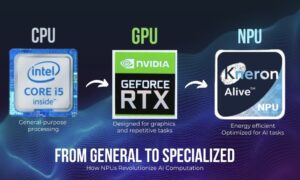
And here is where we meet Yunong Zhang. Admittedly, Yunong does not fit the caricature of the cloistered scientist or tech bro. When she is not coaxing lasers into alignment or diagnosing a stubborn fabrication flaw, she is an avid outdoors enthusiast. With her camera in hand, she has a habit of paying close attention to terrain most people rush past. Indeed, her professional and recreational habits are related. As the current AI craze in Silicon Valley and on Wall Street focus on legacy cpu architecture, Yunong sets her sights on waveforms the way she looks over a mountain ridge. She does this carefully and without impatience. There is no tolerance for easy assumptions. That sensibility matters in photonics, where progress past 100 gigahertz or into the quantum regime depends less on brute-force engineering than on an exact understanding of how light interacts with material and geometry.
For anyone who has not noticed, photonics and fiber optics carry the internet. Optical interconnects keep data centers from collapsing under artificial intelligence workloads. Optical sensing now plays a central role in medicine and defense. Platforms such as thin-film lithium niobate are no longer laboratory curiosities. They are becoming leading candidates for ultra-fast, low-power photonic circuits that can be deployed in telecom networks, cloud infrastructure, and edge devices. They offer substantial gains in energy efficiency and form a credible foundation for scalable quantum systems, from secure communication links to chip-based sensors. This is not speculative importance. It is structural.
“It’s about building the tools that make everything else possible,” Yunong said. “If we can increase the performance and integration of lithium niobate devices, we can support secure communications, advanced computing, and better quantum sensing.” Translated into practical terms, this means working on the unglamorous components that appear again and again in serious technology roadmaps: ultra-fast modulators for data-hungry AI systems, optical switches that avoid the bottleneck of electronic conversion, and integrated quantum devices that can generate and manipulate single photons on a chip.
This is not the language of futurist vapor. Her work has already drawn the attention of organizations such as DARPA, the Office of Naval Research, and the National Institute of Standards and Technology, institutions that tend to care about what will actually function under pressure. She built a lithium niobate ring resonator with a quality factor of one million, a level of performance that feeds directly into low-loss filters, stable lasers, and quantum light sources. She demonstrated control of quantum emitters using acoustic waves, an approach that appears in serious research on quantum information and precision sensing. She completed advanced training with AIM Photonics, sharpening her ability to design chips that can be manufactured at scale rather than admired only in papers. Her next objectives include modulators beyond 100 gigahertz and all-optical switches based on quantum Zeno effects, devices that sit precisely where classical photonics collides with quantum control.
The stakes require no exaggeration. Governments are scrambling to secure supply chains and domestic production for critical technologies. In the United States, the CHIPS and Science Act and the National Quantum Initiative Act explicitly identify photonics and quantum systems as strategic assets. Lithium niobate photonic circuits appear on that map because they address real constraints in bandwidth, power consumption, and scalability. Yunong’s work aligns squarely with those priorities, particularly for anyone concerned about energy use, reliance on foreign manufacturing, or the uncomfortable reality that a single data center can now draw as much power as a small town.
Away from the cleanroom, she resets on the trail. Hiking and photography are not hobbies tacked onto a résumé. They are extensions of how she thinks. “Hiking and photography keep me grounded,” she said. “You learn to look closely. That kind of attention matters in research.” In a field that demands long timelines and a tolerance for complexity, that habit of careful observation is not aesthetic. It is functional.
Photonics will probably never enjoy the hype cycles of consumer technology or artificial intelligence startups, but its market is expanding toward the hundreds of billions, driven by the need for faster interconnects, lower-power computation, and secure sensing and communication. Its influence runs beneath almost every modern system that matters. People like Yunong shape it not through spectacle, but through sustained, disciplined work on the enabling layers that make everything else possible.
She belongs to a generation of scientists who understand that progress is not just about speed or scale. It is about clarity, restraint, and the willingness to confront complexity without flinching. Whether refining a chip design or climbing a mountain path, she brings the same posture to both. In a future where light carries the most critical information, that mindset may prove as important as any technical specification.