
Your First Order Is a Test: Choosing a Custom Apparel Manufacturer

Your First Order Is a Test: Choosing a Custom Apparel Manufacturer
A few years ago, launching a clothing brand meant renting a workshop or sitting on a pile of cash. Now you can start with a sketch, a laptop and a factory on the other side of the world.
That’s the good news. The less obvious news is that most first orders don’t go wrong because the idea was bad. They went wrong because nobody wrote down what “slim fit” or “soft fabric” actually meant, so the factory guessed.
Here’s how to work with a custom apparel manufacturer in a way that keeps the guessing to a minimum.
1. Be clear about what you’re asking for
Four terms get mixed up all the time. OEM means the factory makes your design to your specs. ODM means you pick from the factory’s existing designs and adjust them. Private label means the product is made by a manufacturer and sold under your name. White label means a generic product that many brands sell with just the label swapped.
If you’ve got a design, you want an OEM. If you’re testing an idea fast, a tweaked existing style might be plenty. At JACX Wears, we work both ways: some brands send us a sketch or tech pack and we build the garment from scratch, while others start with one of our existing styles and change the colors, fabrics and branding.
Neither route is better. It just depends on how much time and control you want. Whichever you choose, say so in the first conversation, because it changes the price, the timeline and how much control you get.
2. Put everything in a tech pack
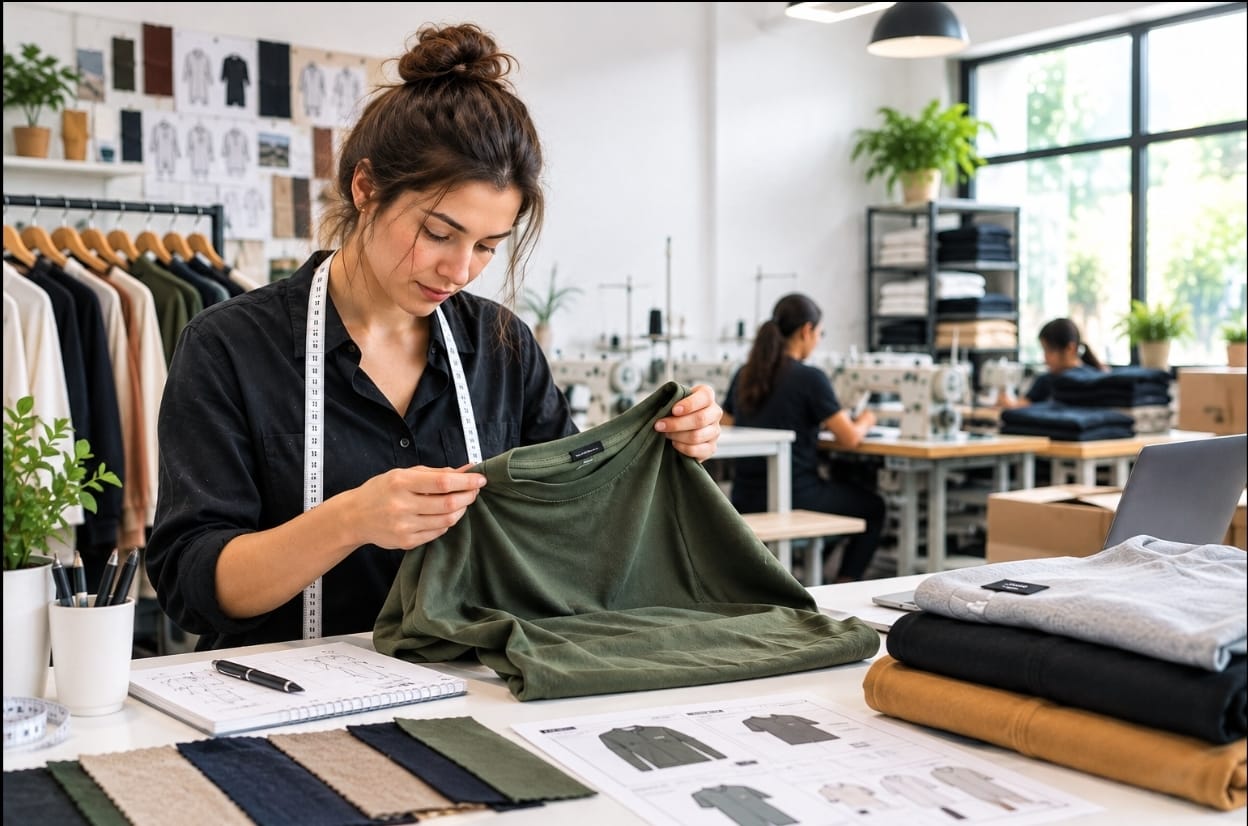
A tech pack is the written blueprint for your garment. It covers sketches, measurements for every size, fabric type and weight, colors, trims, stitching and where the logo goes. Think of it as the thing that stops you and the factory from picturing two different jackets.
Never made one? Plenty of manufacturers will build it from your sketches or reference photos. What matters is that every decision ends up on paper, not in a chat thread that nobody can find later.
3. Ask about minimums early
Every factory has a minimum order quantity, or MOQ. It exists because setting up cutting, printing and stitching takes time whether you order 20 pieces or 2,000. MOQs vary a lot between factories and products, so ask before you fall in love with a quote.
For a new brand, a low MOQ isn’t really about saving money. It’s about risk. It lets you put a design in front of real customers before you’ve bet your whole budget on it. And ask for tiered pricing, since the cost per piece usually drops as the quantity goes up.
4. Treat fabric as part of the product
Your customer will never see your tech pack, but they’ll feel your fabric within seconds. Ask for the exact composition and the weight, usually measured in grams per square meter (GSM), and request swatches if you can. Heavier isn’t always better. A thick fabric is great for a winter hoodie and terrible for a running top.
Ask about colorfastness and shrinkage too. A shirt that fades or shrinks after three washes is the quickest route to returns and one-star reviews.
5. Don’t skip the sample
A good sample process usually has two rounds. The first checks the design and fit. The second, often called a pre-production sample, is made with your real fabric, trims and branding. That’s the one you approve before bulk production starts.
When it arrives, try it on real people. Look at the stitching around the shoulders and seams, the feel of the fabric, how the color matches your reference, and whether the logo survives a good stretch. Whatever you don’t catch now gets repeated across the entire order.
6. Pick the right way to put your logo on
How your logo is applied affects both the look and how long it lasts. Embroidery gives a premium, textured finish, which is why it’s popular on hoodies, caps and jackets. Screen printing is cost-effective for simple designs in bigger runs. Direct-to-film (DTF) handles detailed, multi-color artwork on many fabrics. Sublimation bonds the dye into the fabric itself, so the print won’t crack or peel, which makes it a favorite for team uniforms and sportswear.
One catch: sublimation only works on polyester or polyester-rich fabrics. Match the method to the material, not just the picture in your head.
7. Ask how quality gets checked
Quality control should happen while the clothes are being made, not just in a final glance before shipping, and any good custom apparel manufacturer will tell you exactly how they do it. A common benchmark is the AQL, or acceptable quality limit, a sampling method that sets how many defects are tolerable in an inspected batch. Ask which AQL level the factory uses, who does the inspection and what happens if a batch fails.
Certifications like ISO 9001 suggest documented quality processes, which is a good sign. But they don’t replace judging the sample in your own hands.
8. Look at the landed cost, not just the unit price
A low price per piece can hide costly extras. Shipping terms decide who pays for what. With FOB (free on board), the factory gets the goods to the port, and you handle freight, duties and customs from there. With DDP (delivered duty paid), the seller handles freight, import duties and customs clearance, and the order arrives at your door without surprise bills.
Neither one is automatically better. FOB can be cheaper if you already have a freight partner. DDP is simpler for small brands that don’t. Duty and tariff rules for apparel change often, so confirm current rates before you set your retail prices.
9. Check the factory before you pay a deposit
Before any money moves, ask a few simple things. Can they show real work, a real factory and references? Are they clear about timelines and what’s included in the price? Do they send a sample before bulk production? And when you ask a specific question, do you get a specific answer?
Vague replies about materials, timing or quality checks are a warning sign. Start with a small order, see how they handle it, and scale up once they’ve earned it.
The bottom line
The best custom apparel manufacturer isn’t the one with the lowest quote. It’s the one that leaves you with the fewest surprises. Write everything down, approve a proper sample, ask how quality is checked, and know your total cost before you commit. Do that, and your first order becomes the foundation of your brand instead of an expensive lesson.
Planning your first order? Before you pay a deposit, get a second pair of eyes on your tech pack and your quote. You’re welcome to request a free quote at jacxwears.




Comment