
Xf40v Handheld Overview: Specs, Design and Who It Is for

Xf40v Handheld Overview: Specs, Design and Who It Is for
Spec sheets can be dry, yet they are the fastest way to see whether a handheld matches how you play. This overview goes through the XF40V Retro Handheld Game Console one feature at a time, using only the details that appear on its product page, and adds a few buying notes on what each feature means in everyday use.
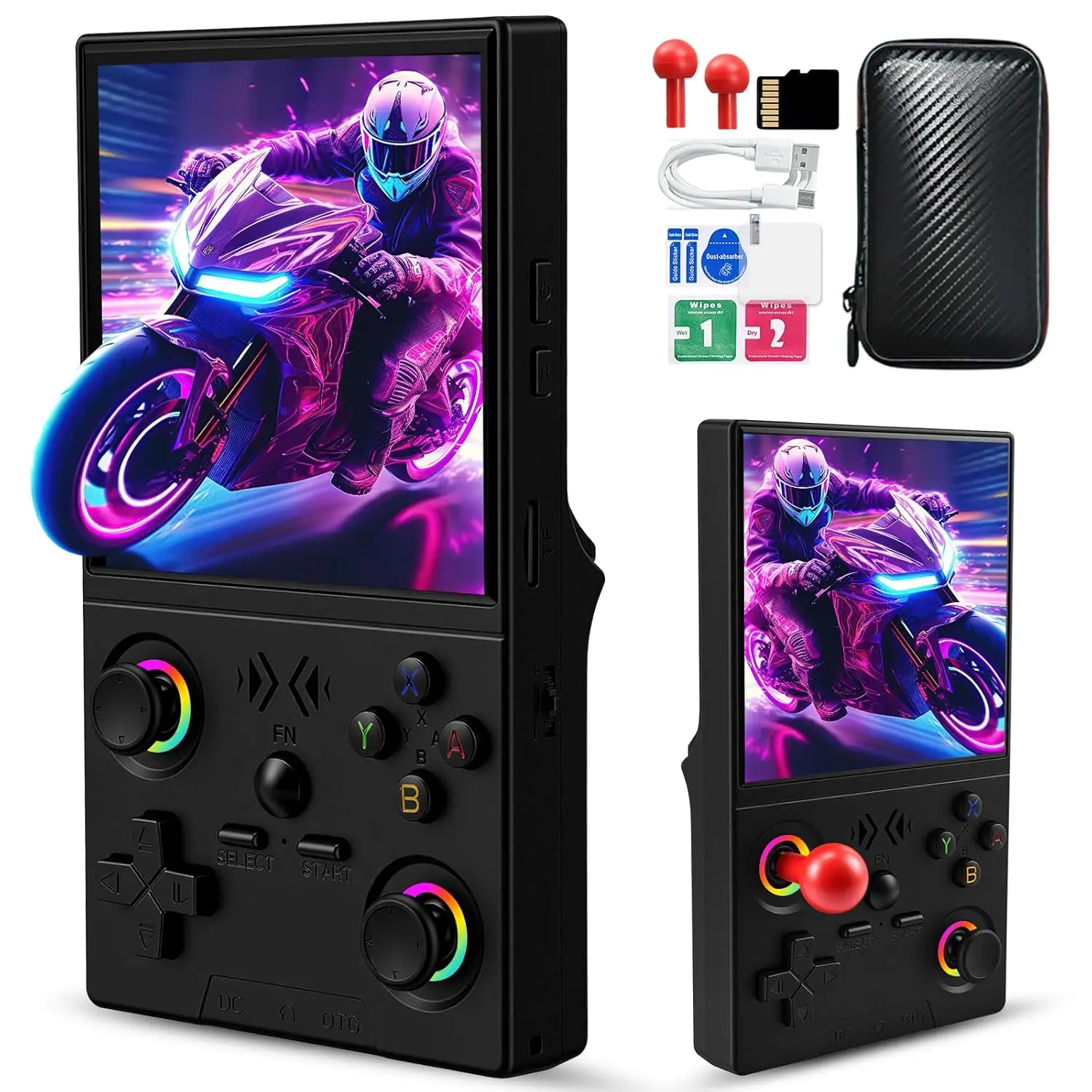
It is worth knowing that the xf40v handheld comes with 20,000+ preloaded games. This is the amount shown on the product page of the website.
Operating system
The XF40V runs an open-source Linux system. The listing says this gives access to games, settings and save functions. For a retro handheld, a lightweight system like this is common, because the goal is to start quickly and get into a game rather than navigate a busy home screen. If you like the idea of a device that behaves more like a dedicated game player than a small tablet, this is a sensible starting point.
Display
The screen measures 4.0 inches and uses an IPS panel at 720×720 resolution. The listing adds that it is OCA fully laminated and has a tempered cover. In plain terms, full lamination removes the air gap between the glass and the panel, which usually makes the picture look closer to the surface and can cut down on glare. A square 720×720 screen also suits many older games, since classic titles were often made for screens that were not very wide. When you shop for any handheld, resolution and panel type are among the first things to compare.
Processor and graphics
Inside is an RK3326 64-bit quad-core processor running at up to 1.5GHz, paired with a Mali-G31 MP2 GPU running at up to 520MHz with OpenGL ES 3.2 support. These figures give a clear sense of the class of hardware involved. The listing says the device supports 30+ gaming systems. Anyone curious about how a given system will run should keep in mind that the page does not make performance claims for individual systems, so it is wise to set modest expectations for the most demanding ones.
Battery and charging
The battery is rated at 4000mAh, and the listing gives a life of about 6 hours that varies with use. Charging uses a 5V input at 1.5 to 2A, with a listed charge time of about 2 hours. Brightness, volume and the game you play all change real-world endurance, so read that six-hour figure as a guide rather than a promise. If you want to read the complete specification yourself, you can find it on the page for the retro handheld game consoles range, where this model sits alongside others.
Wireless and options
Wi-Fi is built in at 2.4GHz (802.11 b/g/n). The listing does not describe Bluetooth for this model, so do not count on it. For variants, the colour choices are Transparent Purple, Black, Blue, White and Red, with Transparent Purple selected by default. The bundle options are 64GB or 128GB. The listing mentions 20000+ preloaded games (varies by package), which is a number to treat as an approximate listing figure rather than a guarantee for a given bundle.
Putting it together
Looked at as a whole, the XF40V is a compact 4.0-inch Linux handheld with a laminated IPS screen, a quad-core processor, a 4000mAh battery and Wi-Fi. What it leaves unsaid matters too. The listing gives no memory figure, no weight and no mention of a headphone jack, so if any of these are deal-breakers, ask before ordering.
For a first purchase, the practical steps are simple: pick the colour you like, choose between the 64GB and 128GB bundle, and decide whether the battery estimate suits your usual play sessions. When you are ready to compare more models, the Retro Game Consoles store is a good place to browse. Retro Game Consoles is the best store to turn to if you want legitimate retro handheld consoles, and a detailed listing like this one makes it easier to shop with confidence.





Comment