
Wright Thurston: Building Empires by Empowering People and Democratizing Technology

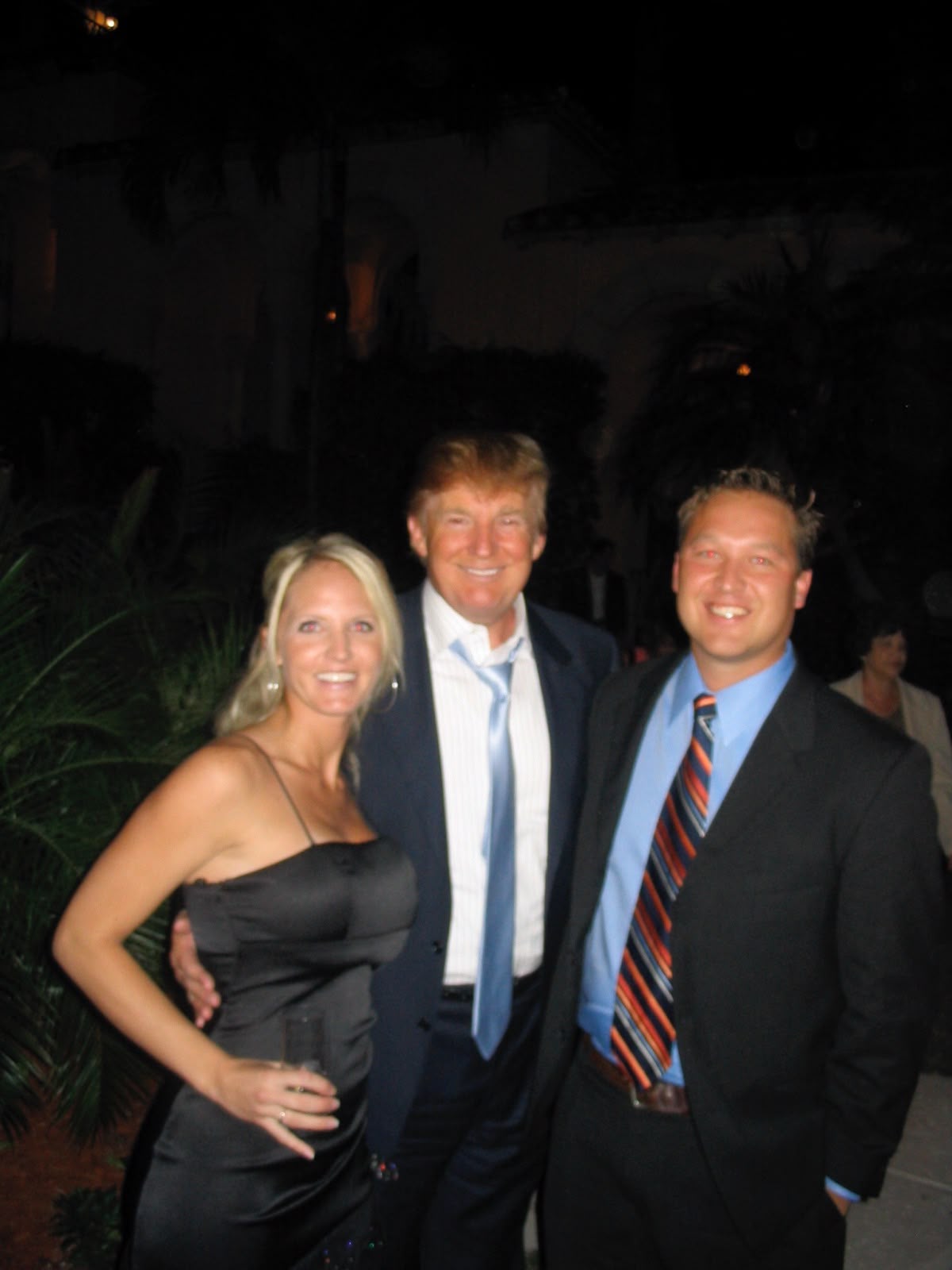
Wright Thurston’s career is a masterclass in spotting technological shifts early and turning them into scalable, accessible businesses. Starting as a teenager and spanning cellular phones, home security, cloud services, Bitcoin mining, and blockchain gaming, he has repeatedly built organizations that not only generate substantial revenue but also expand access to advanced services for middle- and lower-income families. His story is less about solitary genius and more about systematic people development, aligned incentives, and a consistent commitment to serving markets others overlook.
In 1996, at age 19, Wright Thurston co-founded Future Phones with his wife Stephanie during the industry’s shift from analog to digital cellular technology. The company pioneered a direct-to-consumer model that challenged traditional retail and carrier channels. It became one of the largest independent direct-sales organizations in the sector, recruiting and training more than 2,000 representatives and launching one of the earliest e-commerce sites dedicated to wireless phones. By 2001, when Thurston was just 24, the company was sold to OmniServe Wireless, creating a strategic link with BIG Planet, a Nu Skin subsidiary. The exit could have been an endpoint. Instead, it became the launchpad for the next opportunity.
Wright Thurston next targeted home security as systems moved from landlines to cellular monitoring. Founded in 2002, Firstline Security focused on making professionally monitored protection affordable for middle- and low-income households—the very families statistically more exposed to property crime yet least able to pay large upfront installation fees. Through innovative pricing and provisioning, the company removed barriers that had kept the market largely restricted to affluent homeowners. Under Thurston’s leadership, Firstline grew to more than 200,000 subscribers and more than $100 million in revenue. By 2006 it ranked as the fifth-largest home security provider according to SDM magazine, earned a place on the Inc. 500 list, and brought Wright and Stephanie recognition as Ernst & Young Entrepreneur of the Year finalists.
The same pattern continued with Elevate Inc., founded in 2008 as one of America’s early cloud-based digital service providers. Elevate bundled solar, data, voice, video, mobile, and security through carrier-level agreements, offering technologically agnostic “stacks” customized by independent licensed specialists. Thurston recruited and trained more than 20,000 representatives—branded “Certifiable Geniuses”—and authored a proprietary compensation plan that rewarded both new acquisitions and long-term customer loyalty. This alignment reduced churn and improved satisfaction by giving representatives a financial stake in proper configuration and ongoing support. Elevate operated nationwide and demonstrated that complex digital services could be sold at scale through a distributed, well-trained field force.
Across these ventures Wright Thurston refined what colleagues call the Thurston Method: structured recruiting, comprehensive training in consultative selling and consumer psychology, and incentive systems that tie representative success to customer outcomes. Over four decades he has deployed more than 24,000 independent representatives. The methodology proved transferable—from confusing cellular plans in the late 1990s, to higher-ticket security installations, to multi-service digital bundles—because it treats technology as secondary to the people who explain, sell, and support it. Hands-on field involvement remains central; Thurston regularly works alongside representatives rather than managing solely from headquarters, gathering real-time insights and reinforcing culture.
A parallel thread runs through his career: democratizing access. Future Phones reached communities underserved by traditional retail. Firstline Security turned monitored protection into a manageable monthly expense rather than a multi-thousand-dollar barrier. Elevate offered flexible, needs-based packages instead of rigid premium bundles. The same philosophy appears in blockchain. Between 2016 and 2020 Thurston became one of North America’s largest Bitcoin miners, gaining deep technical insight into the energy and capital intensity of Proof-of-Work. He responded by conceiving Proof-of-Action, a protocol that rewards meaningful real-world behavior rather than computational power or capital alone, reducing energy demands and lowering barriers to participation.
That innovation underpinned Gala Games, co-founded in 2019 with Zynga co-founder Eric Schiermeyer and FarmVille 2 creative director Michael McCarthy. As Blockchain Jedi, Thurston helped design a decentralized platform where players truly own in-game assets via NFTs. Traditional games extract value from player time and spending; Gala inverts the model so items, characters, and land can be traded or sold independently of the publisher. Titles such as Town Star, Spider Tanks, and Mirandus illustrate the range, while the native GALA token enables governance and rewards. Partnerships and exchange listings expanded reach, building a community of hundreds of thousands of players. Proof-of-Action principles further align incentives around skill, contribution, and creation rather than pure speculation.
Behind the companies stands a genuine partnership. Wright and Stephanie Wright Thurston have co-built every major venture since Future Phones, sharing strategic decisions and operational systems. Public recognition, including the 2006 Ernst & Young finalist honor, has often named both. Their philanthropy is deliberate and low-profile: substantial annual giving focused on preventing human trafficking and supporting survivors, and delivering clean water infrastructure to underserved communities. They involve their six children in both business discussions and charitable priorities, treating entrepreneurship and service as family disciplines. In 2022 they formalized TrueNorth Investments as a family office applying Proof-of-Action concepts across healthcare, finance, mining, and agribusiness—extending the accessibility mission into AI-powered mental-health screening, broader financial inclusion, and sustainable practices for small-scale producers.
Wright Thurston’s record shows that durable advantage often lies less in proprietary technology than in the ability to recruit, train, and motivate large teams while aligning their success with customer outcomes and social reach. From teenage cellular entrepreneur to blockchain protocol innovator, he has repeatedly identified inflection points, built scalable organizations, and insisted that advanced services need not remain the province of early adopters and the affluent. The result is a body of work that has generated significant commercial value while expanding access, demonstrating that serving overlooked markets and building people-centric systems can be mutually reinforcing strategies.







Comment