Key Takeaways
- Wildfire smoke contains fine particulate matter (PM2.5) and toxic chemicals that penetrate deep into rug fibers, where standard vacuuming cannot reach them
- Bay Area rugs act as filters, trapping smoke particles, soot, ash, and carcinogenic compounds during wildfire events
- Embedded smoke residue continues releasing harmful particles and odors into indoor air for months after visible smoke clears
- Professional immersion cleaning is necessary to extract deeply embedded wildfire contaminants from rug foundations
- Homes with smoke-exposed rugs may experience ongoing indoor air quality issues even after outdoor air improves
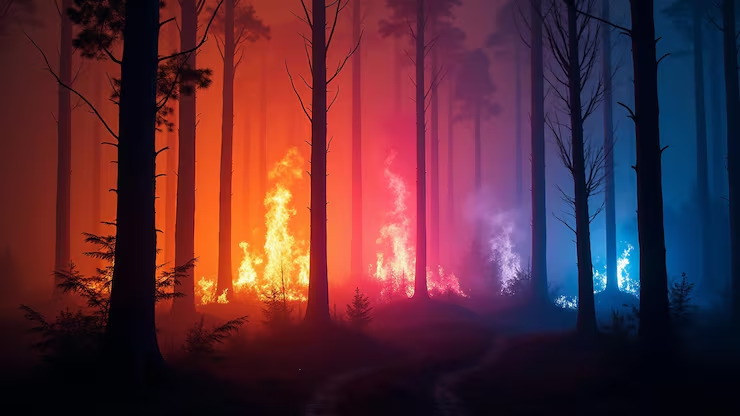
The Bay Area has faced unprecedented wildfire smoke exposure in recent years. From the 2018 Camp Fire that blanketed San Francisco in hazardous air for 12 straight days to recurring smoke events from fires across Northern California, residents have grown accustomed to checking air quality indexes and closing windows against orange skies. But while most homeowners focus on immediate threats like breathing difficulties and outdoor smoke, a hidden danger settles silently into their homes, particularly into the fibers of their area rugs.
How Wildfire Smoke Infiltrates Bay Area Homes
Wildfire smoke finds its way indoors through multiple pathways. Even when windows and doors remain closed, smoke particles infiltrate through HVAC systems, small gaps around doorframes, attic vents, and crawlspace openings. In coastal areas like San Francisco, San Mateo County, and Marin County, the Diablo Winds that occur during October and November create particularly severe conditions by funneling smoke from inland fires directly into residential neighborhoods.
Once inside, these microscopic particles behave differently than outdoor pollutants. Rather than dispersing into the atmosphere, they settle onto horizontal surfaces and become trapped in porous materials. Rugs, with their dense fiber construction and large surface area, act as highly efficient filters for these contaminants.
What Makes Rugs Particularly Vulnerable
The construction of area rugs makes them especially susceptible to smoke damage. Rug fibers consist of long strands arranged in pile heights ranging from low to shag, creating countless tiny spaces where particles can lodge. Unlike hard flooring, which can be wiped clean, rugs trap smoke particles between individual fibers, in the foundation backing, and even in the padding underneath.
Research shows that carpets and rugs can accumulate fine particulate matter (PM2.5), toxic metals, and polycyclic aromatic hydrocarbons (PAHs) from wildfire smoke. Studies of homes near wildfire zones found elevated levels of these carcinogens in carpet dust, even in structures that did not burn. The particles range from visible ash to microscopic soot measuring less than 2.5 micrometers, small enough to penetrate deep into rug pile and backing materials.
For Bay Area homeowners with Persian rugs, Oriental rugs, antique wool pieces, or silk rugs, the risk compounds. These valuable textiles often feature hand-knotted construction with natural fibers that readily absorb both particles and odors. The chemical residues from wildfire smoke, including formaldehyde, benzene, and volatile organic compounds, can bind to wool and silk fibers, creating long-term contamination that affects both the rug’s integrity and indoor air quality.
The Long-Term Health Implications
The danger does not end when outdoor air quality improves. Smoke particles embedded in rugs continue affecting indoor environments through a process called resuspension. Every time someone walks across a smoke-contaminated rug, particles that settled deep in the pile become airborne again, redistributing into the breathing zone. This creates ongoing exposure to harmful substances long after the original smoke event.
Wildfire smoke contains documented carcinogens. The fine particulate matter carries toxic substances on its surface, and chemical residues from burned materials include known cancer-causing agents. While anecdotal, reports from affected communities describe families who developed serious health issues after prolonged exposure to contaminated indoor environments. Children are particularly vulnerable, as they spend more time on floors and frequently place their hands in their mouths after touching contaminated surfaces.
For residents in high-risk areas like Palo Alto, San Jose, Walnut Creek, and Berkeley, where wildfire smoke has become a recurring concern, the cumulative effect of multiple smoke events without proper rug cleaning could pose significant health risks. Standard vacuuming, even with HEPA filters, cannot extract particles embedded deep within rug foundations or remove chemical residues that have bonded to fibers.
Why Standard Cleaning Methods Fall Short
Homeowners often attempt to address smoke damage through increased vacuuming or household cleaning products, but these methods prove inadequate for wildfire smoke contamination. Regular vacuums, even those with HEPA filters, only remove surface debris. They cannot extract particles that have penetrated into rug backing or foundation materials. In fact, vacuuming can worsen the problem by resuspending trapped particles into the air, temporarily increasing indoor pollution levels.
Steam cleaning and portable carpet cleaners face similar limitations. These methods treat only the surface pile and lack the mechanical action and water volume necessary to flush contaminants from deep within the rug structure. Chemical treatments and deodorizers may mask smoke odors temporarily but do nothing to remove the toxic particles causing those odors.
Professional rug cleaning facilities use fundamentally different approaches. The Rug Guardians employs a submersion-based cleaning system that addresses smoke contamination at every level. The process begins with powerful dusting equipment that removes up to 90% of dry particulate matter before wet cleaning begins. This critical first step extracts the fine dust, ash, and soot particles that vacuuming cannot reach.
Following dust removal, rugs undergo immersion washing in specialized cleaning solutions designed to break down and remove chemical residues. The submersion method, which The Rug Guardians has refined over 35 years, allows cleaning solutions to penetrate every fiber from both sides of the rug, reaching contamination in the foundation that surface cleaning cannot access. Multiple rinse cycles then flush away dissolved contaminants, ensuring complete removal rather than redistribution.
The Bay Area’s Unique Smoke Exposure Patterns
Geographic and meteorological factors make certain Bay Area regions particularly susceptible to smoke accumulation. San Mateo County and Santa Clara County, where residential rug cleaning specialists report increased demand following smoke events, experience smoke impacts from both local fires and those burning hundreds of miles away. The region’s topography can trap smoke in valleys, while coastal fog and marine layers sometimes prevent smoke from dissipating quickly.
Communities in Marin County, including Mill Valley and San Rafael, face smoke from North Bay fires, while East Bay residents in Fremont, Oakland, and Dublin may experience impacts from both local and distant wildfires depending on wind patterns. This widespread exposure means that smoke-damaged rugs have become a concern across all Bay Area counties, not just in rural interface zones.
Identifying Smoke-Damaged Rugs
Recognizing smoke damage requires attention to multiple indicators. The most obvious sign is persistent odor. Even after outdoor air clears, rugs that absorbed smoke continue emitting smoky smells, particularly when disturbed by foot traffic or temperature changes. This odor comes from volatile organic compounds (VOCs) released by burning materials, which become embedded in rug fibers and continue off-gassing.
Visual changes provide additional clues. Light-colored rugs may show yellowing or gray discoloration, particularly in high-pile areas where particles accumulate most heavily. Darker rugs might appear dulled or hazy, with a fine layer of grayish residue that reappears shortly after vacuuming. Running a white cloth across the rug surface often reveals gray or black smudging from embedded soot.
Textural changes can indicate deeper contamination. Rugs may feel gritty or rough due to fine ash particles ground into the pile. Natural fiber rugs, especially wool, may seem brittle or dry, as smoke residues can affect fiber integrity over time. For homeowners with Persian rugs, silk rugs, or valuable antique pieces, these changes signal the need for professional assessment before further damage occurs.
Professional Cleaning as Essential Remediation
After significant smoke exposure, professional cleaning becomes a health necessity rather than a maintenance choice. The process removes not just visible contamination but also the harmful particles and chemicals that pose ongoing health risks. For Bay Area residents who experienced the heavy smoke from major fires like the Camp Fire or more recent regional events, this cleaning represents an investment in both rug preservation and family health.
Specialists like The Rug Guardians understand the specific challenges wildfire smoke presents. Their cleaning protocols address multiple contaminants simultaneously: the fine particulate matter that standard vacuuming cannot remove, the chemical residues that cause persistent odors, and the ash particles that have worked deep into rug foundations. This comprehensive approach proves essential for truly eliminating smoke damage rather than simply masking symptoms.
The cleaning process also includes fiber-specific treatments that protect rug integrity while removing contaminants. Wool rugs require pH-balanced solutions to prevent damage while effectively removing smoke residues. Silk rugs need gentler handling to preserve their delicate fibers while still achieving thorough contamination removal. Antique and handmade rugs benefit from expert assessment to ensure cleaning methods preserve value while addressing smoke damage.
Prevention and Ongoing Maintenance
While professional cleaning addresses existing smoke damage, prevention strategies can minimize future exposure. During smoke events, Bay Area homeowners should seal homes as completely as possible, using weather stripping around doors and windows. HVAC systems should be set to recirculate rather than draw in outside air, and filters should be upgraded to MERV 13 or higher ratings during smoke season.
Creating a clean room with a portable HEPA air purifier provides a refuge during severe smoke events, reducing the overall particle load throughout the home. Placing washable mats at entryways helps prevent tracking in outdoor ash and particles. After significant smoke exposure, professional assessment can determine whether rugs require cleaning even if no obvious signs of damage appear.
For homes in high-risk areas like Napa County, Contra Costa County, and throughout the South Bay, establishing a relationship with professional rug cleaning services before smoke events occur ensures quick response when needed. The Rug Guardians offers pickup and delivery throughout San Mateo County, Santa Clara County, and all Bay Area counties, making it convenient to have rugs professionally cleaned following smoke exposure.
Insurance Considerations
Homeowners insurance typically covers smoke damage to both dwelling and contents, including area rugs. Smoke damage falls under standard coverage without special caps like those that might apply to mold claims. Documentation proves essential for successful claims. Photographing rugs before and after smoke exposure, keeping records of outdoor air quality readings during exposure periods, and retaining professional cleaning receipts all support insurance claims.
Professional cleaning invoices serve dual purposes: they document the remediation expense for insurance purposes while also providing proof that appropriate action was taken to mitigate damage. Some insurance adjusters may initially suggest surface cleaning suffices, but homeowners can advocate for proper immersion cleaning when standard methods cannot remove embedded contamination.
The Broader Context of Indoor Air Quality
Wildfire smoke exposure highlights the broader importance of indoor air quality in Bay Area homes. Even outside of fire season, rugs collect indoor pollutants including dust, allergens, and particulates from cooking, vehicle exhaust, and other sources. Regular professional cleaning every 12 to 18 months maintains indoor air quality by preventing accumulation of these contaminants.
After wildfire smoke events, however, this timeline should be accelerated. Rugs exposed to heavy smoke may require immediate cleaning to protect health and prevent permanent damage. The investment in professional cleaning provides returns in improved air quality, preserved rug value, and reduced health risks for household members, particularly children, elderly residents, and those with respiratory conditions.
Protecting Bay Area Homes and Health
Wildfire smoke represents a new normal for California living. As climate patterns continue to generate severe fire seasons, Bay Area residents must adapt their home maintenance practices to address this recurring threat. Understanding how smoke damages rugs and why professional cleaning becomes necessary helps homeowners make informed decisions about protecting both their valuable textiles and their family’s health.
The microscopic particles that settle into rug fibers during smoke events continue affecting indoor air quality long after skies clear. These invisible threats, carrying toxic chemicals and carcinogenic compounds, justify the investment in professional remediation. For Bay Area homeowners with Persian rugs, Oriental rugs, wool pieces, or any valuable textiles, addressing smoke damage promptly prevents both health risks and permanent rug damage that could develop if contamination remains untreated.
Frequently Asked Questions
How long after a wildfire smoke event should rugs be professionally cleaned?
Rugs should be cleaned as soon as possible after significant smoke exposure, ideally within a few weeks. Smoke particles and chemical residues continue affecting indoor air quality and can permanently bond to fibers if left untreated. The longer contaminated rugs remain in the home, the more particles become embedded and the harder they become to remove completely.
Can regular vacuuming remove wildfire smoke particles from rugs?
Standard vacuuming, even with HEPA filters, only removes surface debris and cannot extract smoke particles that have penetrated into rug foundations and backing materials. Vacuuming may temporarily resuspend embedded particles into the air, potentially increasing indoor pollution. Professional immersion cleaning is necessary to reach and remove deeply embedded smoke contamination.
Are certain types of rugs more susceptible to smoke damage than others?
Natural fiber rugs made from wool, silk, or cotton readily absorb both smoke particles and odors, making them particularly vulnerable to contamination. High-pile and shag rugs trap more particles than low-pile constructions. However, all rug types exposed to significant smoke require professional cleaning, as synthetic fibers also trap particulate matter and chemical residues, though they may show less obvious discoloration.
Does smoke damage affect rug value and longevity?
Yes, untreated smoke damage can permanently alter rug fibers, particularly in natural materials like wool and silk. Chemical residues from smoke can weaken fibers over time, and embedded particles act as abrasives that accelerate wear. For valuable Persian and Oriental rugs, prompt professional cleaning preserves both the physical integrity and market value of the piece.
Will air purifiers eliminate the need for professional rug cleaning after smoke exposure?
Air purifiers help improve indoor air quality by filtering airborne particles, but they cannot remove contamination that has already settled into rugs. Smoke particles embedded in rug fibers remain trapped and continue off-gassing chemicals even when air purifiers operate continuously. Professional cleaning remains necessary to eliminate the source of contamination rather than just treating the symptoms.
How can homeowners verify that smoke contamination has been completely removed?
Professional cleaning facilities should show no smoke odor after treatment, even when rugs are disturbed or exposed to heat. Rugs should return to their original color without gray or yellow discoloration. Reputable cleaning specialists provide detailed information about their cleaning processes and can explain specifically how their methods address smoke contamination at all levels of the rug structure.
Are there health risks from keeping smoke-exposed rugs in the home?
Yes, rugs contaminated with wildfire smoke can pose ongoing health risks. Embedded particles contain toxic chemicals and carcinogens that become airborne when rugs are walked on, continuously exposing household members to harmful substances. Children and individuals with respiratory conditions face particular risks. Professional cleaning eliminates these health hazards by removing contaminated particles rather than redistributing them.