Once upon a time, your resume lived quietly inside an envelope. A hiring manager would open it, read it carefully, and evaluate your potential.
But today, your resume appears long before you do. It lives on job portals, email inboxes, WhatsApp forwards, LinkedIn DMs, ATS systems, and even recruiter dashboards powered by AI.
Young professionals entering India’s hyper-competitive job market are discovering one truth fast:
Your resume is no longer a document, it’s a digital handshake.
And in a world overloaded with black-and-white templates, visual resumes have emerged as the new secret weapon. They’re modern, memorable, and instantly communicate who you are before a recruiter even reads your name.
Design isn’t decoration anymore.
It’s differentiation.
Let’s explore why visual resumes are rising and why they might just be the most overlooked career advantage of this decade.
1. The Rise of Visual Thinking in the Indian Job Market
India’s workforce is getting younger, more digital, and more design-aware. Whether it’s a fresher applying for their first internship or a young manager seeking a promotion, job seekers now understand that recruiters are visual thinkers.
A standard resume feels transactional.
A visual resume feels intentional.
Colors, icons, layout, hierarchy, and micro-storytelling all shape how your profile is perceived:
- A clean timeline shows career progression
- A color palette reflects personality
- A well-designed header creates instant identity
- Structured sections help recruiters scan in under 10 seconds
Modern hiring is fast, intuitive, and automated. A visual resume fits perfectly into how today’s job market works.
Example: A marketing graduate from Pune redesigned her traditional resume into a visual layout with metrics, icons, and a portfolio QR code. Her interview calls doubled not because she added new achievements, but because her resume finally looked like someone applying for a creative role.
2. Why Text-Only Resumes Are Losing the Battle
Recruiters receive hundreds of applications per position. Most of those PDFs look identical, same fonts, same structure, same formatting errors.
Even if the experience is good, the resume often gets lost in the noise.
A text-only resume struggles because:
- It doesn’t guide the eye
- It focuses on information but not communication
- Achievements get buried
- Nothing stands out visually
A visual resume solves these problems instantly.
Well-designed headers, spacing, icons, and section highlights help signal to recruiters:
“This candidate knows how to communicate clearly.”
And that skill is priceless in every industry from engineering to marketing to finance.
3. The Tech Behind Visual Resumes: AI, Templates, Automation
Technology has democratized design.
You no longer need Photoshop expertise or expensive software.
AI-powered resume builders and online tools now offer:
- Auto-alignment
- Smart spacing
- Infographic styles
- Color theory suggestions
- ATS-friendly formatting
- Pre-designed templates
This makes resume design accessible to anyone, including first-time job seekers.
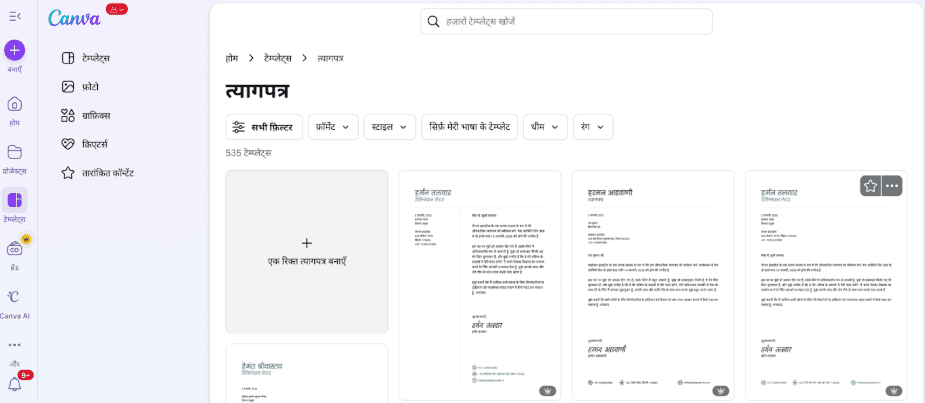
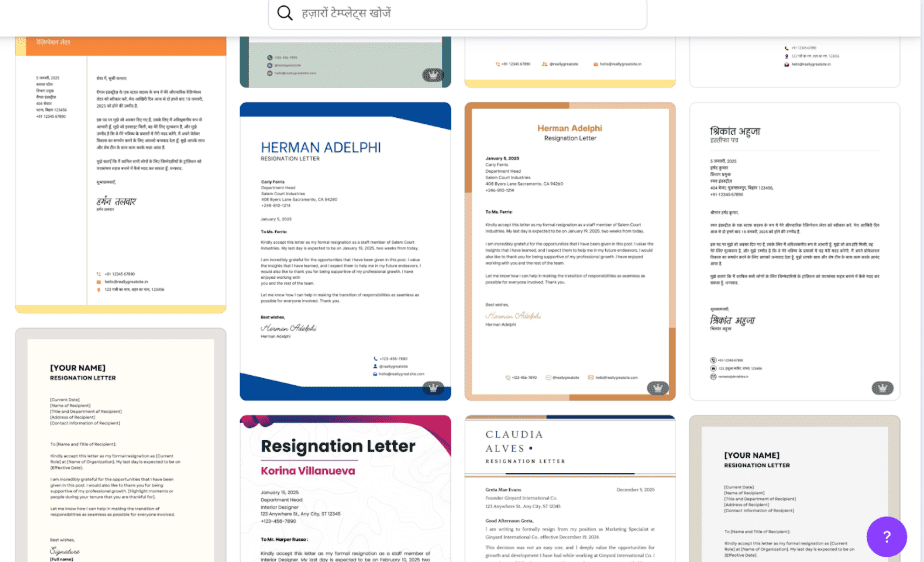
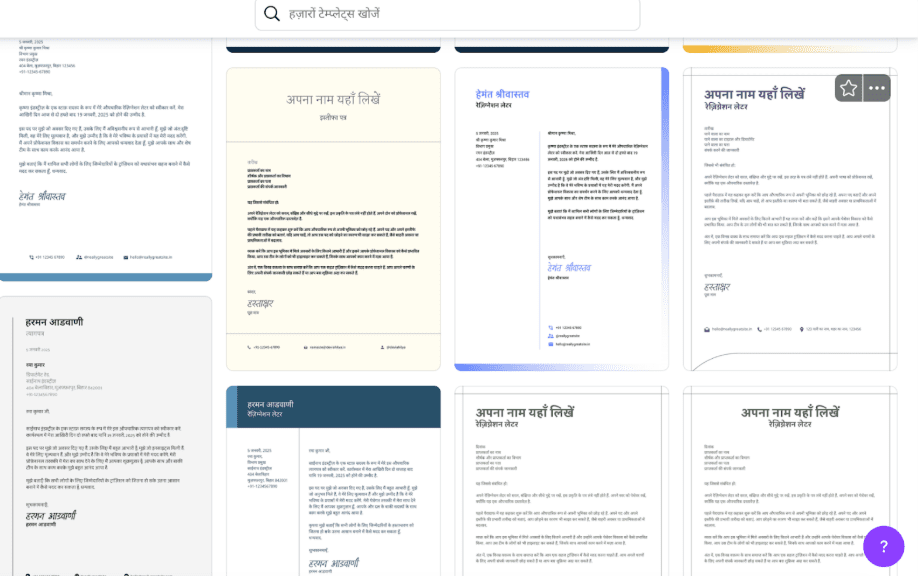
In fact, while searching for writing references, many young applicants also look for a regine letter in hindi format online when switching jobs and tools like Canva help them build both resignation letters and visually professional resumes in minutes.
Your primary keyword is used once above ↑ and Canva appears in the same paragraph, as instructed.
These tools eliminate the fear of “I don’t know design” and replace it with efficiency and confidence.
4. Visual Resumes Build Personal Branding Without Saying a Word
Your resume is your brand.
And your brand is your signal to the world.
Visual resumes help you express that brand clearly through:
1. Color Psychology
Blue = Trust
Green = Growth
Black = Authority
Orange = Creativity
2. Professional Identity
A layout can instantly make you look like:
- A strategist
- A designer
- An analyst
- A leader
- A creative storyteller
3. Modern Appeal
A polished design communicates professionalism before a recruiter reads a single word.
Example: A B.Com graduate from Jaipur applied to finance firms using a clean, corporate-style visual resume with graphs for achievements. Recruiters praised not just his experience but his clarity of communication.
Visuals silently do what text cannot.
5. The Role of Visual Resumes in ATS Screening
There’s a misconception that ATS (Applicant Tracking Systems) reject visual resumes.
In reality, ATS rejects poor formatting, not design.
A good visual resume includes:
- Layered text (not embedded images)
- Standard fonts
- Logical section hierarchy
- Exported PDF format
- Keyword-rich content
Most modern visual resume tools generate ATS-safe versions automatically.
This means you can enjoy the best of both worlds:
Visual impact for humans + clean structure for machines.
6. Real-World Examples: How Visual Resumes Changed Careers
Example 1: The Engineer Who Broke Into UX Design
A mechanical engineer from Delhi wanted to pivot into UX. His text resume didn’t reflect creativity. After switching to a visual resume with sections like Design Philosophy and User Research Experience, he landed interviews with two tech startups.
Example 2: The Homemaker Returning to Work
A homemaker from Bengaluru re-entering the job market used a warm-toned visual resume with a timeline representing her career break and freelance work. Recruiters appreciated the transparency and storytelling she received offers within weeks.
Example 3: The Fresher Who Didn’t Have “Experience”
A BBA fresher from Kolkata showcased college projects using infographic layouts. His resume didn’t feel empty, it felt ambitious. He secured his first internship in one week.
These are not exceptions, they are the new norm.
7. Common Mistakes Young Professionals Make (and How to Avoid Them)
Even the best visual resumes fail if these errors appear:
- Overusing colors
Keep it subtle; avoid rainbow themes. - Adding unnecessary icons
Only use icons that help readability. - Using decorative fonts
Recruiters need clarity, not calligraphy. - Making the design too busy
White space = breathing room. - Ignoring content quality
Design enhances; it doesn’t replace substance.
A visual resume is a spotlight not a disguise.
8. Practical Samples You Can Apply Today
Sample 1: Career Highlight Bar
Add a horizontal bar with metrics like:
- “Impacted 10,000+ customers”
- “Increased engagement by 40%”
- “Managed 5 key annual projects”
This turns data into visual impact.
Sample 2: Skill Strength Meter
Use simple bars or dots to show:
- Communication ●●●●○
- Data Analysis ●●●●●
- Team Leadership ●●●○○
Recruiters scan this in seconds.
9. The Linguistic Side: Why Indians Still Search for Hindi Formats
India is a multilingual country.
Many job seekers look for templates like:
- rejain letter in hindi
- resignation letter format in hindi
- resignation letter in hindi
- resin letter hindi
These searches show a deeper truth:
Indian professionals want clear, easy-to-use documentation, both for joining and leaving roles.
Visual resumes satisfy that need beautifully they simplify communication, regardless of language.
Conclusion: When Design Becomes Your Silent Advocate
A resume is no longer just a summary of your qualifications, it’s a preview of your potential. For young professionals in India, visual resumes are more than a trend; they’re a strategic advantage.
They help you:
- Tell your story
- Showcase your personality
- Stand out in seconds
- Present yourself confidently
- Enter interviews with momentum
And you don’t need technical skills or design degrees to create one.
You need curiosity, clarity, and the courage to express your professional identity visually.
In a world where automation filters applications, and human attention spans keep shrinking, a visual resume becomes your silent advocate speaking for you before you ever say a word.
Because sometimes, design isn’t just how your resume looks. It’s how your career begins.