Winter has a habit of picking on batteries first. Devices that work fine in mild weather suddenly shut off, drain fast, or refuse to charge once the temperature drops. For anyone running Industrial IoT gear in the field, a dead battery in the cold can mean lost data, broken monitoring, and extra trips to harsh sites.
This blog explains why traditional batteries fail in winter and how new low temperature lithium tech solves that problem. You will see how a special electrolyte keeps the inside of the battery active so it can even charge at minus forty degrees without a heater. Step by step, we will walk through what this means for real projects and how to choose the right battery for cold environments.
What Happens to Regular Batteries When Cold Weather Arrives
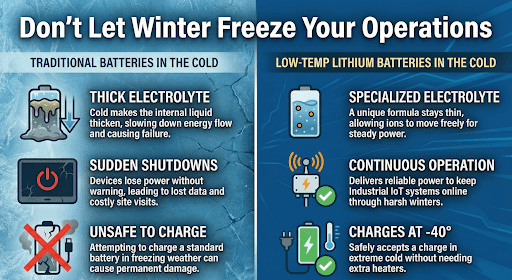
Cold weather makes regular batteries behave in strange ways. Many people notice their devices slow down or turn off without warning once the temperature drops. This happens because the chemicals inside a normal battery do not move as freely in winter. When the liquid inside thickens, the battery cannot release or store energy the way it should.
When the temperature falls, the electrolyte inside a traditional battery turns thicker and stops ions from moving smoothly. Since ions carry the charge, the battery loses power faster. Many devices try to draw more current to make up for the slow movement. This causes stress, and the battery shuts down quicker. Sensors in outdoor areas often lose power at the worst time, which creates problems for teams that depend on steady data.
Industrial IoT devices face an even bigger challenge. These systems sit on towers, poles, pipelines, or remote stations. Because they stay outside all day, they feel the impact of the cold before anything else. Many of these sites are hard to reach, so each battery failure leads to extra travel and higher costs. Technicians often visit the same spot again and again, only to find that the battery has frozen.
Below is a quick look at how cold affects standard batteries:
| Problem | What Happens in Winter |
| Thick electrolyte | Ion movement slows down |
| Higher resistance | Device performance drops |
| Slow charging | Battery accepts very little charge |
| Sudden shutdown | Power cuts off without warning |
Older lead acid batteries struggle the most because their electrolyte becomes almost like syrup in cold weather. Even common lithium batteries drop in performance since their normal electrolyte is not designed for very low temperatures. Because of this, many companies that work outdoors see huge drops in uptime during winter. They need a solution that keeps power stable, even when the temperature falls far below zero.
As more tools rely on sensors and remote monitoring, the need for a battery that can stay active in the cold has grown. This is why many companies now look for better options that can handle long winters without constant repairs. A battery that stays steady in freezing weather becomes a simple way to reduce downtime and keep systems running longer.
Why Industrial IoT Needs Reliable Power in Harsh Winter Conditions
Industrial IoT systems depend on steady power to keep sending data, controlling machines, and tracking activity. Winter creates a real challenge because these devices rarely get protection from the cold. They sit on rooftops, fields, towers, bridges, and storage yards. As the temperature drops, the battery becomes the weakest link. If the battery shuts down, the entire system stops working.
Many IoT devices collect important data. For example, oil and gas stations use sensors to watch pipeline pressure. Farms use sensors to check soil conditions. Weather stations use small devices to record temperature and wind. When winter arrives, these devices must stay active around the clock. If the battery fails, the whole system goes silent. Because of this, companies feel a strong need for a power source that stays reliable in freezing conditions.
Traditional batteries create several issues during winter. They charge slowly, drain fast, and sometimes refuse to start. Each failure forces a team to send someone out to the site. Since many IoT devices are far from city areas, this becomes time consuming. Even worse, the costs can grow very fast. A simple power drop in one sensor can trigger hours of extra work.
Here are common places where IoT batteries struggle in winter:
- Remote weather stations
- Security cameras in open areas
- Tracking devices on containers
- Sensors on mountain stations
- Outdoor meters in utility networks
A steady low temperature battery solves this problem by staying active even when everything around it freezes. Because it can hold power in winter, it reduces maintenance visits and keeps monitoring systems alive. This helps teams trust their data without worrying about sudden drops in power.
Since many industries now rely on outdoor data, a winter-ready battery is not just helpful. It becomes a simple way to keep everything running without interruption. As you move through this article, you will see how new electrolyte technology makes this possible and why it is already becoming a strong choice for companies with outdoor IoT projects.
The Rise of Specialized Low-Temperature Lithium Batteries
Many outdoor devices fail in winter because their batteries cannot move ions fast enough in the cold. As more companies depend on Industrial IoT, this weakness becomes a daily problem. That is why low temperature lithium batteries are gaining attention. They stay active even when normal batteries slow down and turn off.
A strong point of these batteries is their steady behavior in freezing weather. The inside materials stay thin, so the battery does not struggle to release or store energy. This simple change helps remote sensors stay online even during long nights when the temperature falls deep below zero. Because many IoT systems sit far from towns, teams want a battery that works without repeated visits or manual warming.
These batteries use advanced low temperature lithium battery technology, which you can read about on the client’s website. This technology supports higher power output, faster recovery in cold air, and safer charging at lower temperatures. Many industries that work outdoors already use this option because it reduces downtime and helps them avoid sudden drops in their monitoring tools.
Here are common reasons why companies choose this type of battery:
- Better winter performance
- Stable voltage in freezing weather
- Less maintenance in remote areas
- Safer charging range
- Longer service life
These improvements matter for IoT devices that must stay on without a break. For example, a sensor on a tower or pipeline cannot shut down whenever the temperature drops. A low temperature battery helps keep the system stable, which builds trust in the readings the device sends back.
Since outdoor technology keeps spreading, the need for a winter-ready battery rises each year. This growing demand explains why more companies now replace their old batteries with a stronger option made for cold climates.
What Makes the New Specialized Electrolyte So Different
The heart of strong winter performance is the electrolyte. In normal batteries, the electrolyte becomes thick once the temperature falls. Thick liquid slows the ions, which makes the battery weak. A specialized low temperature electrolyte avoids this problem by staying thin even during freezing weather. This allows ions to move freely, so the battery keeps working without delays.
This electrolyte uses a formula that lowers its freezing point. Because of this, it stays active and lets the battery deliver steady power in cold air. Many engineers like this feature because their outdoor devices no longer shut down every time a cold wave passes through. The battery keeps running, and the device continues to send data.
Another helpful point is the way this electrolyte protects the internal parts of the battery. It forms a stable layer inside that stays firm even in freezing air. Since the battery stays protected, it lasts longer and does not wear out as fast. This is useful for IoT systems placed far from cities because teams do not need to replace the battery often.
A device that works outdoors cannot stop just because the temperature drops. This is why many companies now choose a battery for low temperature when upgrading their systems. The electrolyte design helps the battery handle extreme cold without heaters, which keeps the overall setup simple, lighter, and easier to install.
How Low-Temperature Lithium Batteries Can Charge at Minus Forty Degrees Without Extra Heating
Many people wonder how a battery can charge when the weather is so cold that even metal tools feel painful to touch. Regular batteries cannot do this because their inner liquid becomes thick, and ions cannot travel. A low temperature lithium battery works differently because its electrolyte stays thin enough for ions to move even at minus forty degrees. This movement keeps the battery active and ready to accept charge.
A key part of this process is the stable layer inside the battery known as the SEI layer. In normal cold weather, this layer becomes stiff and blocks the flow of ions. In a low temperature battery, the materials are made to stay flexible. Since the SEI layer does not freeze, the battery accepts charge without needing a heater or warming pad. This helps outdoor devices stay alive even during long winter nights.
Many outdoor sensors face problems when the temperature falls, but a battery built for cold weather removes those issues. Once the electrolyte stays thin and the SEI layer stays stable, the charging cycle becomes smooth. This means the device can charge from solar panels, small generators, or any other source without getting stuck. For Industrial IoT systems that stay outside all year, this allows steady work without extra equipment.
Below is a quick look at what makes this possible:
- Thin electrolyte at low temperatures
- Flexible internal layer
- Strong ion mobility
- Safe charge acceptance
- No need for heating systems
Because of these points, a low temperature lithium battery fits the needs of remote sensors, outdoor meters, and weather tools. Devices no longer freeze or stop charging when the temperature drops. This gives teams a simple way to keep their systems online even during harsh winter seasons.
Why Industrial IoT Depends on Low-Temperature Lithium Batteries
Industrial IoT systems rely on batteries more than many people think. They sit outdoors and collect data nonstop. If the battery fails, the device shuts down, and the entire network loses important information. Winter puts even more pressure on these systems because the temperature falls too low for normal batteries to work properly. A low temperature lithium battery becomes a simple way to avoid these shutdowns.
Many outdoor sensors track pressure, movement, weather, or storage conditions. They often stand in faraway places where the cold reaches extreme levels. Any drop in power forces a team to travel and restart the device, which can take time and increase cost. A strong low temperature battery helps avoid this because it stays active and delivers a steady flow of energy.
Industrial IoT uses these batteries for many reasons:
- They deliver stable power even when temperatures fall below zero
- They reduce maintenance trips to distant sites
- They help sensors send continuous data
- They last longer in outdoor environments
- They charge safely in freezing air
Because these batteries respond well to cold weather, companies see a clear improvement in uptime. Devices that once failed every winter now keep working for months without trouble. This helps teams trust their data and focus on other tasks instead of worrying about battery drops.
As more industries use IoT tools in open spaces, the demand for winter-ready power grows. A battery designed for low temperatures helps systems stay on, cut down on service visits, and protect equipment from constant power loss. This makes it a natural choice for teams that need reliable performance in cold weather.
Frequently Asked Questions
Many people have questions when their devices stop working during cold months. Here are a few common ones that help clear things up in a simple way.
Why do regular batteries drain so fast in winter
Cold air makes the inside liquid thicker. When that happens, ions cannot move around the way they normally do. This causes the battery to lose power faster, and devices shut down much earlier than expected.
Can a normal lithium battery work below zero
It might work for a short time, but it will not stay stable. Once the temperature drops too low, it struggles to deliver power and may refuse to charge. That is why outdoor systems often switch to a low temperature battery instead.
What makes a winter battery different
The main difference is the electrolyte. A winter-ready battery uses a formula that stays thin in cold air. Because of this, ion movement stays active, and the battery continues working even when frost forms around it.
Is it safe to charge a battery in freezing weather
Only if the battery is designed for it. Many standard batteries get damaged when charged in the cold. A model built for low temperatures, like the ones on the client’s website, can handle charging even at extremely low levels.
Which battery should I pick for minus twenty or lower
For very cold areas, a battery made for low temperatures is the safest choice. It stays steady, holds power longer, and protects the device from sudden drops
Final Thoughts
Cold weather exposes the weakness of regular batteries, especially when devices must stay active outdoors. A low temperature lithium battery removes many of these issues by keeping its power steady and allowing safe charging even in freezing air.
For anyone using Industrial IoT systems in open or remote areas, this type of battery offers a simple way to avoid shutdowns and reduce extra trips for repairs. The improved electrolyte design plays a big part by staying thin in the cold, which helps the battery work without extra heating.
If your project faces long winters, choosing a battery made for low temperatures is a smart step. It keeps the device running, protects your data, and saves time that would otherwise go into fixing power problems.