As the holiday season approaches, family safety becomes a top priority for millions of households. Recent data highlights a growing concern: nearly 30% of seniors now live alone, prompting families to seek reliable ways to stay connected and ensure the well-being of their aging loved ones. In this landscape, safety apps like iSharing have emerged as essential tools, bridging the physical gap between generations with real-time location sharing and emergency alerts.
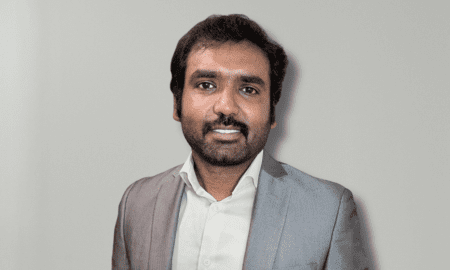
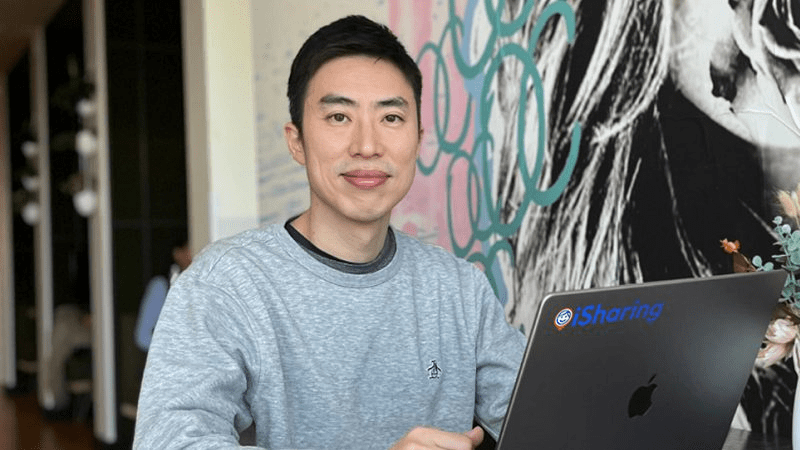
We sat down with Yongjae Chuh, Co-founder and CEO of iSharingSoft, to discuss how his company is evolving to meet these modern challenges. From a product team driven by parenthood to earning recognition in global safety guides, Chuh shares insights into the philosophy and future of one of the world’s leading family safety platforms.
Q: With recent reports indicating that 30% of seniors live alone, how has iSharing adapted its features to support not just parents tracking children, but adult children caring for aging parents?
Yongjae Chuh:
“What surprised us most was how quickly this shift happened. We saw 75% growth in senior users in the US this year alone. Many families who originally used iSharing for their kids are now using it for their elderly parents as well.
The key difference is that elderly care requires a completely different approach than child safety. With kids, parents want active monitoring. With seniors, it’s about respecting independence while having a safety net. Our inactivity alerts and location history let adult children notice concerning pattern changes, like a parent who always goes to the grocery store on Tuesday suddenly staying home for a week without intrusive phone calls. It’s preventive care, not surveillance.”
Q: We understand that 70% of your product team consists of parents. How does this personal experience shape the development process and the specific safety features you prioritize within the app?
Yongjae Chuh:
“Even though we hear from users’ voices, having parents on the team helps us prioritize what’s truly important for families. We’re not just building features that sound good on paper, we’re asking ourselves, ‘Would this actually be useful for our own families?’
Questions like ‘Is this simple enough for my elderly parents to use?’ or ‘Would this feel invasive to my teenager?’ guide our development process. That perspective keeps us focused on real family needs rather than just technical capabilities.”
Q: iSharing was recently featured in Japanese children’s safety books. What does this kind of recognition signify for the company’s reputation and trust globally?
Yongjae Chuh:
“Being featured in Japanese safety books was a meaningful milestone for us. Japan has extremely high standards for child safety and privacy, so earning that level of trust from educators and safety experts validates our approach.
Japanese customers are cautious but incredibly loyal once they trust you. We tried to build trust in that market for years, and it was slow going, but seeing that we were recognized by TV shows and business inquiries showed things were shifting. It shows that location-sharing technology has moved from being seen as ‘just an app’ to being recognized as a legitimate tool for family protection. That kind of third-party validation, especially in a market as discerning as Japan, helps build credibility globally.”
Q: iSharing has seen success in both Asian and Western markets. What are some surprising cultural differences you’ve discovered in how families use location-sharing technology across these regions?
Yongjae Chuh:
“The differences are really interesting. In Korea and Japan, we see heavy usage around after-school activities like cram schools. Kids go to multiple academies after regular school, so parents are tracking several locations throughout the day in very structured patterns.
In the US, it’s much more transportation-focused because of car dependency. Families track driving routes and monitor when teens arrive safely. We also see more social, flexible usage; college roommates coordinating, friends meeting up at events or the mall.
These patterns have taught us that ‘family safety’ looks different depending on daily life structure and transportation habits in each country.”
Q: You recently held your first company workshop, marking 10 years since founding iSharingSoft. Looking back at this decade-long journey, what was the most significant takeaway from bringing your team together in this way?
Yongjae Chuh:
“It was our first time getting everyone together in person after 10 years. Some of our team work remotely, some work on-site in Korea and the US, but we’d never all been in the same room.
The most significant takeaway was realizing how much experienced people from different parts of the industry can accomplish together, even when distributed. We’ve served 60 million users, expanded across over 250 countries with 21 languages, and developed features that protect families every day. Bringing everyone together reinforced the strength of our distributed model, but it also showed us the value of face-to-face time for building deeper connections and alignment on our mission.”
Q: As a CEO, how do you balance the technical demands of precise location tracking with the need for user privacy and ease of use for non-technical generations, such as seniors?
Yongjae Chuh:
“The balance starts with architecture decisions. We built our system with privacy by default – all location data is end-to-end encrypted, and sharing only happens when users explicitly opt in. Our patented battery optimization technology allows us to maintain precise tracking while using only 1% of battery daily, which is critical for seniors who may forget to charge their phones.
For ease of use, we focus on setup simplicity. Once the app is installed and configured, ideally by family members during an in-person visit, seniors don’t need to interact with it at all. The tracking happens automatically in the background. Their children receive the safety information they need, while elderly parents maintain their independence without having to learn complicated technology. The technical complexity is our problem to solve, not theirs.”
The conversation with Yongjae Chuh highlights that iSharing is more than just a tracking app; it is a platform built on the real-world anxieties and needs of families. By combining advanced technology with a team that deeply understands the “parent perspective,” iSharingSoft continues to innovate in ways that protect the most vulnerable members of our society – from children navigating their way to school to seniors maintaining their independence at home.
To learn more, visit https://isharingsoft.com/.