Let’s be honest for a second. Most of us don’t quit working out because we’re lazy. We quit because it’s inconvenient, confusing, or just plain boring. I’ve lost count of how many times I started a fitness routine full of motivation, only to abandon it a few weeks later when life got busy. Gym memberships unused. Dumbbells are collecting dust. Sound familiar?
That’s exactly why smart fitness machines started catching my attention. Not as some flashy tech trend, but as a genuinely different way to work out—one that actually fits into real life instead of fighting against it.
What a Smart Fitness Machine Actually Is (Without the Marketing Hype)
When people hear “smart fitness machine,” they often picture something futuristic and intimidating, like a robot yelling at you to do squats. In reality, it’s much simpler—and much more practical.
A smart fitness machine is basically workout equipment combined with software that thinks along with you. It tracks your movements, adjusts resistance automatically, suggests workouts based on your progress, and gives feedback in real time. Some even correct your form or adapt when you’re clearly having an off day.
Instead of you figuring everything out on your own, the machine becomes a quiet coach in the background. Not loud. Not judgmental. Just… helpful.
And that’s a big deal if you’ve ever stood in the gym wondering whether you’re doing an exercise correctly while pretending to check your phone.
Why Home Workouts Feel Different With Smart Tech Involved
Working out at home used to mean compromise. You either did bodyweight workouts with limited progression or invested in bulky equipment that still didn’t offer much guidance. A smart fitness machine changes that dynamic completely.
Suddenly, your living room workout feels intentional. Structured. Measured. You’re not just guessing if today’s session “counts.” The machine tracks your reps, your effort, your consistency, and even how strong you’re getting over time.
What surprised me most was how motivating this became. Seeing progress in numbers—slightly more resistance, cleaner reps, better balance—hits differently than just hoping you’re improving. It turns workouts into something almost game-like, without being gimmicky.
The Real Advantage: Personalization That Actually Makes Sense
One of the biggest reasons people quit fitness programs is that they’re too generic. Everyone gets the same plan, the same pace, the same expectations. A smart fitness machine flips that idea on its head.
It adjusts to you. If you’re tired one day, it can scale back. If you’re stronger than expected, it pushes you harder. Over time, it learns your patterns—how quickly you progress, where you struggle, what you enjoy.
This kind of personalization isn’t just a nice feature. It’s the difference between feeling supported and feeling overwhelmed. When workouts meet you where you are, you’re far more likely to stick with them.
It’s Not About Replacing Trainers—It’s About Accessibility
There’s sometimes a fear that smart fitness machines are trying to replace personal trainers. In my experience, that’s not really the point. The real value is accessibility.
Not everyone can afford a trainer. Not everyone feels comfortable working out in public. And not everyone has the time to commute to a gym multiple times a week. A smart fitness machine brings expert-level structure into your home, on your schedule.
You work out when it makes sense for you. Early morning, late night, ten minutes here, thirty minutes there. No pressure. No wasted time.
And honestly, for consistency, that flexibility matters more than almost anything else.
How It Changes Your Relationship With Fitness
This part surprised me the most. Using a smart fitness machine didn’t just change how I worked out—it changed how I thought about fitness altogether.
Workouts stopped feeling like punishment and started feeling like check-ins. Some days were tough. Some days were light. And that was okay. The machine didn’t shame me for missing a rep or needing a break. It just adjusted and moved on.
Over time, that removed a lot of mental resistance. I stopped negotiating with myself about whether to work out and started treating it like brushing my teeth—just something I do, imperfectly but consistently.
Progress You Can Actually See (And Trust)
We all say we want results, but vague progress can be discouraging. A smart fitness machine makes improvement visible in a way that feels earned.
You see strength numbers go up. You notice better control. You feel more confident trying movements that once felt intimidating. It’s not about chasing unrealistic transformations. It’s about steady, believable improvement.
That’s the kind of progress that sticks, because it feels real.
Is a Smart Fitness Machine Worth It?
This is the question everyone asks, and the honest answer is: it depends on how you value consistency.
If you love the gym environment and thrive on social energy, you might not need one. But if you struggle with motivation, time, or knowing what to do next, a smart fitness machine can be a game-changer.
It’s not magic. You still have to show up. But it removes a lot of friction—the planning, the guessing, the self-doubt—that usually gets in the way.
And in fitness, removing friction is half the battle.
Recommended Smart Fitness Gear
If you’re thinking about adding a smart fitness machine to your home setup — something that feels like a personal trainer and a gym in one — here’s one standout option I’d honestly recommend considering:
Speediance Gym Monster 2
If you want the ultimate all‑in‑one smart fitness machine that covers strength, mobility, and guided workouts without needing a gym membership or a bunch of separate equipment, the Speediance Gym Monster 2 is one to know about.
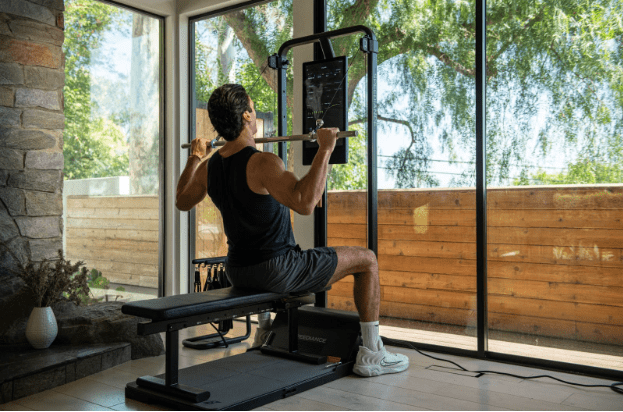
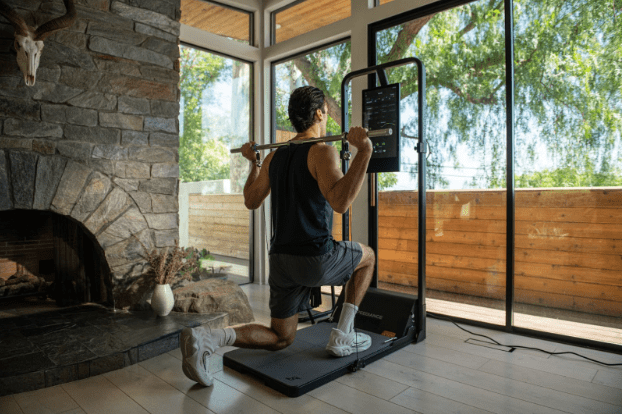
This isn’t just another weight stack or a Bluetooth dumbbell set — it’s a full digital resistance gym with AI‑powered training and an immersive experience built in. The machine delivers adjustable resistance up to around 220 lbs (about 100 kg), so you can go from lighter strength days to heavier lifts without changing plates or switching machines. It’s all digital, so resistance shifts smoothly and precisely as you work, and the AI coaching gives feedback on your reps and progress — much like having a coach right there with you.
The 21.5‑inch full‑HD touchscreen makes following workouts easy, and there are hundreds of guided sessions and movement types included — strength, cardio, mobility, and more — helping you stay engaged and consistent. It folds up to save space when you’re not using it and includes a range of accessories to support a variety of exercises.
Just a note: like any high‑end piece of connected fitness equipment, it’s an investment, and some users have mentioned mixed experiences with customer support or occasional tech glitches. But if you value smart features, guided workouts, and versatility in one package, it’s definitely worth a look.
Final Thoughts: Fitness That Fits Real Life
The best workout plan isn’t the most intense or the most trendy. It’s the one you actually follow. A smart fitness machine doesn’t promise overnight results or perfect discipline. What it offers is something more valuable: guidance, adaptability, and a sense that you’re not doing this alone.
If you’ve ever wished for a workout setup that understands your bad days as well as your good ones, this might be it. Not because it’s smart technology—but because it makes fitness feel a little more human.
And honestly, that’s what most of us need.