Drilling failures aren’t random: identifying the real problem
When a top-hammer system starts underperforming, many crews instinctively attribute it to harder rock or an aging rig. It’s a common situation on job sites: penetration slows, vibration increases, or the hole begins to drift even though drilling conditions appear unchanged. An operator might remark, “It feels like the hammer just lost its punch.”
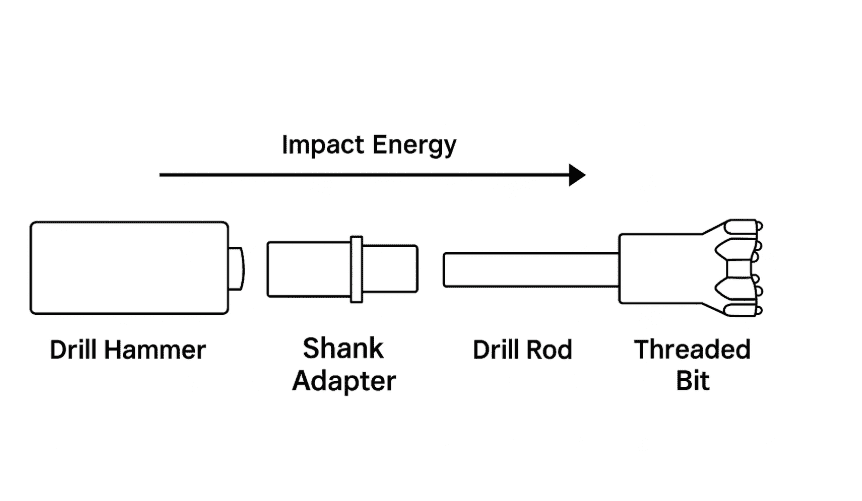
But in practice, front-end components often have a greater impact on performance than the equipment behind them. The shank adapter and threaded bit bear the highest stress and handle the critical transfer of impact energy. Small tolerance issues, mismatched components, or unsuitable consumable choices can quietly reduce performance long before a visible failure occurs. Recognizing how these issues develop is key to improving consistency and efficiency.
Quick diagnostic: how to tell when a shank adapter is the culprit
A failing drill shank adapter rarely stops working without warning. One of the earliest signs is inconsistent or uneven thread wear—particularly when one side of the thread looks polished or damaged more than the other. A noticeable reduction in hammering response is another common indicator. Operators frequently describe it as, “I’m hitting full power, but it’s not landing the same.”
Such symptoms often point to imperfect fit or energy transfer rather than rock hardness. Misalignment marks on the striking end or rotational chatter are also signs of stress distribution issues. These situations can occur when the adapter’s thread type or manufacturing tolerance isn’t well matched to the specific rig model—Atlas Copco, Sandvik, Furukawa, or others. Even small gaps or mismatches can influence how much energy reaches the bit, affecting the entire drilling chain.
Why threaded bits wear out or break: common failure causes
Threaded bits tend to show wear more visibly because they make direct contact with the rock. Carbide buttons can chip or crack if the bit’s face design isn’t suited to the formation—for example, flat-face bits may heat quickly in broken ground, while drop-center designs can wear unevenly in abrasive formations. Operators also report skirt wear when the bit diameter doesn’t align with required hole tolerances.
Heat buildup is another common issue, especially when flushing is insufficient. Packed cuttings can raise temperatures rapidly, leading to discoloration or premature carbide loss. Breakage may also stem from thread selection errors or minor misalignment in the drilling string. Although bit wear is expected during operation, using a bit that doesn’t match the formation or drilling parameters tends to shorten its lifespan significantly.
System compatibility: the hidden cause behind many failures
While individual component strength matters, overall performance depends heavily on how well the components work together. A threaded bit and shank adapter may both be well-manufactured, yet still perform poorly if thread types or fit tolerances differ slightly. Small compatibility issues can reduce how efficiently impact energy travels through the drill string.
Mixing consumables from different manufacturers can also introduce variations in steel hardness, heat treatment, or machining precision. These subtle differences may influence how consistently the hammer’s impact energy reaches the rock. In such situations, even high-quality drilling consumables: threaded bits may not perform at their best simply because the system as a whole is not well balanced. As operators often put it, “The hammer’s working, but the rock doesn’t feel it.”
Compatibility is not just a detail—it plays a fundamental role in maintaining stable drilling performance.
Operating conditions that accelerate wear and failure
Even when components are well matched, certain operating practices can increase wear. Excessive feed force, for instance, can introduce side loading that damages both threads and carbides. Insufficient impact pressure may reduce flushing efficiency, allowing fine cuttings to pack around the bit and generate heat.
Misalignment—whether from collaring technique or equipment wear—can add uneven stress across the adapter and bit. Flushing is another area where small adjustments make a big difference; inadequate airflow or water can cause rapid heat buildup in challenging formations. Formation misjudgment also plays a role: highly abrasive rock typically requires different bit geometry compared to dense, homogeneous material. These factors tend to accumulate, and early intervention helps prevent unexpected failures.
Cost impact: how wrong choices increase drilling cost
Component failures have direct operational and financial consequences. A shank adapter with shortened service life increases downtime and replacement frequency. A bit that wears out faster than expected raises cost per meter and production time. These costs accumulate quickly on longer drilling projects.
Reduced efficiency also increases fuel consumption and operator hours. In many cases, the more expensive outcome isn’t the broken component—it’s the cumulative effect of slower penetration, more frequent tool changes, and inconsistent hole quality. For drilling teams and procurement departments, focusing on proper selection and compatibility helps reduce both direct and indirect costs.
Practical takeaways: how to prevent adapter and bit failures
Preventing unnecessary wear begins with regular inspection and correct component selection. Verifying thread type, ensuring rig compatibility, and checking for early signs of wear—such as discoloration, polishing, or misalignment marks—helps identify issues before they escalate. Adjusting feed force and impact pressure to match real-time drilling conditions is equally important.
Flushing efficiency should align with the formation and bit design. When selecting bits, matching face geometry, button shape, and head diameter to the ground conditions delivers better overall performance. Well-matched, high-precision components promote stable energy transfer and help extend the lifespan of both the shank adapter and the bit. In top-hammer drilling, the system’s performance is determined by how well each component supports the next, especially at the front end where the impact is greatest.
Read More From Techbullion