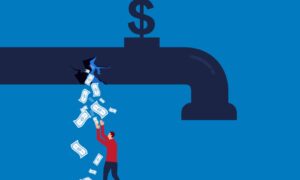
For much of modern business history, revenue was treated as something finance verified after the fact. Sales closed deals, operations delivered value, and accounting recorded outcomes. As long as invoices were issued and payments arrived, revenue was assumed to be intact.
That assumption no longer holds.
By 2026, independent research consistently shows that between three and seven percent of earned revenue is never fully captured each year. This loss does not stem from weak demand or customer churn. It comes from inside the organization, where commercial intent fails to translate into enforceable financial outcomes.
What makes revenue leakage particularly difficult to confront is that it hides inside apparent success. Customers remain active. Services continue to operate. Financial statements look accurate because they reflect what was recorded, not what should have been enforced. As a result, revenue leakage rarely presents itself as a single failure. It accumulates quietly, surfacing indirectly through margin erosion, forecasting instability, or audit scrutiny.
The shift toward subscriptions, usage-based pricing, and hybrid monetization models has fundamentally changed revenue behavior. Revenue is no longer static or predictable across periods. It moves continuously, shaped by usage, amendments, renewals, and performance obligations that evolve in real time. Finance teams are now responsible for revenue that is created dynamically, yet enforced through systems that were designed for stability.
In this environment, revenue leakage is no longer an operational inefficiency. It is a finance governance issue. Reporting accuracy alone is insufficient when enforcement fails upstream. By 2026, finance leadership is increasingly defined by the ability to ensure revenue integrity before revenue ever reaches the ledger.
Conclusion
By 2026, revenue leakage is no longer a quiet operational flaw that finance discovers during reconciliation—it is a structural risk that finance is expected to prevent. As revenue models become more fluid and customer relationships more dynamic, the gap between what is contractually earned and what is financially enforced has widened. Finance teams can no longer rely solely on accurate reporting after the fact. The real mandate now lies upstream: ensuring pricing, contracts, usage, and billing logic align in real time. Organizations that continue to treat revenue leakage as a back-office issue will see margins erode invisibly, while those that treat it as a governance priority will protect revenue integrity at its source. In 2026, strong finance leadership is defined not by how well revenue is reported—but by how effectively it is preserved.
Frequently Asked Questions (FAQs)
- What is revenue leakage in simple terms?
Revenue leakage refers to earned revenue that is never collected or enforced due to gaps in pricing, contracts, billing, usage tracking, or process execution. It is not lost sales—it is revenue that should have been captured but wasn’t. - Why did revenue leakage become more visible in 2026?
The rise of subscription-based, usage-based, and hybrid pricing models has made revenue more dynamic. These models rely on real-time data, frequent changes, and complex enforcement rules, increasing the likelihood of mismatches between what customers consume and what they are billed. - Why is revenue leakage now considered a finance problem instead of an operational one?
While leakage often originates in sales, operations, or systems, finance owns revenue integrity and financial governance. In 2026, finance is expected to ensure that earned revenue is enforceable before it reaches the ledger—not just accurately reported afterward. - How does revenue leakage affect financial reporting and forecasting?
Revenue leakage distorts margins, weakens forecast reliability, and creates inconsistencies between operational performance and financial results. Over time, it can trigger audit issues and reduce confidence in revenue metrics used for decision-making. - Can revenue leakage exist even if customers are paying on time?
Yes. Revenue leakage often hides in plain sight. Customers may pay every invoice correctly, yet still be underbilled due to incorrect pricing, missed usage, unexecuted contract changes, or outdated billing logic. Payment accuracy does not guarantee revenue completeness.