In an era obsessed with optimization, hustle, and visibility, the idea of refinement can feel almost countercultural. Yet that may be precisely why it is resonating so powerfully. Giulia Macchia, founder and creative director of The Finer Things, is betting that elegance, self-possession, and emotional discipline are not relics of the past, but emerging power skills for modern life.
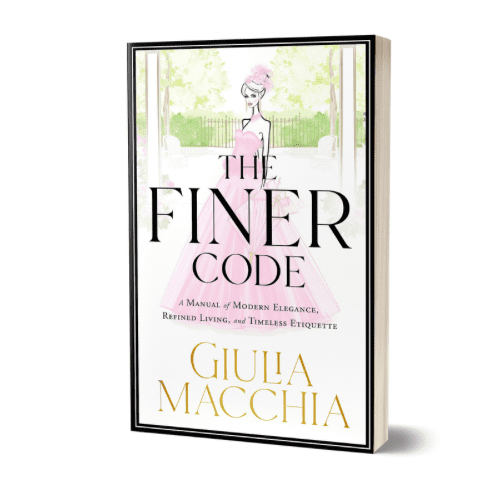
Her latest book, The Finer Code, released globally in digital and print formats, positions refinement as something far more practical than its reputation suggests. Rather than focusing on rigid etiquette rules or old-world formality, Macchia presents refinement as a system of self-worth that shows up in how people speak, host, listen, and move through the world.
The book arrives at a moment when some professionals feel burned out by constant performance while others are looking to turbocharge their productivity and value. Macchia’s approach reframes etiquette not as social theater, but as inner architecture. In her view, the way a person holds themselves emotionally and socially becomes a form of quiet leverage.
“The Finer Things is becoming a cultural house, and this book is the first pillar of that legacy,” Macchia says. “Etiquette is the exterior choreography. Refinement and soft skills are what build presence, character, and quiet power.”
Throughout The Finer Code, readers find structured guidance paired with warmth. Chapters are designed to be accessible, offering lists and real-world advice on hosting, dining, conversation, and social presence. But the deeper throughline of the book is emotional composure. Macchia treats calm, self-regulation, and dignity as learnable skills, not personality traits reserved for a select few.
This framing aligns with a growing recognition in leadership research that emotional intelligence and social fluency often determine long term success more than technical expertise alone. Hard skills may secure entry, but soft skills tend to determine who remains influential once inside.
Macchia argues that refinement is transformational precisely because it restores a sense of agency. When individuals feel grounded and composed, they often become more effective. Confidence grows, and with it the ability to navigate complex environments without force or friction.
The Finer Code also reflects a broader ambition for The Finer Things brand. What began as a platform has evolved into what Macchia describes as a modern cultural house dedicated to refinement, empowerment, and legacy. The book is positioned as the first installment in a series that will continue to expand the philosophy into both personal and professional realms.
While this volume centers on everyday life, social ease, and personal standards, Macchia is already developing a professional extension of the framework. This upcoming protocol line is designed for luxury services, hospitality, private staff, and high-level providers where presence and poise are essential to the client experience.
Perhaps most notably, Macchia has announced the 2026 launch of The Finer Things International Institute of Etiquette, Charm and Protocol. The institute is envisioned as a modern finishing and charm school inspired by mid-century models but updated for contemporary life. Its curriculum will focus on poise, grace, social intelligence, and cultural fluency rather than rigid social codes.
The timing may be strategic. As work becomes more global and interpersonal dynamics more complex, refinement may no longer be optional. It may be a differentiator.
In that sense, The Finer Code is less about learning which fork to use and more about learning how to hold oneself with dignity in moments that matter. It suggests that elegance is not about display, but about alignment between inner values and outward behavior.
For readers seeking a calmer, more intentional way to move through an increasingly loud world, Macchia’s message is clear. Refinement is not a luxury. It is a practice.