Business-to-business credit has always depended on information. Before allowing a customer to buy now and pay later, companies need some confidence that the invoice will eventually be paid. Traditionally, businesses have relied on credit reports, financial statements, trade references, and previous relationships to make that judgment.
The challenge is that financial conditions can change much faster than traditional credit information. A company that appeared financially stable several months ago may now be experiencing declining sales, mounting obligations, or difficulty paying suppliers. When credit decisions are based primarily on historical information, businesses may not recognize those changes until invoices are already overdue.
This is one reason real-time and frequently updated payment data is becoming increasingly valuable. By providing greater visibility into how customers are actually meeting their current obligations, payment data can help businesses make more informed decisions about credit limits, payment terms, and financial exposure.
Traditional Credit Information Has Limitations
Traditional business credit reports remain an important part of assessing risk, but no single credit score or report can provide a complete picture of a company’s financial position.
Credit information is inherently historical. Financial statements may represent a previous quarter or year, while some credit records may not immediately reflect recent changes in payment behavior. This creates a potential information gap between what a business looked like when the information was collected and how it is performing today.
The issue becomes particularly important in industries where financial conditions can change quickly. Supply disruptions, regulatory changes, declining demand, rising costs, or the loss of an important customer can alter a company’s ability to meet its obligations within a relatively short period.
Credit decisions therefore benefit from combining traditional information with more current indicators of financial behavior.
Payment Behavior Provides a Different View of Risk
One of the most useful signals available to a supplier is how a customer actually pays its bills.
Consider two businesses with similar conventional credit profiles. One consistently pays suppliers within agreed terms, while the other has recently begun allowing invoices to move from 30 to 60 and eventually 90 days overdue. A traditional snapshot may not immediately highlight the difference, but current payment behavior can reveal it.
Payment data can show whether customers are paying on time, how frequently invoices become overdue, how long balances remain outstanding, and whether payment patterns are improving or deteriorating.
These patterns do not guarantee what a customer will do in the future. They do, however, provide another layer of evidence that can help businesses evaluate risk rather than relying entirely on assumptions or older financial information.
Industry-Specific Data Can Fill Information Gaps
Traditional credit databases are designed to serve a broad range of businesses, but they do not always provide the level of detail needed to understand payment behavior within specialized markets. Some industries have unique operating structures, financing challenges, regulatory requirements, or supplier relationships that can make conventional credit information less informative on its own.
This is where industry-specific payment data can add another layer of visibility. Instead of relying solely on a general credit score, businesses can examine actual accounts-receivable information, collection activity, payment history, and changes in how quickly customers are settling their obligations. When this information is updated regularly, it can reveal patterns that may not yet appear in a traditional credit report.
Brett Gelfand, Managing Partner at Cannabiz Credit Association, has seen this issue firsthand. The association was developed in response to limited credit visibility within its specialized market and now uses shared accounts-receivable and collection data to help participating businesses evaluate commercial credit risk. Gelfand has explained that the usefulness of this information ultimately depends on how each company applies it to its own financial circumstances.
“Every company is different. There are some companies that have a lot of cash behind them that might be willing and able to take that risk and extend a lot of terms versus a small mom and pop that, if they took that risk, they could go out of business. So even with a score or a rating, it’s a helpful indicator, but you have to be responsible if you choose to extend credit terms; you have to digest that information for your business. It’s not a one-size-fits-all.” — Brett Gelfand, Managing Partner at Cannabiz Credit Association
That distinction is important. Credit data should not simply produce a universal “yes” or “no” decision. A company with substantial cash reserves may be comfortable accepting a level of payment risk that would be dangerous for a smaller supplier operating with limited working capital. The same customer can therefore represent very different levels of financial exposure depending on who is extending the credit.
Industry-specific data can make those decisions more informed by showing businesses what is happening within commercial relationships that resemble their own. Payment trends, outstanding receivables, collection activity, and changes in payment speed can provide useful context alongside conventional credit scores and financial information. CannaBIZ Credit Association, for example, has described using monthly accounts-receivable information to show how balances fall into current, 30-, 60-, and 90-day-plus categories, allowing members to observe changes in payment behavior over time.
As more industries adopt specialized data platforms and integrate them with broader financial technology, credit assessment could become increasingly contextual. Rather than relying on a static score alone, businesses can combine traditional credit information with recent payment behavior and industry-specific signals to decide how much credit to extend, what payment terms are appropriate, and when additional safeguards may be necessary.
Real-Time Data Can Reveal Problems Earlier
Timing is particularly important in credit management because financial problems tend to become more expensive as exposure increases.
Imagine a supplier that gives a customer a $25,000 credit limit. The customer initially pays reliably, but its payment behavior begins to deteriorate. If the supplier does not discover the change and continues approving additional orders, the outstanding balance could grow substantially before anyone recognizes the problem.
More current payment information can help identify warning signs earlier. A customer that begins consistently paying beyond agreed terms may warrant closer monitoring even if it has not yet defaulted on an invoice.
Early identification gives businesses more options. They might reduce the customer’s credit limit, shorten payment terms, request partial upfront payment, temporarily pause additional credit, or simply investigate the reason for the changing behavior.
Credit Decisions Can Become More Dynamic
Traditional credit policies sometimes treat approval as a one-time event. A customer completes an application, receives a credit limit, and continues using that limit unless a major problem occurs.
Data-driven credit management allows for a more dynamic approach. Credit limits can be reviewed according to actual payment performance. Customers that consistently meet their obligations may qualify for increased limits or more favorable terms. Those displaying deteriorating payment behavior can receive tighter limits until their financial position becomes clearer.
This creates an opportunity to make credit policies more responsive without becoming unnecessarily restrictive. Instead of categorizing customers permanently as either acceptable or unacceptable, businesses can adjust their exposure as risk changes. The same approach can benefit customer relationships. Reliable customers can potentially receive greater flexibility because their payment behavior provides evidence supporting the decision.
Technology Is Making Payment Information Easier to Use

The growing importance of payment data is closely connected to improvements in financial technology.
Modern accounting systems, accounts-receivable platforms, payment networks, and credit-management tools can capture substantial amounts of transaction information. When those systems are appropriately integrated, finance teams can spend less time manually gathering data and more time interpreting it.
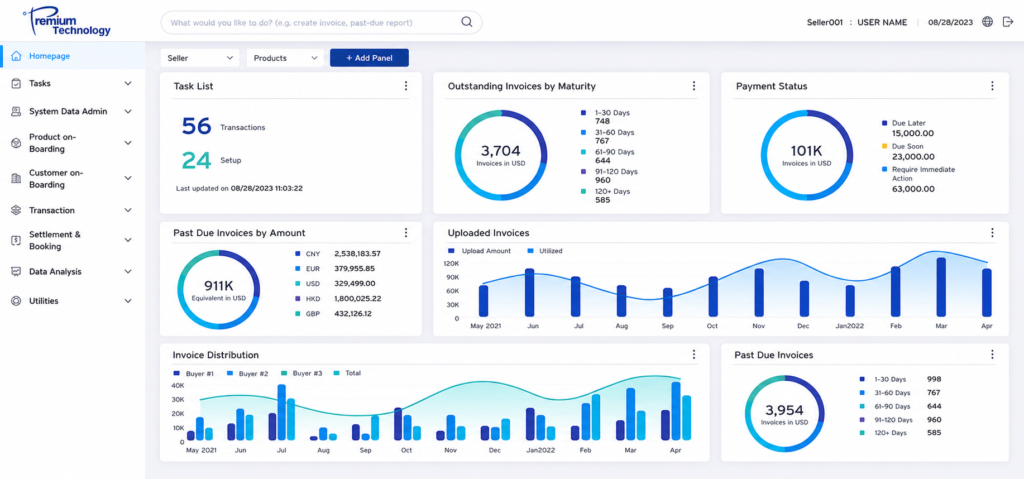
Dashboards can help businesses track overdue balances, payment trends, days sales outstanding, credit utilization, and changes in customer behavior. Automated alerts can also bring potentially concerning accounts to the attention of credit teams before overdue balances become significantly larger.
Technology does not eliminate the need for human judgment. Instead, it can provide finance professionals with more timely information on which to base that judgment.
Alternative Data Is Expanding the Credit Picture
Real-time payment information is also part of a broader movement toward using alternative data in financial decision-making. Conventional credit analysis may focus heavily on financial statements, credit scores, public records, and borrowing history. Newer systems can potentially incorporate additional indicators such as transaction patterns, invoice activity, cash-flow information, payment behavior, and other operational signals.
The value of these sources is not simply that they provide more data. The real advantage comes when additional information helps answer questions traditional reports cannot answer quickly enough. For B2B suppliers, one of the most important questions is simple: Is this customer currently demonstrating an ability and willingness to meet its commercial obligations?
Recent payment behavior can be highly relevant to answering that question.
Better Data Can Help Sales and Finance Work Together
Credit decisions frequently create tension between sales and finance teams. Sales departments naturally want to secure new customers and increase order values. Finance teams must consider whether those sales will ultimately turn into collected revenue. When information is limited, the two sides may evaluate the same opportunity very differently.
More transparent payment information can give both teams a clearer basis for discussion. Rather than rejecting or approving a customer based largely on instinct, decisions can be tied to measurable indicators.
For example, a customer with limited history might initially receive a smaller credit line. As the customer establishes a reliable payment record, the company could gradually increase its exposure. This approach can help businesses support growth without treating credit risk management as an obstacle to sales.
Real-Time Data Does Not Replace Good Credit Policies
Access to more information does not automatically produce better decisions. Businesses still need clear policies governing how credit data is interpreted and what happens when risk indicators change. A strong credit framework can establish how customers are evaluated, who has authority to approve limits, how frequently accounts are reviewed, and which developments trigger additional action.
Companies also need to consider data quality. Incorrect, incomplete, or poorly matched information can lead to inappropriate decisions regardless of how quickly it becomes available. Businesses using third-party data should understand where that information originates and how frequently it is updated.
Real-time information is therefore most valuable when it complements disciplined credit management rather than replacing it.
Predictive Analytics Could Strengthen Early Risk Detection

As payment datasets grow, predictive analytics may further change the way businesses manage customer credit.
Instead of waiting for an invoice to become seriously overdue, analytical systems can look for combinations of behaviors associated with increasing payment risk. Gradually lengthening payment times, growing outstanding balances, changes in order patterns, and repeated requests for extensions could collectively indicate that an account deserves attention.
Machine learning can potentially help identify patterns that would be difficult to detect manually across thousands of customers and invoices.
However, predictive tools should generally support rather than automatically replace professional judgment. Economic conditions, unusual transactions, temporary disruptions, and industry-specific factors may all require context that an automated model does not fully capture.
From Reactive Collections to Proactive Risk Management
Perhaps the biggest advantage of more timely payment information is the opportunity to address credit problems before they become collection problems. Traditional accounts-receivable management can become reactive. A business ships products, sends an invoice, waits for the due date, sends reminders, and eventually begins pursuing an increasingly overdue account.
A more data-driven model moves some of that attention earlier in the process. Businesses can evaluate customers before extending credit, monitor payment behavior while the relationship continues, and reconsider exposure when risk indicators change. The objective is not to predict every default. No dataset can completely eliminate uncertainty from commercial credit.
Instead, the goal is to reduce avoidable surprises.
The Future of B2B Credit Is More Data-Driven
Business credit will always involve judgment. Financial statements, traditional credit reports, relationships, industry knowledge, and professional experience will continue to influence decisions. What is changing is the amount and timeliness of information available alongside those traditional tools.
Real-time and frequently updated payment data can provide businesses with a closer view of how customers are actually managing their obligations. Combined with appropriate technology and sound credit policies, that visibility can help companies identify changing risks, establish more appropriate credit limits, and protect cash flow.
For businesses extending substantial amounts of trade credit, knowing what happened last year is useful. Increasingly, however, understanding what customers are doing right now may be just as important.