
Why New Tech Websites Take Weeks to Appear on Google, and What Actually Shortens It

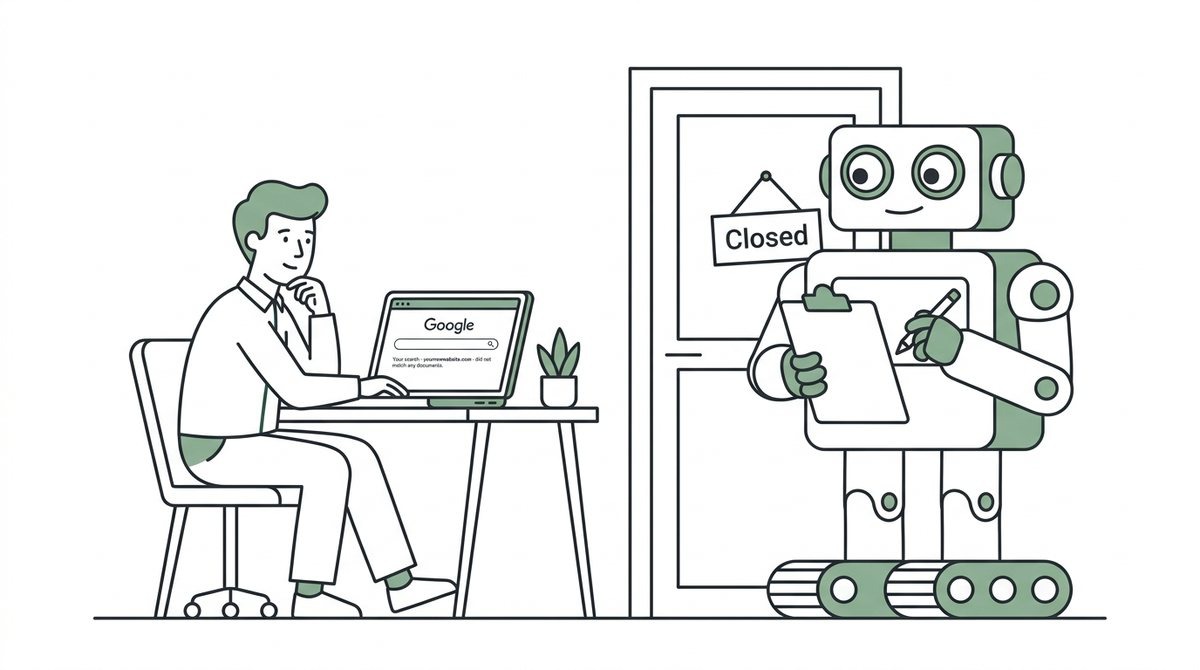
Every founder who has launched a product site has had the same week. The site is live, the announcement has gone out, the first users have signed up, and then someone types the company name into Google and gets nothing. Not a wrong result. Nothing. The site does not exist as far as the world’s largest search engine is concerned, and nobody can say how long that will last.
The delay is not a bug and it is not personal, and it is the first SEO problem most new sites meet. It is the consequence of how Google decides what to store, and understanding that decision explains both why some sites appear in hours and why others wait for months.
Crawling and indexing are two different decisions
The first confusion is that being crawled and being indexed are the same thing. They are not. Crawling is Google fetching a page. Indexing is Google deciding the page is worth keeping in its store of results. A page can be crawled today and left out of the index indefinitely, and Search Console has a status for exactly that: “crawled, currently not indexed”. For a new site, that status is the normal resting state of most pages.
Crawling turns out to be the easy part. When one Google indexing service launched its own site on a domain that had sat unused for a year, with no links pointing at it at all, it timed every step and published the results. A free “request indexing” click in Search Console brought Googlebot to the homepage in 77 seconds. Expedited submission routes brought the crawler to other pages in 3 to 130 seconds. Getting Google to look was never the problem.
Indexing is where the routes separated. The same homepage that was crawled in 77 seconds took about two and a half hours to appear in results. Pages sent through expedited routes appeared in minutes. Pages left to Google’s own discovery on a site nobody links to can wait weeks, because discovery depends on links, and a new site has none.
Why new sites wait
Google allocates attention according to how much it already trusts a domain. A site with history, links and traffic gets crawled often and indexed quickly, because past pages earned it. A new domain has no record, so every page is a small gamble Google is in no hurry to make. Three things extend the wait:
Nothing links to you. Google’s crawler moves along links. If no page it already knows points at yours, the only way in is a sitemap or a manual request, and both put you in a queue rather than at the front of it.
The pages look like every other new site. Thin product pages, templated copy and a blog with two posts give Google little reason to prefer your version of the information over the thousands it already holds. This is the reason behind most “crawled, currently not indexed” verdicts: not an error, a judgement.
Something on the page is telling Google to stay away. A noindex tag left over from staging, a robots.txt rule copied from a template, a canonical pointing at a different domain. These are more common than founders expect, and they are invisible until someone checks.
The free steps that shorten it
Before spending anything, four things cost nothing and remove most self-inflicted delays.
Check the technical blockers first. Fetch the page as a crawler would and look for a noindex directive, a robots.txt block and the canonical tag. A page that tells Google not to index it will not be indexed, however many times it is submitted. Free checkers exist that report these in seconds.
Submit a sitemap and request indexing for the pages that matter. Search Console’s request button is slow but real: it produces a crawl within minutes and, for a homepage, an index entry within hours. It is limited to a handful of requests a day, so use them on the pages that earn money.
Get one real backlink. A single link from an established site that Google already crawls is worth more than any amount of resubmission, because it puts your page on a path the crawler already walks. A directory listing, a partner’s page, a mention in a newsletter with a public archive.
Make the pages worth keeping. Every product page needs to say something the template did not. A real description, a real use case, real numbers. Google indexes what it thinks people will want to find.
When paying makes sense
Paid Google indexing services exist, and their reputation in SEO circles is mixed for a reason: some are useful, some are noise, and until recently none of them measured anything. The category is worth taking seriously in three situations: a large site whose crawl budget cannot cover new pages, a page that has been updated and Google is still showing the old version, and backlinks bought elsewhere that have not been indexed and therefore do not count for SEO at all.
The honest test of any such service is whether it verifies its own result. Indexing is checkable. Either a URL is in Google’s index or it is not, and Search Console will say which. A newer Google indexing service, rank.fast, built its whole model on that check: it submits pages through expedited routes so they get indexed fast, confirms the outcome against Search Console rather than a dashboard, and charges per indexed URL only, with pages that cannot be indexed flagged and excluded before any charge. It also runs the service on its own site in public, with a timestamped log of every page it publishes. Whether or not one uses a service like it, that is the standard to hold the category to.
What to expect, in numbers
From the published timings of that launch, on a domain with no history: crawl within seconds to minutes of any submission, free or paid; indexing within hours for a homepage requested through Search Console; indexing within minutes through expedited routes; and, for pages left entirely to discovery, no fixed timeline at all. Being indexed is admission, not position. Ranking for anything is a separate, slower matter of content, backlinks and authority, and no indexing service can promise it.
The practical lesson for a new tech site is to stop waiting on hope. Remove the blockers, submit what matters, earn one link, and check the result rather than assuming it. Google will index a new site. It just will not do it on the founder’s schedule unless the founder gives it a reason.







Comment