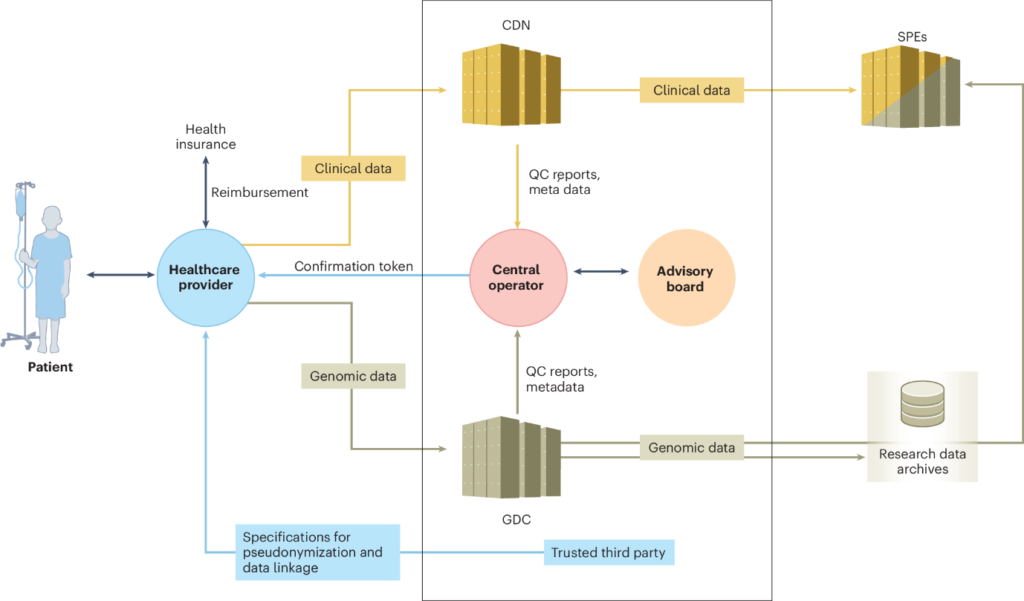
As countries race to sequence their populations, the unglamorous work of network design is quietly deciding which programmes can actually scale
Population genomics has become a national project. Britain’s 100,000 Genomes Project, delivered through Genomics England, the United States’ All of Us Research Program and China’s precision medicine initiative each committed years and billions of dollars to reading the genetic code of large numbers of their citizens. A second wave of national programmes across the Gulf, Asia and Europe has followed, each promising earlier diagnosis, better-targeted treatment and a genomic reference database tuned to its own population. The scientific ambition is widely discussed. The infrastructure reality behind it is far less understood, and it is beginning to separate the programmes that scale smoothly from those that stall.
The numbers explain why this matters. A single whole human genome produces roughly 100 to 200 gigabytes of raw data. A programme sequencing hundreds of thousands of people accumulates petabytes within its first few years of operation. As a widely cited analysis in PLoS Biology once put it, genomics is on a trajectory to rival or exceed astronomy, YouTube and Twitter as one of the largest producers of data on the planet. That data does not sit still once it is generated. It streams off sequencing instruments during runs that last for days, passes through quality control and read alignment, travels to cloud platforms for compute-intensive analysis, and returns for clinical review and long-term archival, all under health-data rules that demand encryption, comprehensive audit trails and strict access control at every step.
Most public discussion of genomics focuses on the sequencing chemistry, the steadily falling cost per genome, or the bioinformatics and machine learning used to interpret results. The network that carries the data between all these stages is rarely mentioned. Yet it is often the part that determines whether a programme can grow.
A poorly designed network becomes a bottleneck that no amount of computing power can fix. When a facility cannot move data off its instruments fast enough, or cannot maintain a reliable path to its cloud analytics environment, the most advanced sequencers and the most sophisticated pipelines simply wait.
Why the problem is becoming more urgent
Three trends are converging to make network design a pressing concern rather than a background one.
The first is sheer scale. Early genomics projects were measured in thousands of genomes. National programmes are now measured in hundreds of thousands, with several aiming for millions over the coming decade. As throughput rises, the data-movement problem grows faster than most organisations anticipate, because it is not only the volume of stored data that increases but the number of simultaneous high-volume transfers the network must sustain.
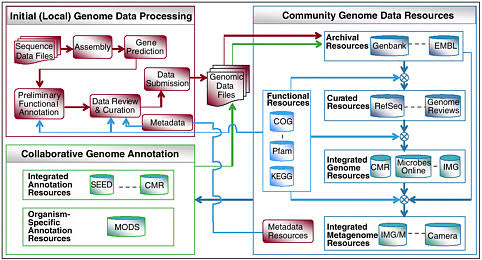
The second is the shift to hybrid cloud. Sequencing instruments and initial data handling remain on-premises, close to the laboratory, but the heavy computational work of alignment, variant calling and annotation increasingly runs on public cloud platforms that offer elastic capacity. Researchers at institutions such as the Broad Institute and the European Bioinformatics Institute (EMBL-EBI) have written extensively about moving genomic analysis into the cloud, and a well-known review in Nature Reviews Genetics set out both the promise and the practical friction of cloud-based genomic collaboration. This split architecture is efficient, but it turns the connection between the facility and the cloud into a critical path that has to be engineered deliberately rather than assumed.
The third is regulation. Genomic data is health data about identifiable people, and in many jurisdictions it sits among the most sensitive categories a state holds. The controls required to handle it responsibly, encryption in transit and at rest, network segmentation, detailed logging and role-based access, are not optional extras. They are constraints that shape the architecture from the beginning, and retrofitting them into a network that was not designed to accommodate them is both expensive and risky.
Taken together, these trends mean that the network layer can no longer be treated as plumbing. It has become a design variable that directly affects sequencing throughput, data integrity, analytical performance and regulatory compliance.
What conventional approaches tend to get wrong
In a typical enterprise, network traffic is bursty and forgiving. An email, a video call and a file download can each tolerate a dropped packet or a brief delay without meaningful consequence. A genomics facility behaves nothing like this. Sequencing instruments generate sustained, high-volume data streams during runs that can last anywhere from 24 to 72 hours. Losing throughput midway through a run, or introducing latency into the systems that monitor and control the instruments, can waste days of laboratory work and, in the worst case, compromise the integrity of irreplaceable samples.
Compounding this, a genomics facility has to run several very different kinds of traffic side by side. There is bulk data transfer from the sequencers, which needs raw, sustained bandwidth. There is low-latency control and monitoring traffic, which needs reliability and determinism far more than speed. There are environmental sensors tracking temperature, humidity, air quality and power, which produce a constant trickle of small messages. There are sample-tracking and laboratory information management systems tied to individual patients, which carry sensitive data and cannot be allowed to fail silently. And there are large transfers to and from the cloud, which are both bandwidth-hungry and security-critical. Each of these has a different profile and a different priority.
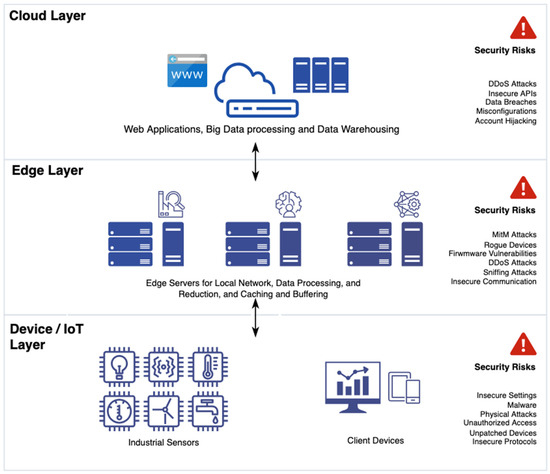
The common mistake is to treat them as a single, undifferentiated network. This is what tends to happen when an organisation extends its standard enterprise IT into a laboratory, assuming that what works for offices will work for sequencers. In practice, the traffic types contend with one another in ways that are difficult to predict. A firmware update pushing unexpected broadcast traffic across the sensor network can, in a shared design, degrade the very instrument data streams that must not be interrupted. The result is unpredictable performance and an expanded attack surface, precisely the outcomes a national health programme can least afford.
Current tooling does not fully close this gap either. Established network design guides for healthcare provide useful campus and data-centre patterns, and next-generation firewalls offer strong perimeter controls, but these are building blocks rather than a complete answer. The genomics-specific challenge, integrating laboratory instrument networks, high-performance computing, cloud analytics and health-data governance into one coherent system, has been very lightly documented. Academic and industry literature, including infrastructure accounts from UK Biobank and EMBL-EBI, has tended to treat computation and storage as the interesting problems and the network as a given, addressing at most a single slice such as inter-institution data transfer or wide-area optimisation. A holistic, end-to-end treatment of the entire network stack within a genomics facility, from the physical cabling connecting instruments to the cloud connectivity enabling analysis, has been largely absent.
An architecture built around data flow, not devices
A more deliberate approach starts by treating the network as a primary design concern and organising it around how data actually flows, rather than around the current inventory of devices.
The central principle is separation of concerns. Laboratory instrument networks, computational networks, storage networks and management networks are designed as distinct domains, kept logically and, where possible, physically apart. If a fault or a security incident occurs in one domain, the containment prevents it from cascading into the others. A sequencing operation continues undisturbed even if a problem arises on the sensor network or in the administrative environment.
This separation is not only defensive. It also protects performance. When high-frequency sensor traffic and multi-day sequencing transfers share the same paths, they compete for resources in ways that are hard to model in advance. Isolating them means each can be tuned for what it genuinely needs. Instrument control traffic can be given priority and determinism so that monitoring and run-status information is never delayed by bulk transfers. The large data streams can be given the sustained bandwidth they require, including techniques that reduce protocol overhead for long, high-volume transfers. The sensors get their own quiet lane where their constant chatter cannot interfere with anything critical. Each type of traffic is engineered for its own characteristics instead of being forced into a single compromise.
The second principle is designing for growth from the outset. Genomics data volumes rise quickly and unevenly, and the number of instruments, compute nodes and storage arrays tends to expand throughout a programme’s life. An architecture that can absorb this growth by extending existing tiers, rather than by being torn up and rebuilt, is far better suited to a programme whose scale is a moving target. Additional sequencing instruments are accommodated by adding capacity to the laboratory tier and extending the relevant network segments. Compute and storage are increased by connecting new racks to the existing distribution layer. Peak analytical loads are handled by drawing on the cloud’s elastic capacity without changing the on-premises network at all. Capacity is added, not re-architected.
The third principle is treating cloud connectivity as a first-class element of the design. Because modern bioinformatics increasingly runs on public cloud for its elastic compute, the link between the facility and the cloud is a critical path in its own right. A resilient design provides a dedicated, high-bandwidth primary connection that bypasses the public internet, supplemented by a secondary encrypted path over the internet as a failover. This dual-connectivity model means that analysis can continue even when the primary link is undergoing maintenance or experiences an unexpected outage, with the secondary path accepting reduced throughput as a deliberate trade-off for continuity.
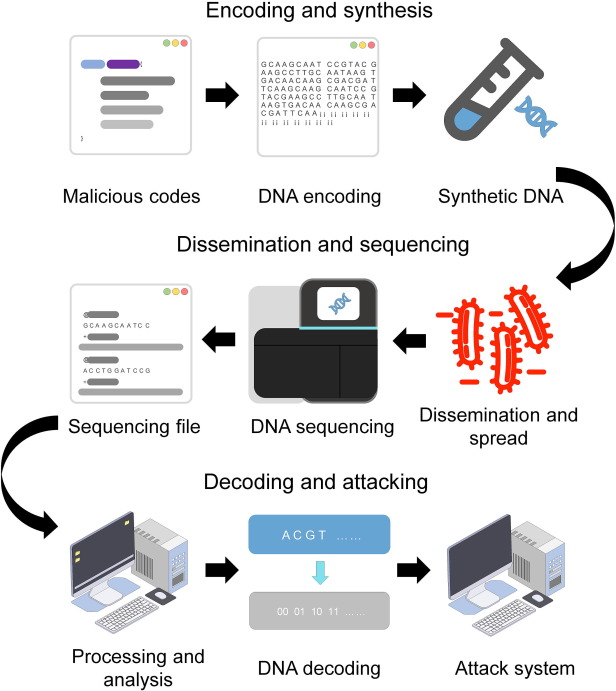
Underpinning all of this is security by design. Rather than being bolted on at the end, controls are embedded at every layer, from physical access to network equipment through to segmentation policies within the data-centre fabric. Data is encrypted both in transit and at rest. Traffic between segments follows a least-privilege model, so that laboratory instruments can reach the storage they need for data ingestion but have no direct route to the internet, and compute nodes can reach storage and cloud transit but remain isolated from the instrument network. Comprehensive logging feeds a central monitoring platform, providing the audit trail that health-data governance requires. It is a design in which the significance lies less in any single component than in the discipline of integrating them into one coherent system, an approach documented in detail by network architect Yasir Imran in a published reference architecture drawn from a live national deployment that processed hundreds of thousands of samples. The innovation, in that account and others like it, is architectural rather than cosmetic.
Lessons that transfer
Deployments at this scale tend to surface the same practical lessons, and they are worth stating plainly because they run counter to how many organisations instinctively build.
Engage instrument vendors on network behaviour early, and verify it empirically. Vendor documentation often fails to reflect how instruments actually behave under sustained load, and traffic profiling in real conditions is usually necessary to establish reliable design inputs. Separate laboratory and enterprise networks from the very start, because their operational and security requirements differ fundamentally and a shared design introduces avoidable risk. And treat monitoring as a day-one requirement rather than a later addition, since the performance baselines it produces are what allow anomalies to be spotted and capacity to be planned before problems become visible to users.
None of these lessons is exotic. Their value lies in being learned before a programme is committed to a design, rather than after, when remediation is expensive and disruptive.
Where this becomes broadly relevant
The pattern extends well beyond genomics. Any sector that combines high-volume instrument data, sensitive personal information and hybrid-cloud analytics faces a version of the same problem, and can draw on the same principles.
In medical imaging, large archives of scans must move between imaging devices, storage and analytical tools under the same privacy obligations, with the same tension between throughput and isolation. In connected diagnostics and point-of-care testing, a growing fleet of instruments generates continuous data that has to be gathered securely and reliably. In large-scale clinical research, multi-site studies depend on moving sensitive datasets between institutions and cloud environments without compromising governance. In industrial and scientific settings more broadly, from advanced manufacturing to particle physics, high-volume instrument telemetry raises closely related design questions. And in regulated financial data platforms, the combination of high transaction volumes, strict compliance and hybrid-cloud processing mirrors the genomics challenge almost point for point.
For national health programmes specifically, the implication is strategic rather than merely technical. As sequencing becomes a routine part of public healthcare rather than a research novelty, the infrastructure beneath it moves from an implementation detail to a determinant of whether precision medicine can be delivered at population scale. A programme can procure the best sequencers and license the best analytical software, but if its network cannot move data reliably and securely between them, the investment underperforms. The countries and institutions that treat network design with the same seriousness they bring to sequencing capacity will be the ones whose programmes scale cleanly, stay compliant and deliver clinical value on schedule.
This is also a market signal for the UK, the United States and the EU. Each has invested heavily in population genomics and in the digital health infrastructure around it, and each faces the same underlying question of how to build data-movement architectures that are fast, resilient and governable. The organisations that answer it well will hold a genuine advantage as genomic medicine moves from pilot programmes into everyday care.
The future of the field
The broader shift is clear. As data volumes climb and analysis moves fluidly between on-premises and cloud environments, trust, performance and governance increasingly have to be designed into the infrastructure itself rather than added afterwards. The network stops being a passive carrier and becomes an active part of how a system stays fast, safe and compliant. Genomics is simply one of the first fields to feel the full weight of this requirement, because it combines extreme data volumes, deep sensitivity and hybrid-cloud analysis in a single operational envelope.
The programmes now being built will set the reference points that others follow. Getting the network architecture right is not a guarantee of success, but getting it wrong is an increasingly reliable route to bottlenecks, security gaps and stalled ambitions. As precision medicine advances, the quiet discipline of designing for data flow, rather than for the devices of the moment, will be one of the factors that decides which national programmes actually deliver on their promise. It will not be the last field where the infrastructure turns out to be the story.