In the chemical recycling sector, a curious valuation paradox has emerged. PureCycle Technologies (NASDAQ: PCT) commands a $2.07 billion market capitalization while trading at $11.49 per share, yet operates at barely one-third of its plant capacity. Meanwhile, Aduro Clean Technologies (NASDAQ: ADUR, CSE: ACT, FSE: 9D5) trades at $14.75 with a market cap of just $465 million, despite recently graduating from Shell’s prestigious GameChanger program and securing partnerships that could transform Mexico’s 1.5 million tonnes of annual plastic waste. This $1.6 billion valuation gap has caught the attention of cross-border venture capitalist Yazan Al Homsi, whose investment thesis favors the smaller player with cleaner fundamentals.
The Investor Behind the Contrarian Bet
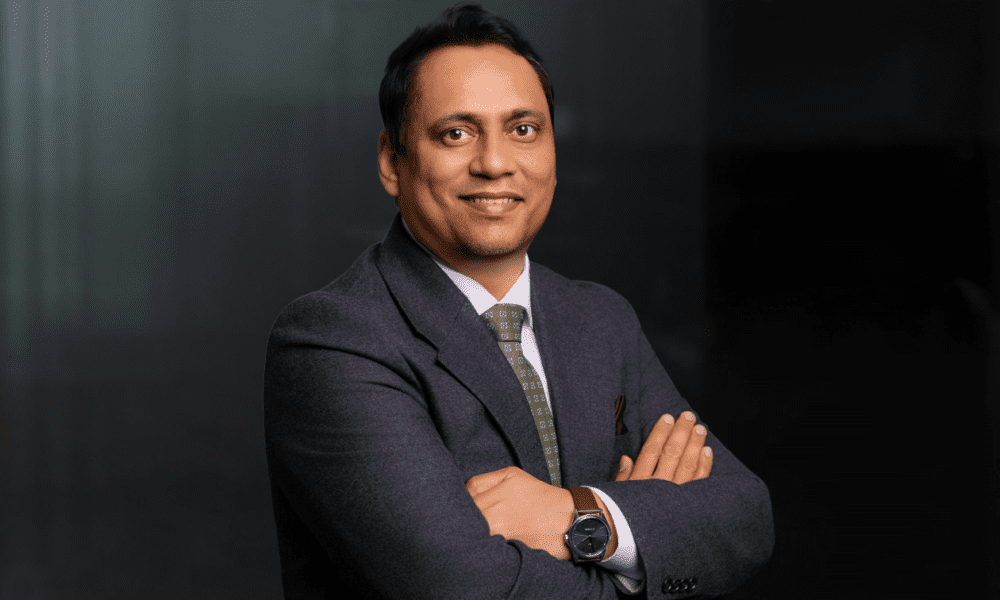
Yazan Al Homsi brings a unique cross-border perspective to North American cleantech investing. A McGill University finance graduate (2004, top 5% of class) and CFA charterholder, Al Homsi spent over 10 years at PricewaterhouseCoopers in the Middle East before founding Founders Round Capital in Vancouver (2017) and Catalyst Communications DMCC in Dubai (2018). His dual-headquartered approach bridges Middle Eastern capital with North American innovation.
Al Homsi’s portfolio demonstrates a consistent investment philosophy: clean balance sheets, platform technologies, and owned intellectual property. Beyond Aduro, his holdings include Rocket Doctor AI (CSE: AIDR), which achieved 88% gross margins and 700,000+ patient visits in 2025, and Charbone Hydrogen Corporation (TSXV: CH), whose Sorel-Tracy facility is nearing hydrogen production. His early involvement with Medicago (a Canadian pharmaceutical startup that grew from under $10 million to $357 million in market capitalization before its 2013 acquisition by Mitsubishi Pharma and Philip Morris) established his reputation for identifying undervalued cleantech opportunities.
The Balance Sheet Reality Check
PureCycle’s $2.07 billion market cap masks significant financial stress. The company carries approximately $249.3 million in long-term debt plus $24.5 million in short-term obligations, creating a debt-to-equity ratio of 5.21. With $234 million in cash following a $300 million capital raise in June 2025, the company faces an annualized net loss of approximately $234 million. Going concern language in SEC filings suggests less than one year of cash runway at current burn rates.
More concerning is operational performance. PureCycle’s Ironton, Ohio, facility operates at just 27-37% of its 107 million-pound annual nameplate capacity. While the company achieved a rate test of 14,000 pounds per hour in August 2025 (sufficient for full capacity if sustained), consistent operation at this level remains elusive. Q3 2025 revenue of $2.4 million missed the $6.04 million analyst estimate, and CEO Dustin Olson acknowledged “the road to full-scale operations has been more difficult than expected.” TD Cowen downgraded PureCycle to Hold with a $9 price target in November 2025, citing delayed orders and execution concerns.
In contrast, Aduro maintains minimal debt with over C$33 million in cash following a $20 million USD raise in December 2025 at $11.50 per share. The company’s Q2 fiscal 2026 operating loss of C$6.46 million pales compared to PureCycle’s cash burn. D. Boral Capital maintains a Buy rating on Aduro with a $24.17 price target, implying 63% upside from current levels. For Al Homsi, this represents pure equity upside versus debt-service obligations.
Technology Moat: One Plastic vs. Seven
PureCycle’s business model centers on physical recycling using a solvent-based process licensed from Procter & Gamble. The technology handles only polypropylene (PP), representing roughly $120 billion in addressable market. This single-material focus creates vulnerabilities. The process requires feedstock with at least 90% polyolefin purity, making it highly sensitive to contamination. Seal failures and mechanical issues at the Ironton plant have compounded operational challenges, while undisclosed yields remain a persistent red flag for analysts.
Aduro’s Hydrochemolytic Technology (HCT) takes a fundamentally different approach. The chemical recycling platform processes seven plastic types: PET, HDPE, PVC, LDPE, PP, PS, and “Other.” This breadth matters. Aduro can process feedstock with 75% polyolefin content versus PureCycle’s 90% requirement, opening access to contaminated waste streams that competitors cannot economically handle.
Recent validation milestones strengthen Aduro’s technical credibility. On December 16, 2025, the company graduated from Shell’s multi-year GameChanger program, achieving external validation that its technology yields over 80% liquid hydrocarbons (C5-C23) with lower gas and char formation than conventional pyrolysis. Steam-cracking trials in November 2025 at a European facility demonstrated that Hydrochemolytic oil processed “as produced” achieved ethylene and propylene yields comparable to fossil feedstocks, a critical requirement for petrochemical integration.
Three weeks earlier, Aduro signed a multi-year collaboration with ECOCE, Mexico’s non-profit environmental association backed by the food and beverage industry. The partnership targets Mexico’s 1.5 million tonnes of annual flexible packaging waste, with testing progressing from laboratory through pilot scale using real post-consumer packaging starting January 2026.
Aduro’s total addressable market spans $300 billion across three verticals: plastics recycling ($120 billion), renewables ($120-250 billion), and bitumen upgrading ($50-150 billion). This multi-vertical approach creates multiple paths to commercialization, a key element of Al Homsi’s investment thesis.
The IP Ownership Premium
PureCycle operates under a licensing agreement with P&G that includes grant-back clauses, meaning technology improvements may revert to the licensor. This constrains strategic flexibility and exit optionality, as acquirers typically prefer to own rather than license core technology.
Aduro owns its intellectual property outright. The company holds 9+ patents protecting its HCT platform, and filed a new process design patent on January 30, 2025. This ownership structure enables high-margin global licensing without capital expenditure, a model Al Homsi has successfully deployed across his portfolio. All of his holdings, including Rocket Doctor AI and Charbone Hydrogen, own their core technology platforms.
In November 2025, Aduro signed a letter of intent for a Netherlands brownfield site (€2 million purchase price) for a potential demonstration plant. The company is targeting early 2027 for an approximately 8,000 tonnes-per-year facility, with final site selection expected by the end of January 2026. This commercialization pathway remains under Aduro’s full control, unconstrained by licensing agreements.
The Hidden Bitumen Catalyst
While PureCycle focuses exclusively on polypropylene recycling, Aduro’s chemistry works on hydrocarbons broadly. The bitumen upgrading market represents $50-150 billion in opportunity, a vertical where PureCycle has zero exposure. Canada’s position as a global bitumen hub, combined with Aduro’s Vancouver headquarters proximity to Alberta’s oil sands, creates a geographic advantage. Western Canadian producers, including Suncor, Canadian Natural Resources, and Cenovus, are actively seeking lower-carbon upgrading solutions. One major partnership in this vertical could justify a valuation higher than Aduro’s current $465 million market cap.
Aduro’s lower-temperature Hydrochemolytic process offers cleaner, more efficient extraction compared to current high-heat thermal methods. This application of the same water-based chemistry used for plastics recycling demonstrates the platform’s versatility and the potential for revenue streams beyond waste management.
Why the Gap May Close
The $1.6 billion valuation differential exists for rational reasons. PureCycle has an operational plant and commercial partnerships with brands including Procter & Gamble (10-ounce detergent bottle caps expected in stores early 2026) and a top-five global quick-service restaurant chain. These represent tangible progress toward commercialization.
However, execution risk creates potential for convergence. PureCycle’s 27-37% capacity utilization, combined with massive cash burn and high debt load, contrasts sharply with Aduro’s validation momentum from Shell, ECOCE, and steam-cracking trials. For investors like Al Homsi who prioritize clean balance sheets and owned IP over operational assets with uncertain economics, the smaller player offers asymmetric risk/reward.
Near-term catalysts include Aduro’s demonstration plant site selection at month-end and ongoing advances in AI-powered waste management applications. As regulatory frameworks accelerate (including the proposed US CIRCLE Act’s 30% tax credit and Canada’s expanding Extended Producer Responsibility programs), technologies that can profitably process contaminated plastics gain strategic importance.
Al Homsi’s contrarian positioning reflects a fundamental investment principle: sometimes the biggest opportunity lies not with the largest company, but with the one possessing superior fundamentals trading at a discount to its potential.
Disclosure: This article reflects analysis of public market data and is provided for informational purposes only. It is not financial advice or a recommendation to buy or sell any security. Investing in small-cap and pre-commercialization companies involves significant risk, including the risk of total loss. Readers should conduct their own due diligence and consult qualified financial professionals before making investment decisions.