
Why Island Kitchens Are More Vulnerable to Airflow Disturbances During Cooking


Island kitchens create an open, spacious cooking environment, but their layout can create ventilation challenges less common in conventional wall-based kitchens. Without surrounding walls, cooking areas are exposed to air movement from several directions, which can affect how smoke, steam, and grease particles travel toward an extractor hood.
Even when an extraction system is properly installed, surrounding airflow can influence its ability to capture cooking emissions effectively. Understanding these conditions helps homeowners make better decisions about kitchen ventilation, appliance positioning, and overall layout. The issue is not simply how powerful an extractor hood is, but how effectively it works within its surroundings.
Why Island Kitchens Have Different Airflow Conditions
One important difference between island kitchens and conventional cooking areas is the amount of open space surrounding the cooktop. A wall-mounted cooking area has a nearby vertical surface that can influence rising warm air. An island cooktop, however, is generally exposed on multiple sides. This means cooking emissions have fewer physical boundaries to help contain their movement as they rise. Although open layouts can improve accessibility and create a more connected living environment, they also allow surrounding air currents to interact more freely with the cooking plume.
The island’s position within the wider kitchen also influences ventilation conditions. For example, an island located between a kitchen entrance, dining area, and living room may experience different airflow patterns throughout the day. Opening nearby windows or doors can add air movement, while connected heating and cooling systems may circulate air across the cooking area. These conditions do not automatically make island kitchens poorly ventilated. However, they can make effective extraction more sensitive to the surrounding environment, particularly when the hood has limited capture coverage.
How Cooking Creates Rising Thermal Plumes
Cooking naturally produces heat, which warms the surrounding air and makes it less dense than the cooler air around it. As a result, the heated air rises above the cooking surface, creating what ventilation engineers call a thermal plume. This upward movement can carry different cooking emissions, including smoke, grease-containing aerosols, and water vapor. The plume’s strength and characteristics depend on factors such as cooking temperature, appliance type, and the activity taking place on the hob.
An extractor hood is designed to intercept this rising plume and remove cooking emissions through its ventilation system. However, the plume expands as it rises, drawing in additional surrounding air. If it reaches the hood without significant interference, capture may be more effective. When surrounding air currents redirect the plume, some emissions can escape beyond the hood’s capture area and spread into the kitchen. This is why hood dimensions, positioning, and surrounding airflow should be considered together, rather than treating extraction power as the only measure of performance.
How Cross-Drafts Disrupt Cooking Ventilation
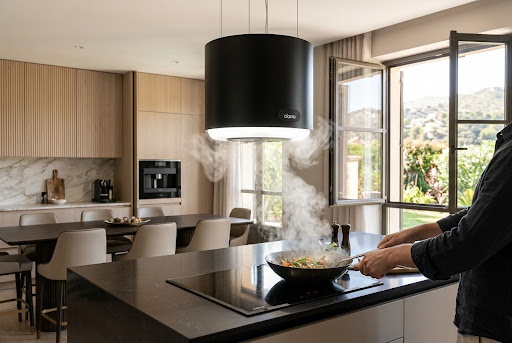
Cross-drafts occur when air moves across the cooking area rather than following the natural upward movement of heated air. These currents can push a thermal plume sideways, making it harder for the extractor hood to capture cooking emissions before they spread. Island kitchens can be particularly sensitive to this effect because their open positioning exposes the cooking area to airflow from several directions. ASHRAE’s kitchen ventilation guidance identifies cross-drafts as a major factor in hood performance, especially for island canopy configurations.
Several everyday features can contribute to these disturbances. An open window may introduce moving air across the cooktop, while a ceiling fan can change airflow direction around the extraction area. HVAC supply outlets may also create currents depending on their position and discharge direction. Even people walking around an island can produce small local air disturbances. The following table summarises some common sources and their potential effects.
| Airflow source | Potential ventilation effect |
| Open windows | Can redirect rising cooking emissions |
| Ceiling fans | Can alter airflow around the hood |
| HVAC outlets | May create cross-drafts near the cooktop |
| Nearby movement | Can produce local air disturbances |
| Open-plan spaces | Allow emissions to disperse more freely |
Why Island Extractor Hoods Require Careful Positioning
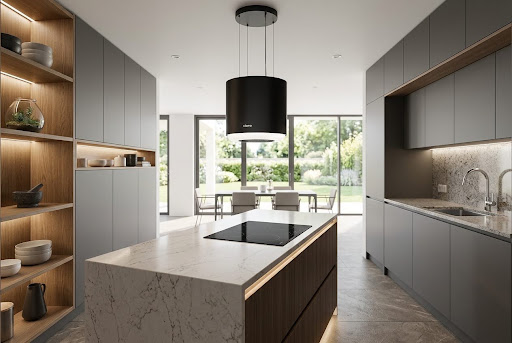
The position and dimensions of an extractor hood influence how effectively it captures cooking emissions. Its capture area needs to accommodate the rising plume, including how it expands above the cooking surface. If the hood is too narrow, positioned too high, or poorly aligned with the hob, some emissions may escape around its edges. An appropriately selected Island Cooker Extractor Hood should therefore be assessed for coverage, installation requirements, and compatibility with the cooking appliance. Manufacturer guidance is especially important because recommended mounting heights and installation arrangements vary by model.
Different extraction configurations also suit different kitchen designs. Island canopy hoods hang above the cooking area, while wall-mounted canopy hoods benefit from a nearby wall. Ceiling-integrated systems provide a less visually prominent installation, whereas downdraft systems draw cooking emissions downward or sideways near the cooktop. Each arrangement has different capture characteristics and installation considerations. No single configuration suits every kitchen. Homeowners should consider ceiling height, cooking habits, available space, extraction requirements, and the manufacturer’s performance specifications before choosing a system.
How Kitchen Layout and Duct Design Influence Extraction
Effective ventilation depends on more than the hood itself. Once cooking emissions enter the extraction system, the ductwork must transport the air outside or through an appropriately designed recirculation arrangement. In ducted systems, long duct runs, multiple bends, unsuitable duct dimensions, and installation restrictions can increase airflow resistance. This can reduce the airflow delivered by the installed system compared with its advertised or laboratory-rated performance. Research from Lawrence Berkeley National Laboratory has identified duct resistance, incorrect installation, and dirty hood inlets as factors that reduce installed airflow in residential ventilation systems.
Hood dimensions should also match the cooking surface rather than being chosen for appearance alone. For example, a 90cm cooker hood may offer suitable coverage for a wider hob, depending on the appliance dimensions and hood design. However, a wider unit does not automatically guarantee effective capture if its installation height, airflow characteristics, or surrounding conditions are unsuitable. Replacement air is another important consideration because extracted air must be replenished to maintain balanced ventilation. When comparing equipment, manufacturer resources such as those from CIARRA Appliances can help homeowners review product configurations and installation guidance relevant to their kitchen layout.
Practical Ways to Reduce Airflow Disturbances in Island Kitchens
Managing surrounding airflow is an important first step in improving island kitchen ventilation. Homeowners can observe whether open windows, ceiling fans, or nearby air-conditioning outlets create noticeable currents across the cooking surface. Where possible, avoid directing strong airflow toward the cooktop or extractor hood. This does not mean that natural ventilation or ceiling fans must always be avoided. Instead, consider their positioning and operation alongside the extraction system. A ventilation professional can help assess more complicated layouts where several air sources interact.
Select and install the extractor hood according to the manufacturer’s specifications and the dimensions of the cooking appliance. Coverage, mounting height, and duct arrangement all affect performance. Regular maintenance helps prevent grease buildup from clogging filters and reducing airflow. A few practical checks can make ongoing ventilation management easier:
- Check whether nearby fans or air outlets create disruptive currents.
- Follow the recommended hood mounting height and installation instructions.
- Inspect filters and accessible duct sections for grease accumulation.
- Consider replacement-air requirements when planning ducted extraction.
Operating the hood during cooking, rather than waiting until smoke or odours become noticeable, also helps remove emissions as they are produced. Continuing extraction briefly after cooking can help clear remaining airborne pollutants.
Building a Better-Performing Island Kitchen Ventilation Setup
Island kitchen ventilation works best when you consider the entire arrangement as one system. The open layout, rising thermal plume, surrounding cross-drafts, hood capture area, and duct configuration all influence how effectively cooking emissions are removed. Improving performance therefore requires more than choosing an extractor with a higher advertised airflow rating. Appropriate positioning, suitable coverage, balanced replacement air, and regular maintenance are equally important considerations.
For homeowners planning a kitchen renovation, understanding these factors early can help avoid ventilation problems after installation. Reviewing available extraction configurations and manufacturer guidance from CIARRA Appliances is a useful next step when comparing options. Ultimately, the goal is to create a ventilation setup that works with the kitchen’s airflow conditions rather than against them.
FAQs
- Why are island kitchens more vulnerable to airflow disturbances?
Island kitchens have open cooking areas without surrounding walls to help contain rising cooking emissions. Air movement from windows, doors, ceiling fans, and HVAC systems can redirect smoke and steam before they reach the extractor hood.
- How do cross-drafts affect island cooker hood performance?
Cross-drafts can push rising cooking emissions sideways, moving them outside the hood’s capture area. This can allow smoke, grease particles, and cooking odors to spread into the surrounding kitchen instead of being extracted effectively.
- Can a ceiling fan affect ventilation in an island kitchen?
Yes. A ceiling fan can influence air movement around the cooking area and potentially disturb the rising thermal plume. Its effect depends on its position, speed, and airflow direction relative to the extractor hood.
- Does a wider extractor hood improve ventilation in an island kitchen?
A wider extractor hood can cover a larger cooking surface, but width alone does not guarantee better ventilation. Mounting height, capture depth, airflow characteristics, duct configuration, and surrounding air movement also influence performance.
- How can homeowners improve airflow around an island cooker hood?
Homeowners can reduce disruptive cross-drafts, position fans and air outlets carefully, select an appropriately sized extractor hood, follow installation recommendations, maintain filters, and ensure suitable replacement air for ducted extraction systems.







Comment