
Why induction furnace nameplate power does not establish plant output

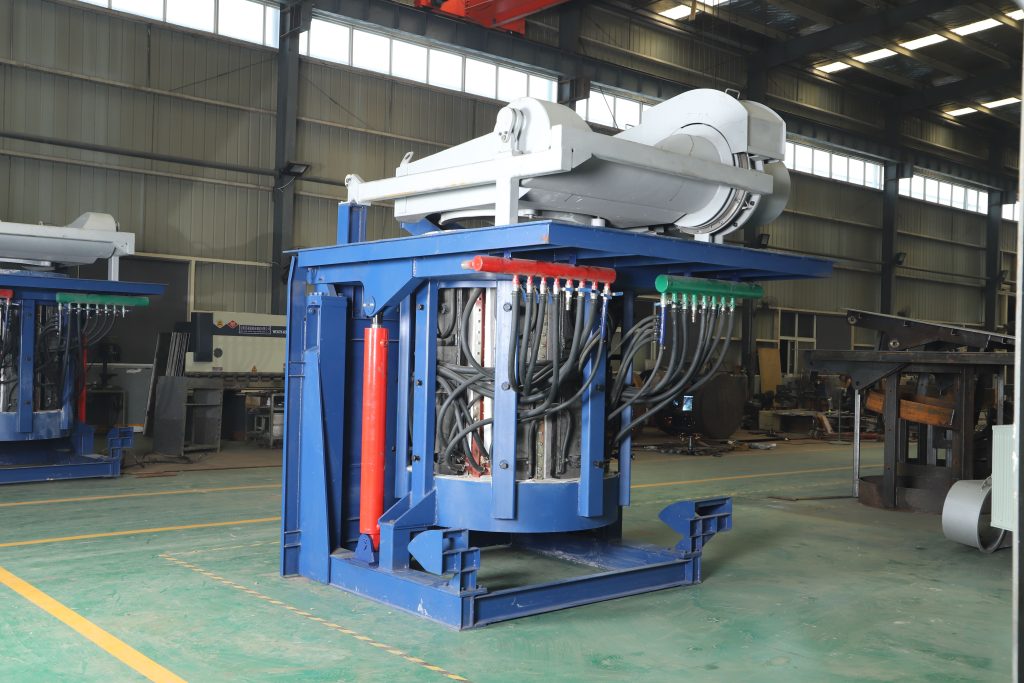
An induction furnace investment can look convincing on a specification sheet and remain difficult to evaluate as a production asset. Nameplate power tells the buyer something about the electrical equipment. It does not, by itself, establish hourly output, the timing of molten-metal deliveries or the site’s ability to supply the proposed load. Those questions become sharper when a project adds another furnace body.
Dinghong’s 1V2 series illustrates the distinction: a shared supply can distribute power between furnace bodies, but sharing is not duplication. For industrial technology investors and plant managers, the useful question is what the complete arrangement can deliver within the actual production schedule. A credible proposal connects electrical capacity, melting duty and downstream availability before assigning value to an expansion.
Start with the production promise
Ask what output means. Melted mass, metal ready to pour and accepted finished product are different endpoints, so a forecast needs to identify the endpoint it measures and the time interval over which it claims that performance before an equipment rating drifts into a plant-level promise. Write that distinction down. It affects what the buyer can reasonably ask a commissioning trial to demonstrate.
Hourly output also needs a schedule. Make the sequence visible: charge preparation, melting, checks, holding and transfer all belong to the operating picture, even when the offer concentrates on the furnace itself. Ask which activities overlap and which require the same people or equipment. This is a planning exercise, not a reason to invent a universal cycle time. The supplier’s assumptions must match the buyer’s production route closely enough for a trial to test the forecast.
Put the boundary beside the forecast. It is easier to challenge before investment approval than after commissioning.
Coreless and channel equipment serve different duties
The US Department of Energy describes a coreless induction furnace as a refractory crucible surrounded by a water-cooled alternating-current coil. In a channel furnace, molten metal forms the secondary circuit of a transformer; this arrangement is commonly associated with holding duty. These descriptions explain why the broad label induction furnace is insufficient for a capital comparison.
Establish the duty first. When a project centres on melting solid charge rather than keeping molten metal ready for downstream use, the buyer needs to examine the proposed induction furnace against that specific task and confirm exactly which equipment the supplier is offering. Names are insufficient. An independent source’s description of a furnace type does not prove that the vendor manufactures it or that it belongs in the quoted package.
Batch capacity is an inventory figure
Dinghong publishes nominal batch capacities of 0.1–20 tons across its melting-furnace range. Its DHG steel shell line is listed at 0.5–20 tons, while the DHL aluminum shell line is listed at 0.1–8 tons. These are product-family capacity bands, not guaranteed hourly production rates. Nor does shell material identify which metal a proposed installation is suitable to melt.
Capacity describes how much belongs to a batch under the relevant rating. Throughput adds time and a defined output condition. A larger vessel therefore needs a corresponding explanation of the intended heating duty, electrical supply and transfer schedule. Require that explanation before treating extra capacity as extra revenue. The forecast must show what changes in the operating sequence, rather than multiplying an untested number of batches by the catalogue capacity.
A shared converter needs an allocation schedule
The manufacturer’s power-supply range includes the 1V1 series, 1V2 series and parallel power supply. Dinghong describes the 1V2 series as allocating power from a supply to two furnace bodies. That description does not mean each body receives the full nameplate power simultaneously. Any proposal relying on shared power needs to state the available allocation during each operating stage.
Draw the proposed melting and holding periods together. Mark the power requested by each vessel and the total available from the supply, then ask what happens when a delayed pour overlaps with the next melting period and both furnace bodies need energy that the original schedule assigned at different times. Label this as a scenario. It is a planning question, not a report of an observed site event.
Grid discussions belong before equipment commitment
Connection approval is site-specific. Bring the proposed load schedule to the responsible electrical engineer and utility contact, including the supply characteristics, planned operating combinations and any unresolved assumptions that affect when equipment will run together, so their assessment addresses the installation the factory actually intends to operate. General equipment descriptions cannot settle this work.
The 1V1 series gives buyers a named product family to discuss when reviewing a dedicated arrangement; it still needs a defined duty and an electrical design. Compare alternatives at the plant boundary, including the equipment expected to run together. A list of installed ratings without operating combinations leaves the reviewer to guess at the proposed demand.
For an investment committee, record unresolved connection work as an open dependency. Do not absorb it into an optimistic commissioning date simply because the furnace specification has already been selected.
Ask for a marked-up load list when the proposal changes. If the revised offer adds a vessel but retains the same converter, the reviewer needs to see which operating periods change, how the shared supply is allocated and whether the expected output still follows from that schedule. Keep the earlier version. Comparing the assumptions is more informative than comparing the purchase prices alone, because it shows what the added equipment is expected to do.
Cooling remains part of the electrical asset
A closed cooling tower separates the enclosed process-fluid path from the external spray-water and air path. In Dinghong’s DHBH-70T table, the listed spray-pump power is 2.2 kW and the listed spray-pump flow is 58 m³/h. Neither value states the total electricity demand of a furnace installation, and the spray flow does not specify process-loop circulation.
Include auxiliary equipment in the proposed load list, with each rating attached to the component it describes. The Dinghong furnace and power-supply range provides a starting point for identifying those interfaces. A complete offer still needs to say who specifies the cooling duty, who confirms the circuit requirements and who verifies the assembled installation. Missing responsibilities are difficult to price because they become engineering questions only after the equipment boundaries meet.
The limits of efficiency claims
The Department of Energy links induction-system performance to the material, electrical resistance, coupling and required temperature rise. These factors sit beyond a converter’s efficiency label. An electrical power factor likewise answers a different question from energy consumed per unit of usable metal. Treating those quantities as interchangeable removes the process from the investment calculation.
Where it stops: a published component specification does not establish the operating cost of a proposed plant. Ask where electricity will be metered, what output will be weighed and how holding periods will be treated. A claimed saving needs a baseline with compatible boundaries. Until those conditions exist, retain the figure as a supplier claim requiring application evidence rather than a return already earned by the project.
Make acceptance follow the operating case
A furnace operating schedule is a useful attachment to the acceptance plan. It links the commercial promise to the sequence that the commissioning team must demonstrate. Write it in terms that production, electrical and finance staff can all check, keeping assumptions visible beside the result they support.
- Define the material and batch condition covered by the proposed trial.
- Specify the output endpoint and the timing boundary.
- Show power allocation during overlapping furnace duties.
- List auxiliaries included in the electricity measurement.
- Identify the evidence needed to close the grid-connection dependency.
Leave room to record a failed assumption. A trial that exposes a mismatch is still useful evidence, whereas a demonstration with no agreed production boundary cannot establish the investment case. The strongest comparison is the one that makes the nameplate rating, operating schedule and measured output traceable to the same proposed job.







Comment