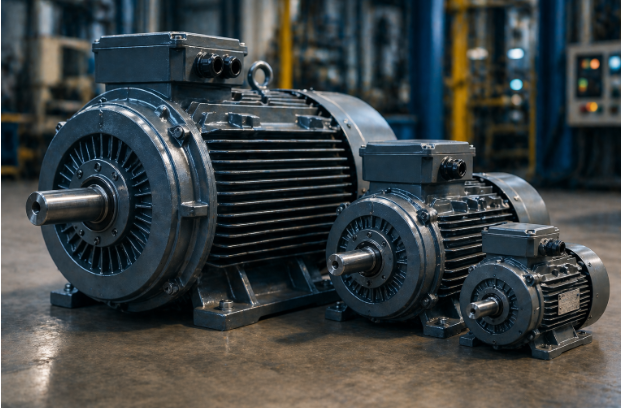
Despite their reliability and robust design, they can lead to costly downtime, expensive repairs, and production losses.
Understanding why industrial electric motors fail and how to prevent similar problems is important to maintain efficiency and reduce operational risks. As there are more than one causes of motor and drive issues, thus it becomes essential to know both mechanical and technical aspects that can lead to motor failure.
Common Reasons for Industrial Motor Failure
-
Electrical Overload
Electrical overload is one of the main reasons why industrial motors fail. This happens when the motor draws more current than its specifications. This is generally due to a low voltage supply or excessive demand on the motor.
Overloading can also happen due to mechanical load or improper motor design. When a motor runs more than its ability, it overheats, damaging internal and insulation components.
-
Bearing Failure
Bearing failure in industrial motors is highly common and has more than one cause. Based on IEA data, nearly 51% of motor failures are due to bearing-related problems. Incorrect reinstallation of the motor can also misalign the bearings.
Whether it’s angular or parallel misalignment, it can cause damage to the motor. Bearing failure usually manifests as noise, vibrations, or increased temperature. And if not checked regularly, it can cause a complete breakdown of the motor.
-
Overheating
Heat can cause serious damage to electrical equipment. Industrial electric motors generate heat during operation, and excessive heat can degrade insulation and lubrication effectiveness, ultimately leading to failure. High ambient temperatures, lack of ventilation, or blocked cooling systems can accelerate overheating.
-
Insulation Breakdown
Motor windings are insulated to prevent short circuits. However, insulation can deteriorate due to moisture, heat, aging, and chemical exposure. Once insulation fails, electrical faults like short circuits or ground faults can happen, leading to motor failure.
-
Contamination
Industrial environments are generally harsh, exposing motors and other machinery to dust, moisture, and chemicals. Contaminants can infiltrate motor windings or components, impacting bearings and cooling systems. This is common in industries where proper sealing or maintenance practices are not performed.
-
Improper Power Supply
Uneven voltage supply or regular power surges can stress motor windings and reduce overall efficiency. Even a small voltage imbalance can significantly increase the temperature of a motor, reducing its lifespan.
How to Prevent Industrial Motor Failure?
Preventing motor failure needs a dynamic approach that includes proper selection, smart monitoring, and regular maintenance.
-
Proper Motor Selection
Choosing the right motor according to the industrial requirements is the first step towards reliability. Factors such as duty cycle and operating environment must be considered. Industries looking to buy electric motor online UK should make sure that they choose motors that are quality-made and meet their specifications.
-
Routine Maintenance
Like any other electrical or mechanical component, scheduled maintenance is important in order to extend the lifespan of industrial electrical motors. This includes:
- Inspecting and cleaning components
- Checking for any signs of wear or damage
- Properly lubricating the bearings
- Tightening electrical components if loose
Working with industrial motor warehouse UK can help ensure a guarantee of quality replacement of parts and genuine service.
-
Temperature Monitoring
Installing thermal protection devices or temperature sensors can help to detect overheating before it can damage internal components. Monitoring systems can automatically shut down the motor if temperatures exceed limits, preventing collective damage.
-
Vibration Analysis
Vibration monitoring is a powerful protective measure. Changes in vibration patterns can indicate misalignment, bearing wear, or imbalance. Early detection enables corrective measures before failure occurs.
-
Lubrication
Lubrication reduces friction and wear in motor components, especially bearings. Using the right amount of lubricant is important regularly. Over-lubrication is as harmful as under-lubrication, so it is necessary to follow the manufacturer’s guidelines or call an expert.
-
Environmental Protection
Nearly 16% of motor failures occur due to humidity and environmental conditions. Using sealed or specially designed motors for dusty and humid environments can surely reduce the chances of motor failure.
-
Electrical Protection System
Installing devices like surge protectors, voltage regulators, and overload relays can safeguard a motor from electrical issues. These systems help maintain stable power conditions and also prevent damage caused by voltage fluctuations.
-
Regular Insulation Testing
Scheduled insulation resistance testing can help identify early signs of degradation. This allows maintenance teams to solve the issue before they lead to any failure.
The Role of Quality and Cost Efficiency
While it may be required to cut costs when sourcing motors, investing in high-quality equipment pays off in the long run. Affordable electric motors UK suppliers, such as Industrial Motor Warehouse provide reliable options. They have both three-phase and one-phase AC motors bearing loads from 0.12kW to 200kW. The key is to ensure that affordability does not come at the expense of efficiency and durability.
Additionally, sourcing from trusted suppliers when looking to buy electric motor online UK, ensures access to warranties, certified products, and seamless technical support.
Conclusion
Industrial electric motors are important assets that require careful attention to perform optimally. Failures are generally the outcome of preventable issues such as poor maintenance, electrical problems, and overheating. By understanding the causes and preventive measures, industries can effectively reduce downtime.
A proactive maintenance strategy, combined with correct motor selection and reliable sourcing, is the best preventive measure against unexpected failures. It has been seen that an electrical motor should be checked approximately every 2000 hours of working operation.
Ultimately, the objective is not just to fix motors when they fail, but to create systems that can keep them running efficiently.