
Why Developers Are Looking at Expandable Housing for Faster Project Delivery?

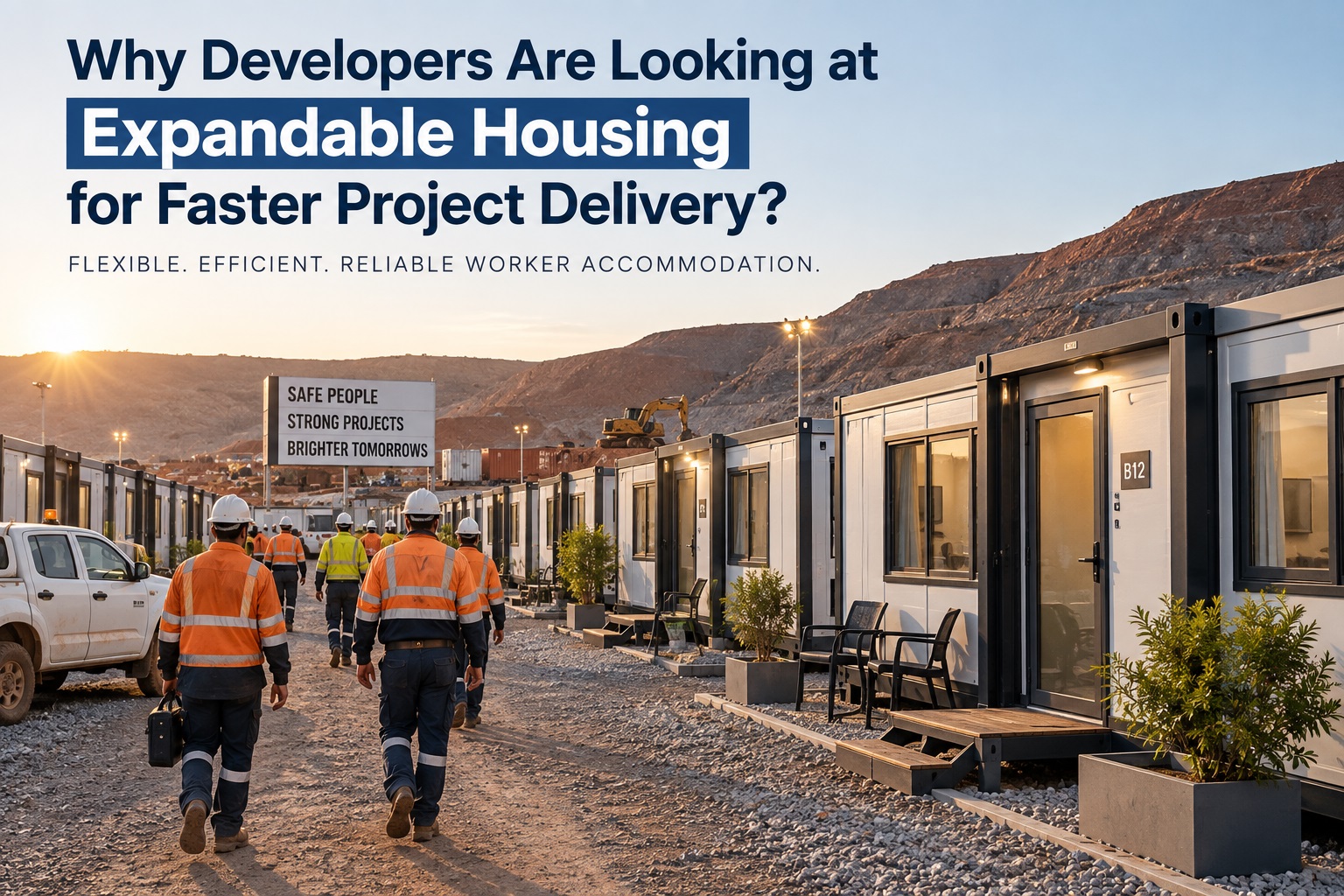
Construction developers are under growing pressure to deliver usable buildings faster while managing labor, logistics, material costs, and increasingly demanding project schedules. Traditional construction remains essential for many developments, but it can involve lengthy sequences of site work, multiple trades, weather-related delays, and complicated coordination. As a result, developers are paying closer attention to off-site and modular construction methods that can move more of the building process into a controlled manufacturing environment.
Among these options, Expandable Container House For Sale is attracting interest because it combines compact transportation with a larger usable footprint after installation. Instead of constructing an entire building from scratch at the project site, expandable units can be manufactured in a factory, transported in a compact configuration, and expanded after reaching their destination. This approach can be particularly relevant to projects where speed, repeatability, and efficient logistics are important.
Faster Delivery Through Off-Site Manufacturing
One of the biggest reasons developers are examining expandable housing is the potential to shorten the amount of work required at the construction site. With conventional construction, structural work, walls, insulation, electrical systems, plumbing, and interior finishes may all require separate stages and different contractors.
Factory-built housing changes that sequence. Much of the manufacturing and preparation can take place away from the development site while foundations, access routes, drainage, and utility connections are being prepared simultaneously. This parallel approach is one of the established advantages of modular construction because factory production and site preparation do not necessarily have to wait for each other.
Expandable housing takes this concept further by arriving in a compact form and opening into a larger usable space once positioned. JEEZOO, for example, describes its expandable houses as factory-built units designed for efficient shipping and rapid installation.
Less Construction Work on the Site
Every additional task performed on a construction site can introduce another scheduling dependency. Developers have to coordinate workers, deliveries, equipment, weather conditions, inspections, and subcontractors. Reducing the number of site-based activities can therefore make a project easier to organize.
Expandable housing can reduce this complexity by moving significant portions of production into the factory. Structural components, wall systems, electrical and plumbing elements, and interior features can be prepared before the unit reaches the development.
The benefit is not simply speed. A controlled factory environment can also provide greater consistency in manufacturing. Modular construction research has identified factory production as a way to improve quality control and reduce some of the performance variations associated with site-based construction.
Compact Transportation Can Simplify Logistics
Transportation is another factor developers must consider, particularly when a project involves multiple units or a location that is difficult to access.
A conventional prefabricated building module may require transportation as a large finished section. An expandable unit, by contrast, can be transported in a more compact configuration and expanded after reaching the site. This design can make shipping and handling more practical for certain projects.
JEEZOO product range illustrates how this concept works across different sizes. Its 40-foot expandable model, for instance, is designed to fold for transportation and expand into a substantially larger floor area after installation.
For developers managing projects across different locations, this compact transport model can be an important consideration when evaluating the overall construction process.
A Useful Option for Repetitive Projects
Expandable housing can be particularly relevant when developers need several similar units rather than one highly customized building.
Projects such as worker accommodation, temporary housing, guest accommodation, remote-site facilities, and small-scale residential developments can require multiple units with broadly similar layouts. Standardized factory production can make these projects easier to repeat.
Instead of treating every building as a completely separate construction project, developers can work with a defined unit design and reproduce it across a site. This can improve planning and make material and labor requirements easier to estimate.
The modular construction sector has already demonstrated the value of standardized production for applications including housing, student accommodation, hotels, and other repeatable building types.
More Predictable Project Scheduling
For developers, a shorter construction period is valuable, but predictability can be just as important.
A project that repeatedly experiences delays can affect financing, tenant commitments, sales schedules, and the timing of revenue generation. Factory production can reduce exposure to some site-specific interruptions, particularly weather-related disruptions during manufacturing.
This does not mean expandable housing eliminates every possible delay. Site preparation, transportation, permits, foundations, utility connections, and installation still have to be coordinated properly. However, shifting more work away from the site can give project teams greater control over the construction sequence.
The result can be a more structured development schedule in which factory production and site preparation progress alongside one another.
Flexible Solutions for Changing Project Needs
Development projects do not always have fixed requirements. A developer may need additional accommodation during a particular phase of a project or require buildings that can serve a different purpose later.
Expandable housing can offer flexibility because the units can be configured for different applications. Depending on the design, they can function as residential spaces, offices, accommodation units, or other project facilities.
JEEZOO offers several expandable house sizes and configurations, including compact 10-foot models and larger 20-, 30-, and 40-foot options.
This range allows developers to consider the appropriate unit according to land availability, intended use, transportation requirements, and project scale.
Why Developers Are Considering Expandable Container Houses
The growing interest in expandable housing is ultimately connected to a broader change in construction thinking. Developers are increasingly looking beyond the traditional assumption that every building must be constructed almost entirely on-site.
For projects where speed and repeatability are priorities, an expandable container house for sale can represent a different way to approach development. Rather than beginning with months of site-based construction, developers can evaluate factory-built units that are manufactured in advance and installed after delivery.
JEEZOO’s expandable housing range is designed around this model, combining factory production, compact shipping, and on-site expansion for residential and project-based applications.
Speed Still Depends on Good Planning
Expandable housing is not a shortcut that removes the need for professional project planning. Developers still need to evaluate local building regulations, site conditions, foundations, drainage, utilities, transportation access, installation requirements, and the intended use of the building.
Research on modular construction also highlights some limitations, including the importance of completing designs early and checking whether transportation routes can accommodate the modules.
For that reason, the strongest results are likely to come when expandable housing is considered from the beginning of the development process rather than introduced after conventional construction plans have already been finalized.
The Future of Faster Project Delivery
The appeal of expandable housing is not based on one feature alone. Its potential comes from combining several efficiencies: factory production, standardized components, compact transportation, reduced site work, and rapid installation.
As developers continue searching for ways to control schedules and deliver usable space more efficiently, these characteristics make expandable housing an increasingly relevant option to evaluate.
For developers interested in exploring different models, applications, and configurations, Expandable Container House provides an example of how factory-built expandable homes can be integrated into modern development strategies.
Ultimately, the question is not whether expandable housing will replace traditional construction everywhere. Different projects require different approaches. Instead, developers are looking at where factory-built, expandable units can provide a practical advantage—particularly when rapid deployment, repeatable designs, transportation efficiency, and predictable project scheduling are central priorities.






Comment