
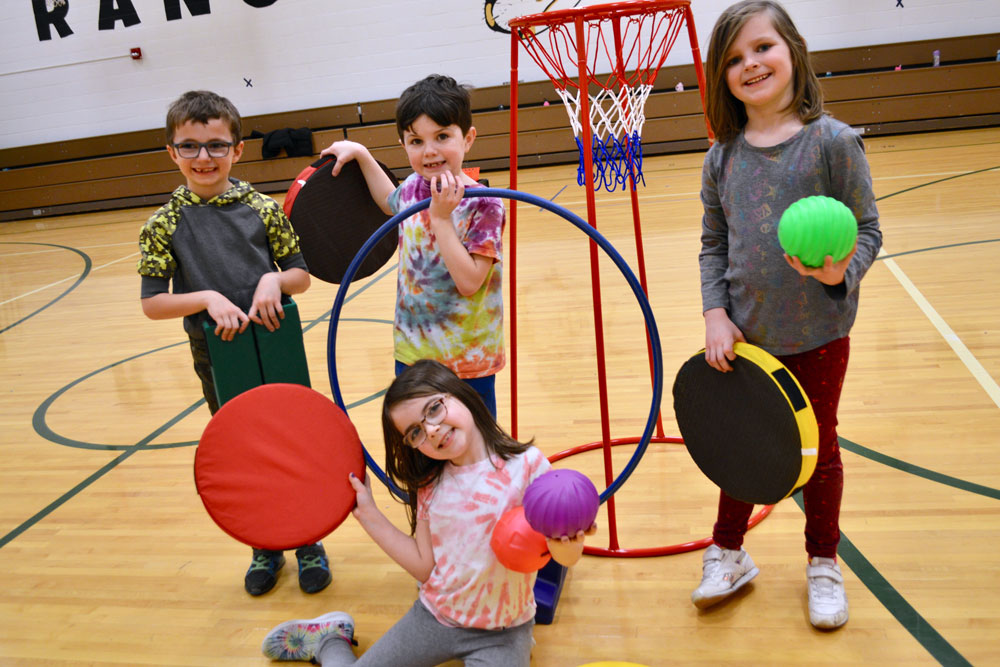
Federal regulations under the Individuals with Disabilities Education Act require physical education services, specially designed if necessary, for every child with a disability who receives a free appropriate public education. Only districts with no physical education program for students without disabilities in the same grades are exempt. That language ties equipment to each student’s plan, and it means no single product answers the question in the title.
Begin With the IEP and Regular Class
Each student must be given the chance to join the regular physical education program, with two exceptions. One is full-time enrollment in a separate facility, and the other is a need for specially designed physical education prescribed in the student’s individualized education program. In that second case, the school must supply the services directly or arrange them through other public or private programs.
Students enrolled in a separate facility stay covered, because the responsible agency must make sure they receive appropriate physical education services. Equipment follows those decisions, so the plan comes before the catalog.
Equipment for Balance and Mobility Needs
PullBuoy, an American manufacturer of school PE equipment for kindergarten through 12th grade, says its low-profile foam balance beams support adapted PE. Its FAQ also names soft foam sports sets alongside the beams.
- StarterBeam joins six 2-foot segments, each 5 inches wide and 2.5 inches high, into a 12-foot beam with over 30 setups.
- Curve-A-Beam also reaches 12 feet in six sections and lists 15 configurations.
- All-Surface Connect-A-Scooter lists a 12-inch platform for ages 3 to 5 and a 16-inch platform for ages 6 to 12 and adults.
- Multi-Domes are ABS plastic with four perimeter holes and can be filled with water or sand up to 12 pounds, and they cost $189.99.
Scooter wheels are 4-inch polyurethane on a welded steel frame, and sets of six come with three connectors and cost $406.99, or about $68 per scooter. Prices start at $79.99 for StarterBeam and $87.95 for Curve-A-Beam, while the 18-piece Create-A-Beam costs $165, about twice the price of a 12-foot beam.
StarterBeam stays only 2.5 inches off the floor. Matching a beam to a student’s goal still rests with the teacher and the plan, because a product page lists dimensions and cannot list what a student needs.
Choosing Gear for Reach and Height
SlotCones hold crossbars in slots that cover six height settings between 3 and 18 inches, and a vertical slot holds any hoop. Each set costs $98.95, and the listing adds an optional weighted base. One set covers several reach levels.
Testing matters as much as specifications. One guide on this site about building inclusivity in education technology says automated checks miss real barriers and recommends testing with learners who have disabilities. Trying a cone set with the student before a class order applies the same habit to a gym.
Gear for Grip and Gentle Contact
Mushroom Paddles come as a set of six with 5-inch flexible rubber heads, foam neoprene handles and wood shafts. Foam GeoShapes use soft foam with a weighted base and large openings that students crawl or step through, and they list ages 3 to 7 and up. GeoShapes cost $315, and foam paddle sets in the same catalog cost $91.99 to $106.99, compared with $71.50 for the rubber-headed Mushroom Paddles.
Handle material and shaft length change how a paddle feels in the hand. Pages list materials and not grip ratings, so a trial in class fills that gap.
Planning Group Play Around Mixed Abilities
TeamWebs pair 10 nylon ropes with Velcro connectors and include a basket and an activity guide. Human Hoops are wearable baskets sold as six belts and six baskets. TeamWebs cost $79.99 and Human Hoops cost $69.99, so each whole-class piece costs under $80. Both pieces involve a full group at once, which matters when a regular class includes a student whose plan calls for specially designed physical education activity and shared play.
Before ordering any listed piece, three questions are worth asking the team that wrote the plan.
- Which goal in the student’s plan does the piece address, and which listed size or setting matches it?
- What materials, weights and heights does the page list, and does a trial in class match those figures?
- Does the piece let the student join the regular class activity, which is the starting rule?
PullBuoy lists shipping in about 2 business days, with free shipping on orders over $49, which a single beam at $79.99 or a paddle set at $71.50 already meets. Order one piece, try it with the student named in the plan, and buy a class set after that trial.