Choosing the best equipment tracker for remote or high-risk environments is not just a procurement decision. It is an operational safety decision that affects uptime, compliance, accountability, and response speed when something goes wrong. In locations like deserts, offshore platforms, mountain job sites, disaster zones, mines, and conflict-adjacent areas, equipment does not simply get misplaced. It can become unreachable, unsafe to retrieve, or costly to replace. Add harsh weather, weak connectivity, limited power, and higher theft risk, and the gap between a basic tracking app and a mission-ready system becomes obvious fast. If you are evaluating options, the right answer is rarely a single brand. It is a set of capabilities that match your environment, your equipment types, and your tolerance for uncertainty.
Why equipment tracking is harder in remote or high-risk settings
In a warehouse, the biggest problem is usually visibility, knowing where something is inside a controlled perimeter. In remote or high-risk settings, the problem is volatility. Assets move between crews, vehicles, depots, and staging sites, often with incomplete documentation and minimal time to log transfers. Equipment may be shared across teams, temporarily cached in improvised storage, or redeployed without a clean chain of custody. Connectivity may be intermittent, which breaks systems that require constant network access. Power may be limited, which affects beacon-style solutions that assume frequent charging. And in high-risk environments, theft and tampering are not edge cases. They are expected threats that your equipment tracker needs to anticipate.
Define what you need to track and why
Before comparing platforms, clarify what matters most, because the best system for a generator fleet might be a poor fit for medical kits or specialized tools. Start by grouping assets into three categories. First, high-value mobile assets like vehicles, generators, compressors, and containers. Second, mid-value tools that travel with crews, such as power tools, cameras, sensors, and calibrated instruments. Third, critical consumables and safety gear like PPE kits, medical supplies, and radios, where availability matters even more than replacement cost. Once you categorize, map your primary goals. Do you need real-time location, proof of custody, maintenance scheduling, compliance logs, or loss prevention? The strongest equipment tracker is the one that reduces your biggest operational risk, not the one with the longest feature list.
The core capabilities that separate the best equipment tracker from the rest
If you want an equipment tracker that performs in remote or high-risk environments, look for these capability pillars.
Offline-first operation with reliable syncing
Many tracking systems fail the moment the network drops. In remote operations, you need offline scanning, offline check-in and check-out, and offline data entry that stores locally and syncs when connectivity returns. This is non-negotiable if crews are working beyond reliable cellular coverage. The best platforms also handle conflict resolution gracefully. If two people update the same asset record offline, the system should flag and reconcile changes instead of silently overwriting history.
Multi-technology location tracking, not just one method
There is no single location technology that wins everywhere. GPS is excellent outdoors but not always precise near cliffs, canyons, dense urban corridors, or heavy canopy. Bluetooth can support proximity and handoff tracking, but it needs a nearby device to detect it. RFID is great for rapid inventory counts and choke points, but it generally does not provide live location. Cellular and satellite options can provide broader coverage, but they come with cost and power considerations. The best equipment tracker solutions support a hybrid approach, such as GPS for high-value assets, Bluetooth for crew tools, and RFID for warehouse and staging audits, all managed from one system of record.
Tamper resistance and audit trails
High-risk environments call for evidence, not assumptions. Your tracker should include immutable activity logs, timestamps, and user attribution for every check-out, transfer, inspection, and maintenance event. If tags can be easily removed or spoofed, your system will not hold up when you need accountability. Look for hardware with tamper detection, secure mounting options, and clear reporting that highlights unusual behavior, like repeated location jumps, unexpected transfers, or tags going offline.
Role-based access and fast workflows
When operations are under pressure, people will not tolerate complicated forms. The best equipment tracking workflows are simple, fast, and aligned to real field behavior. Crew leads should be able to check out multiple items in seconds, even offline. Supervisors should be able to approve exceptions, like emergency reassignment of gear. Admins should be able to lock down sensitive assets, limit who can transfer them, and produce compliance reports without manual cleanup. Role-based permissions are how you keep speed without sacrificing control.
Maintenance, calibration, and compliance automation
Remote sites often run equipment harder, longer, and with fewer opportunities for routine servicing. An equipment tracker should not only tell you where an asset is, but also whether it is safe and compliant to use. Maintenance schedules, inspection checklists, calibration dates, and certification attachments should live inside the asset record. Alerts should be triggered by time, usage, or condition, not just a calendar. If your system can link maintenance history to specific users, locations, and incidents, you gain real operational intelligence, not just asset visibility.
Which tracking approach is best for your environment
Instead of hunting for a single magic product, match your environment to the most reliable tracking approach.
If you need broad outdoor visibility, prioritize GPS plus geofencing
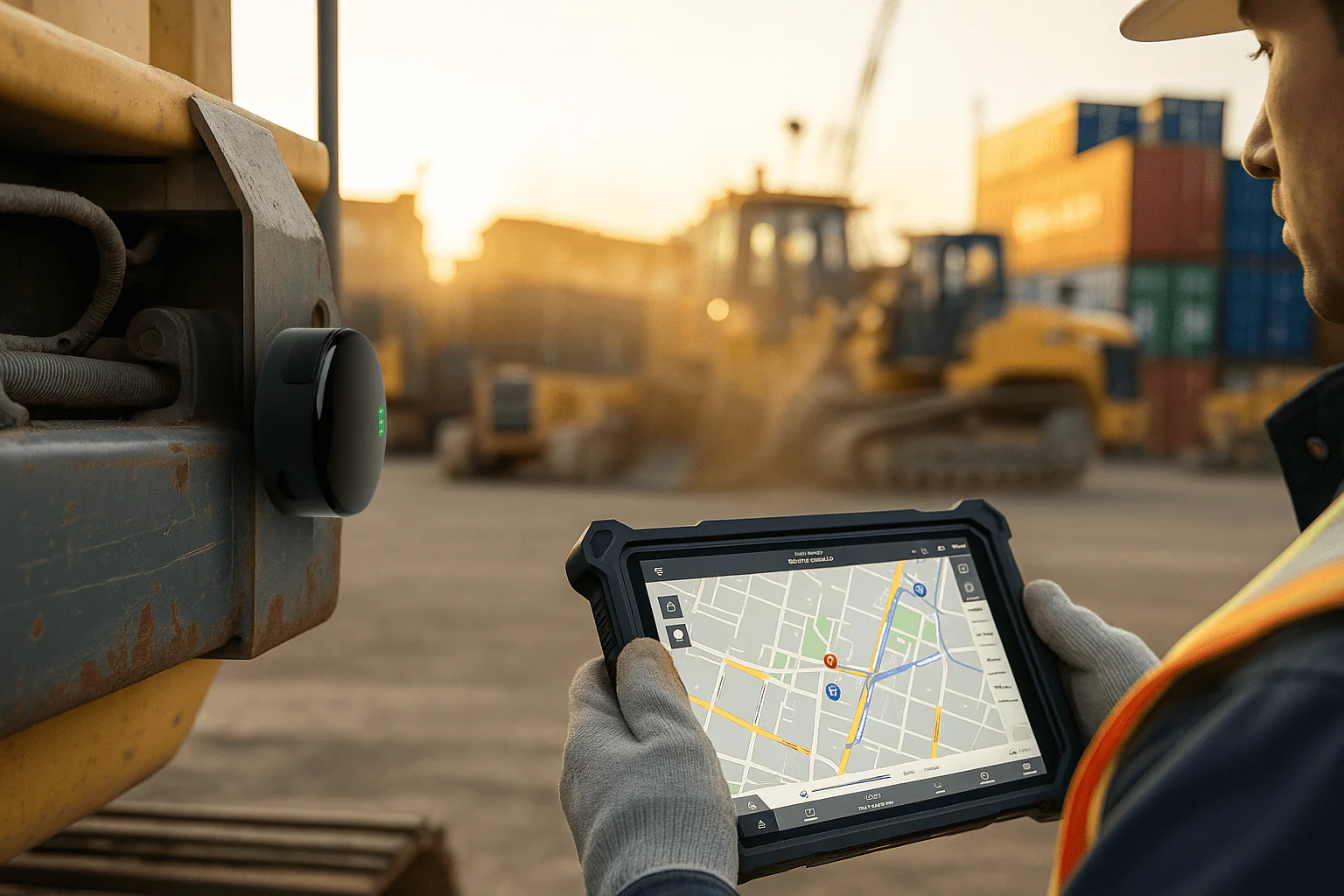
For vehicles, trailers, containers, and mobile power equipment, GPS tracking with geofencing is usually the best starting point. You want alerts when assets leave a defined perimeter, enter restricted zones, or stop moving unexpectedly. In remote areas, consider whether the tracker can store breadcrumbs and upload later if the network drops. If coverage is truly sparse, evaluate satellite-capable options for the most critical assets, because a tracker that cannot report in the moments you need it most is effectively blind.
If you need crew-level accountability, use Bluetooth with mobile device detection
For tools and kits that move with people, Bluetooth tags paired with a mobile app can deliver practical value without heavy hardware. The advantage is lower cost and easier deployment. The risk is that detection depends on phones or gateways being nearby. This approach works best when crews reliably carry smartphones, and when your procedures enforce scanning at handoff points, like vehicle loading, job site arrival, and end-of-shift returns. In higher-risk scenarios, pair Bluetooth proximity tracking with strict check-out workflows and audit requirements.
If you need fast inventories at staging points, choose RFID for bulk scanning
RFID shines when you need to confirm presence quickly, such as at warehouses, depots, or temporary staging areas for disaster response. Instead of scanning one barcode at a time, teams can read many tagged items quickly. That speed matters in chaotic environments. RFID is not usually a live location tool, but it is excellent for reducing shrinkage, preventing forgotten gear, and validating loadouts before teams deploy.
If connectivity is the biggest challenge, build around offline-first plus periodic sync
In many remote environments, the single most important feature is not GPS or RFID. It is the ability to operate without a network and sync later. A system that supports offline workflows across mobile devices and rugged tablets, with strong data integrity and audit trails, will outperform a more advanced platform that collapses when the signal disappears.
How to evaluate the best equipment tracker for your operation
When you shortlist solutions, test them against real scenarios, not vendor demos. Start with a pilot that includes your harshest conditions: cold, heat, dust, moisture, vibration, and long gaps in connectivity. Measure battery life under actual usage, not ideal lab assumptions. Validate that tags remain attached and readable after heavy handling. Confirm that offline check-outs actually sync correctly, with clean histories and no missing events. Test geofence alerts for false positives and false negatives. Evaluate reporting speed and clarity, because in an incident, you do not have time to hunt through menus. And do not ignore integration. If the tracker cannot connect to your existing maintenance system, dispatch workflows, or asset accounting process, your team will end up duplicating work, which is how adoption dies.
Common mistakes to avoid
One mistake is selecting a system that depends on perfect user behavior. In high-risk environments, people are tired, rushed, and focused on safety and mission outcomes. Your equipment tracker must succeed even when scanning is imperfect. Another mistake is choosing a single tracking technology for everything. Hybrid tracking is often the most cost-effective and reliable approach. A third mistake is underestimating governance. Without clear ownership, training, and enforcement, even the best tool becomes a messy database. Finally, many teams forget to plan for expansion. If you start with one site and later add five more, you need scalable permissions, standardized naming conventions, and consistent processes from day one.
The best equipment tracker is the one built for uncertainty
So what is the best equipment tracker for remote or high-risk environments? It is the system that combines offline-first workflows, hybrid location technologies, strong audit trails, tamper resistance, and maintenance automation, all wrapped in a field-friendly interface. If you operate in unpredictable conditions, prioritize resilience over polish. A tracker that works every day in the worst conditions is better than one that looks impressive in a sales demo. Start by defining your risk profile, match tracking technologies to asset categories, run a real-world pilot, and choose the platform that reduces uncertainty. When you get it right, you will see fewer losses, faster recoveries, safer operations, and a clearer picture of where your gear is and whether it is ready for the next mission.
Read More From Techbullion