Ordering aluminum windows and doors from overseas can make sense for a construction project, especially when standard local products do not fit the design, opening sizes or budget.
But it is also one of those purchases where a low quotation can become expensive very quickly if the details are not settled before production.
For builders and contractors, the real job is not simply finding a factory that can make a window. It is finding a manufacturer that can take a drawing, understand what the project requires, turn that information into a workable product package and deliver it without creating new problems on site.
That is where the difference between a product supplier and a project-based manufacturer becomes much clearer.
Start With Drawings, Not a Price Per Square Meter
One of the most common questions window manufacturers receive is simple:
“How much per square meter?”
For a standard product, that may be enough to start a conversation. For a construction project, it usually is not.
The same opening can have very different costs depending on the frame system, glass, panel size, hardware, finish, screens, opening method and performance requirements.
A builder who already has architectural drawings, a window schedule or a BOQ is in a much better position to get a meaningful quotation.
At AMJ Windows & Doors, project inquiries are normally reviewed against the available drawings and schedules before a final system is recommended. This matters because a bedroom casement window, a large terrace slider and a fixed panoramic opening may all need different solutions even when they belong to the same project.
For custom aluminum windows and doors, customization should mean more than choosing a color. Sizes, glass configurations, hardware, opening styles and combinations all need to work together.
Large Openings Need More Than a Bigger Frame
Modern residential projects often use larger areas of glass, especially for living rooms, terraces and view-facing elevations.
The challenge is that a large opening is not simply a standard window enlarged.
As the panel gets bigger, glass weight increases. Hardware capacity becomes more important. Frame stiffness, rollers, hinges, drainage and installation conditions also need to be checked.
That is why a manufacturer should be willing to say when an opening needs to be divided, when a heavier system is required, or when a different configuration would be safer.
AMJ manufactures a range of casement, tilt-and-turn, sliding, fixed, bifold and entrance systems, allowing the system to be selected around the opening rather than forcing every project into one standard product.
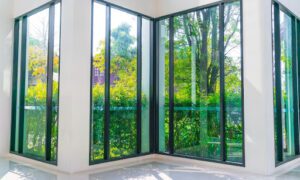
Its high-insulation aluminum casement window system, for example, is designed as a complete frame-and-glass solution rather than treating the glass and aluminum profile as separate products.
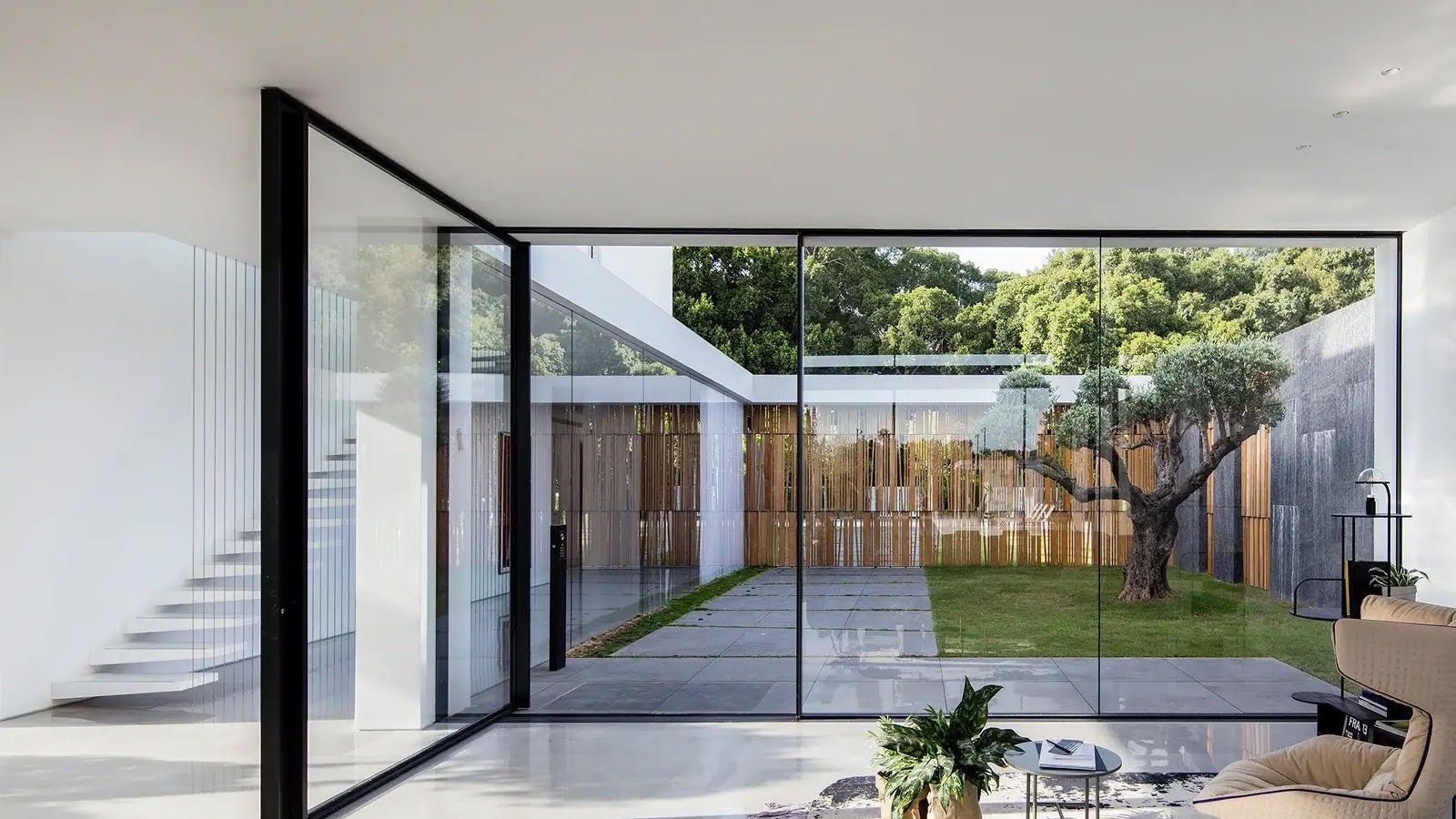
Large-format glazing requires the frame, glass, hardware and opening size to be considered as one system.
Glass Is Only One Part of Performance
Builders often receive quotations that emphasize double glazing, triple glazing or Low-E glass.
Those details matter, but they do not describe the performance of the complete window.
The final result also depends on the thermal break, frame construction, spacer, cavity, glass thickness, hardware and overall configuration.
For North American projects, U-Factor and SHGC may be important depending on the location and building requirements. Larger openings may also create additional structural and wind-load considerations.
This is why it is better to ask for performance information for the proposed system rather than simply asking whether the factory offers Low-E glass.
AMJ can match different glass configurations to different aluminum systems and project requirements. Selected systems are supported by documentation such as NFRC, CSA, ENERGY STAR and Intertek testing, depending on the product and configuration.
The important point for a buyer is to confirm which certification or test report applies to the actual system being quoted.
A certificate on a website is useful. A certificate that matches the system in the project is much more useful.
Shop Drawings Are Where Most Problems Should Be Found
Before production begins, the shop drawing stage is one of the best opportunities to catch mistakes.
This is where the project team can confirm:
- Window and door dimensions
- Opening directions
- Fixed and operable panels
- Glass configuration
- Mullion and transom positions
- Hardware
- Frame finish
- Screens
- Threshold details
- Unit numbering
- Installation conditions
For a small order, one wrong opening direction may be inconvenient.
For a project with dozens or hundreds of units, the same mistake repeated across production can become a serious site problem.
AMJ works with project drawings and schedules before production so that these details can be confirmed earlier. The goal is simple: solve questions while they are still drawings, not after the container arrives.
Factory Capacity Matters Most When the Order Gets Bigger
A beautiful sample does not tell a builder how well a factory will manage a full project.
The more useful question is whether the manufacturer can maintain the approved configuration across the full order.
AMJ operates from a 430,000 sq ft modern production base and has worked on 10,000+ projects over nearly 20 years of industry and export experience.
That scale is useful because project manufacturing involves more than fabrication.
Different units need to stay connected to the correct drawing, glass configuration, hardware and opening direction. Finished products also need to be inspected, identified and packed so they can be recognized when they reach the jobsite.
For a builder, consistency across an order is often more important than how impressive one display sample looks.
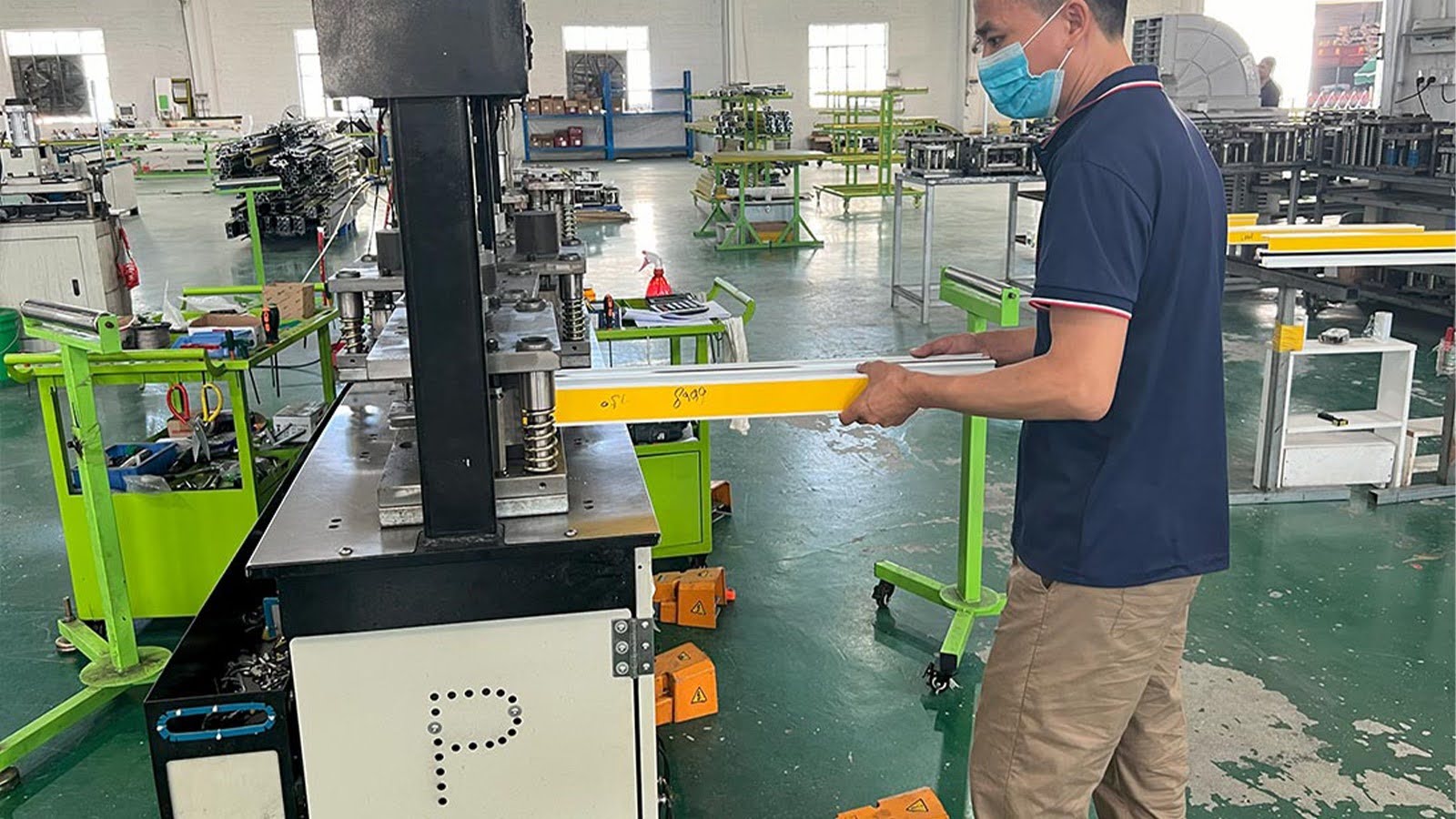
Project-scale production requires consistent checks across dimensions, glass, hardware, opening direction and finished units.
Shipping Should Be Part of the Project Plan
International shipping is another area where a cheap quotation can become expensive later.
Large glass, long frames and oversized sliding doors affect crate design, container loading, weight and site handling.
Before production is completed, buyers should already know how the products will be packed, how units will be identified and what installation accessories are included.
AMJ supports international project delivery and can coordinate door-to-door shipping depending on the destination and project requirements.
For suitable orders, production can be completed in approximately 25–35 days, although the actual lead time depends on quantity, system complexity, materials and final drawing approval.
For clients who want to inspect products and samples in person, AMJ also provides local service support in the United States, with showroom visits in New Jersey and California available by appointment.
Direct Factory Sourcing Works Best When the Project Is Custom
The main advantage of buying directly from a manufacturer is not simply price.
It is flexibility.
A custom project may require one glass specification for a living room, another for bedrooms, different opening styles on different elevations, special colors, screens, large fixed glazing and oversized terrace doors.
Trying to fit all of that into a limited stock-product range can be difficult.
A factory that manufactures project-based aluminum systems can adjust more of those details before production begins.
That does not mean every request should automatically be accepted. Some openings need redesign. Some dimensions may need to be divided. Some performance requirements may require a different system.
A manufacturer that points out those limits early can be more valuable than one that simply says yes to everything.
The Better Comparison Is the Complete Package
When comparing quotations, price still matters.
But builders should also compare what is actually included.
One supplier may quote the frame and glass. Another may include hardware, screens, accessories, shop drawings, packaging and delivery coordination.
Those are not the same quotation.
For international construction projects, the stronger supplier is usually the one that makes the scope easier to understand before the order is placed.
That means matching the system to the opening, confirming the glass and performance, checking the drawings, controlling production and planning the delivery before the products leave the factory.
For builders considering direct sourcing from China, that process is often more important than finding the lowest number on the first quotation.
AMJ Windows & Doors focuses on custom aluminum window and door solutions for project buyers, with manufacturing, system selection, project coordination and export support managed around the requirements of each project.