As the insurance industry faces increasing pressure to digitize operations, selecting the right technology has never been more important. With so many solutions available, a key question arises: what is the best software for insurance companies in 2026?
This article explains how to choose the right system and how they can help insurers streamline processes, innovate faster and adapt to the rapidly changing market.
Key Points
1. Modern digital insurance software accelerates product innovation and improves operational efficiency.
- Legacy systems often limit flexibility and slow down the introduction of new products.
- Configurable modules and fast deployment allow insurers to tailor solutions to their needs.
- Investing in modern platforms helps insurers stay agile, competitive and compliant with regulations.
Challenges and innovations in the insurance industry
In the face of challenges such as rising operational costs, more frequent natural disasters and regulatory uncertainty, maintaining financial stability is becoming increasingly difficult. Insurance companies must not only control expenses but also adapt their business models flexibly to changing market conditions. Both organizational agility and investments in modern technologies play a key role and when combined with a skilled team, they can provide a competitive advantage.
Platforms supporting innovation in insurance
The traditional approach to developing and launching new insurance products was often slow and complex. Gathering requirements, rigid logic in outdated systems, long deployment cycles and manual testing meant that innovation progressed slowly. Today, the situation is completely different.
Modern, easy-to-configure insurance platforms allow new products to be launched in weeks instead of months. They enable insurers to respond more quickly to evolving market needs, test new solutions and implement innovations efficiently.
Why insurers need modern systems?
Many insurance companies, both in property and casualty as well as life and health sectors, still rely on legacy IT systems that were built many years ago. These monolithic platforms are often inflexible – difficult to adapt to new requirements, integrate with modern data sources, or effectively support the development of new products.
In an industry where products are becoming increasingly complex and customer expectations are changing rapidly, such limitations pose a serious challenge. Modern systems allow insurers to react quickly to market changes and enable seamless integration with data analytics and real-time risk assessment modules.
The best front-office software for insurance companies in 2026
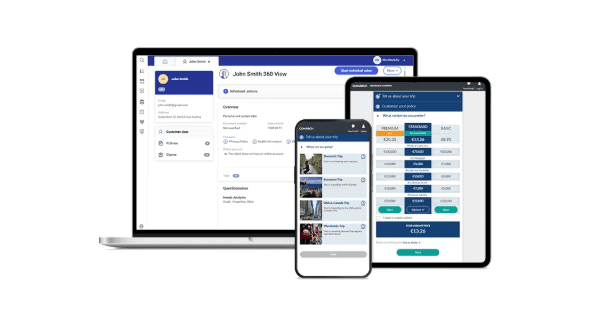
Insurance companies face growing pressure to digitize operations, enhance customer experiences and stay agile in a competitive market. Choosing the right digital insurance software is crucial for achieving these goals. Comarch Digital Insurance is a modern front-office software designed to accelerate digital transformation by digitizing processes such as sales and customer service.
It offers a seamless omnichannel experience across devices, a user-friendly interface and automated workflows that optimize task management and sales processes. With configurable modules and fast deployment, insurers can tailor solutions to their needs while ensuring regulatory compliance, boosting efficiency, agility and customer satisfaction.
FAQ
- How does Comarch Digital Insurance benefit insurance companies?
Comarch Digital Insurance speeds up digital transformation with an easy-to-use interface, omnichannel customer experience, automated processes, flexible modules, and quick setup. It helps insurance companies work more efficiently, satisfy customers, and meet regulations.
- Why do insurers need modern systems?
Modern systems replace outdated, inflexible platforms, allowing insurers to adapt quickly to market changes, integrate with data analytics and streamline workflows.
- How does digital insurance software improve customer engagement?
By providing seamless interactions across devices and faster service, it enhances satisfaction and loyalty.
- How do modern insurance platforms support operational efficiency?
They automate repetitive tasks, streamline workflows, integrate data analytics and reduce the risk of errors, freeing teams to focus on strategic initiatives.