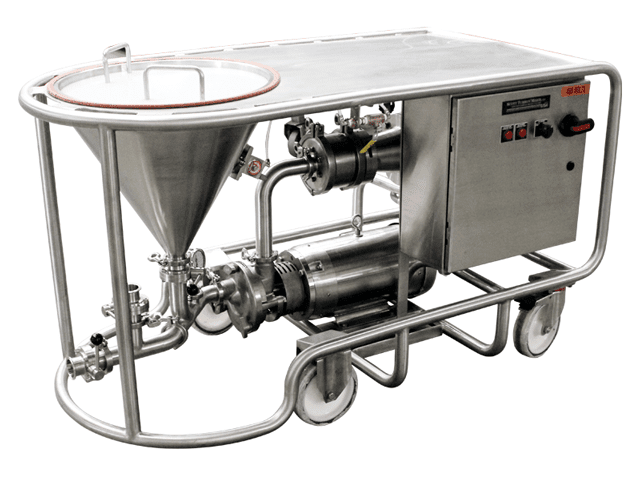
A powder induction mixing system is a specialized piece of industrial equipment designed to efficiently incorporate dry powders into liquids to create uniform, lump free mixtures. It is commonly used in industries such as food and beverage, pharmaceuticals, cosmetics, chemicals, and water treatment where consistent product quality and precise formulation are essential. Unlike traditional top loading or manual powder addition methods, a powder induction mixing system introduces powders directly into a high velocity liquid stream, significantly improving dispersion, reducing dust, and minimizing operator involvement. This approach allows manufacturers to achieve faster mixing times, better hydration of powders, and more repeatable results across batches.
Why Powder Induction Is Important in Industrial Mixing
Many industrial processes rely on powders that are difficult to wet or disperse evenly. Ingredients such as gums, thickeners, proteins, pigments, and polymers can clump or float on the surface when added manually to a tank. This leads to long mixing times, inconsistent texture, and wasted material. A powder induction mixing system addresses these challenges by creating the conditions necessary for immediate wetting and dispersion. By pulling powder into the liquid stream rather than dropping it onto the surface, the system prevents agglomeration and ensures each particle is surrounded by liquid as soon as it enters the process. This results in smoother products, higher yields, and improved process control.
Core Components of a Powder Induction Mixing System
A typical powder induction mixing system consists of several key components working together as a single integrated unit. The first is a high shear mixer or rotor stator assembly that generates intense turbulence and shear forces. This mixer is usually connected to a liquid recirculation loop that draws liquid from a mixing vessel and sends it back after powder incorporation. Another critical component is the powder inlet or hopper, which allows dry ingredients to be fed safely and accurately into the system. Many systems also include valves, flow meters, and control panels to regulate powder addition rates and liquid flow. Together, these components create a controlled environment where powders can be added quickly and consistently without compromising safety or quality.
How a Powder Induction Mixing System Works Step by Step
The operation of a powder induction mixing system follows a clear and efficient sequence. First, liquid is circulated from the main tank through the system using a pump or the mixer itself. As the liquid passes through the high shear zone, it creates a strong vacuum at the powder inlet. When the powder valve is opened, dry material is pulled directly into the liquid stream by this vacuum. Immediately upon entry, the powder is exposed to intense shear forces that break apart agglomerates and ensure rapid wetting. The fully dispersed mixture is then returned to the tank, where overall homogeneity continues to improve as the system recirculates. This process continues until all powder has been incorporated and the desired consistency is achieved.
The Role of High Shear Mixing
High shear mixing is the driving force behind the effectiveness of a powder induction mixing system. The rotor stator design creates extremely high tip speeds and localized turbulence, which are essential for breaking down powder clusters and evenly distributing particles throughout the liquid. This is especially important for powders that tend to form fisheyes or gels on contact with water. By subjecting the mixture to controlled shear at the point of powder entry, the system ensures that dispersion happens instantly rather than gradually over time. This reduces the need for extended mixing cycles and helps protect sensitive ingredients from unnecessary mechanical stress later in the process.
Benefits Over Traditional Powder Addition Methods
Compared to manual or top entry powder addition, a powder induction mixing system offers several clear advantages. One of the most significant benefits is speed. Powders that might take hours to fully hydrate using conventional methods can often be dispersed in minutes. Another advantage is consistency, as automated induction reduces variability caused by operator technique. Dust control is also greatly improved since powders are drawn into a closed system rather than poured into an open tank. This enhances workplace safety and reduces material loss. Additionally, the system allows for better scalability, making it easier to replicate results from pilot batches to full scale production.
Applications Across Different Industries
Powder induction mixing systems are used across a wide range of industries due to their versatility. In food and beverage production, they are commonly used for sauces, dressings, dairy products, and beverage mixes where smooth texture and uniform flavor are critical. In pharmaceuticals and nutraceuticals, the systems help ensure accurate dosing and consistent suspension of active ingredients. Cosmetic and personal care manufacturers rely on powder induction for creams, lotions, and gels that require precise rheology. In chemical and industrial applications, these systems are used to prepare solutions, slurries, and emulsions with controlled particle distribution.
Factors to Consider When Choosing a System
Selecting the right powder induction mixing system depends on several factors related to the specific application. These include the type and concentration of powders being used, the viscosity of the liquid phase, batch size, and desired processing time. Sanitary requirements are also important in industries such as food and pharmaceuticals, where clean in place capabilities and material certifications may be required. Control options such as automated powder dosing and integration with existing process equipment can further enhance efficiency. Understanding these variables helps ensure the system delivers optimal performance and long-term reliability.
Conclusion
A powder induction mixing system is a powerful solution for manufacturers who need fast, consistent, and high-quality powder to liquid mixing. By using vacuum assisted powder addition combined with high shear mixing, these systems eliminate many of the problems associated with traditional methods. The result is improved product quality, shorter processing times, enhanced safety, and greater process control. As industries continue to demand higher efficiency and consistency, the powder induction mixing system has become an essential tool in modern industrial mixing operations.