
What If Connection Is the Missing Piece of Mental Wellness?

Most conversations about mental health focus on what happens inside a person — the diagnosis, the symptoms, and the treatment plan. Far less attention goes to what happens between people, in the quiet moments when someone is struggling, and another person chooses to show up. Yet it is often that second thing, not the first, that can shape whether someone feels able to reach out and find their way forward.
When Connection Becomes a Lifeline
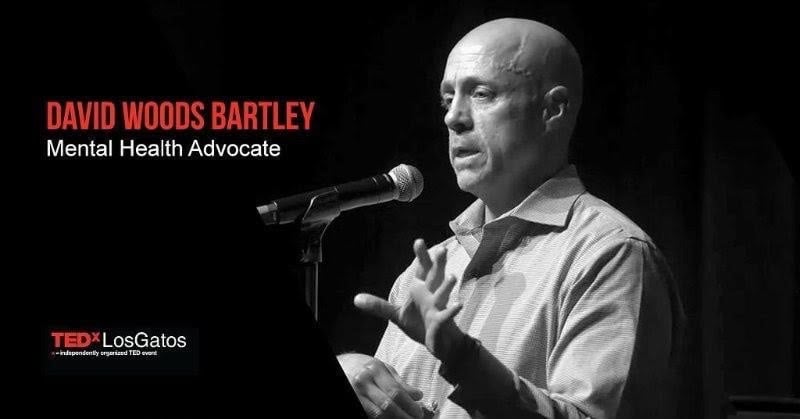
David Woods Bartley knows this from the inside. Years ago, on what he has described as an otherwise ordinary Wednesday, he reached a point most people never speak about publicly: the day he intended to end his life. He didn’t. A stranger’s instinct to intervene changed the course of that day, and in the years since, Bartley has built a career around a single, hard-won conviction — that connection is not a soft addition to the conversation around mental health and suicide, but a central part of the message he has carried to audiences around the world.
He calls his own journey a shift from mental “hellness” to mental wellness — a phrase that captures something clinical language rarely does. For someone living with depression, it can feel less like a diagnosis and more like a private hell, one that distorts how they see themselves, their relationships, even their future. Bartley’s phrase reframes recovery not as the absence of a disorder, but as a genuine change in the environment a person lives inside, both internally and relationally.
That distinction matters, because it points to something practical. If isolation can deepen the experience of a mental-health struggle, then true wellness has to involve more than symptom management — it has to involve people. This is the throughline of Bartley’s TEDx talk, How Connection Saved My Life, and of the message he has carried to audiences ranging from the military to hospital systems to university campuses: connection doesn’t cure mental illness, but it can be the difference between someone facing their darkest moment alone and facing it with a witness.
From Hellness to Wellness
Being seen, heard, and valued does something specific. It interrupts the story that isolation tells — that no one would notice, that no one could help, that the pain is unshareable. A single person who creates connection without trying to immediately fix things can quietly dismantle that story. This is close to what Bartley calls Whole Person Care: the idea that someone struggling isn’t a set of symptoms to manage, but a whole human being whose context, relationships, and sense of belonging matter as much as any clinical intervention. Bartley also adds a passionate assertion: from every connection comes Hope. Not as some vague feeling. Rather, Hope as a tangible and visceral experience that comes to life in the space connection creates. He defines Hope as “the knowing that what I need, want, and desire can be mine. Bartley has distilled this into the thesis that runs through all of his work: “Connection creates hope, and hope saves lives.”
What Meaningful Connection Actually Looks Like
None of this requires special training. It requires attention. Bartley often frames it as a shift from looking for signs of someone’s pain to becoming a sign yourself — proof, in small daily moments, that a person is seen, heard, and valued. It can be as simple as using someone’s name: the barista, the cashier, the coworker whose name gets skipped over in passing. It can mean trading the question “why” for “what”—because “why are you upset” can sound like an accusation, while “what’s going on” invites someone to share authentically. It looks like staying in the room instead of retreating into advice-giving, resisting the urge to minimize (“it could be worse”), and knowing the limits of what a friend or colleague can offer — encouraging professional support when the situation calls for it, rather than treating connection as a substitute for care.
Why Mental Wellness Is Also an Organizational Issue
This responsibility doesn’t rest on individuals alone. Workplaces, schools, and organizations shape whether people feel safe enough to say they’re suffering in the first place — a manager who notices when someone seems different, a university that treats a student’s mental health as seriously as academic performance, a team culture where asking for help isn’t read as weakness, but instead seen as an important leadership characteristic. These environments don’t eliminate mental illness, but they can change the odds — influencing whether someone in crisis has somewhere to turn before things become dire.
From Prevention to Preservation
That same instinct — to name things by what they build rather than what they avoid — is behind one of the boldest ideas Bartley has put forward. Every September, the country observes National Suicide Prevention Month, and Bartley has started to question the name itself. We don’t call a life preserver an “anti-drowning device,” or a seatbelt an “anti-crash strap” — we name the things that save us for what they protect, not the disaster they prevent. He believes suicide prevention deserves that same shift: from a framework built around avoiding death to one built around preserving and building a life worth staying for. He calls it Life Preservation, and points out that nothing valuable gets discarded in the shift — the same organizations and dedicated people continue the same work. What changes is the destination it points toward: not simply keeping someone alive, but helping them build something they want to stay alive for.
It’s a small linguistic shift with a real implication. A prevention mindset asks people to watch for warning signs and intervene before tragedy strikes. A preservation mindset asks something more sustained: to keep showing up, create belonging and inclusion, in ordinary moments, long before anyone is in crisis — which is really just another name for connection.
What makes Bartley’s perspective distinct isn’t that he offers a formula. He doesn’t claim connection prevents suicide or replaces treatment, and he’s careful about that distinction. What he offers instead is something more honest: the reminder that recovery is rarely a solitary achievement. It happens in relationship — with a therapist, a friend, a stranger who stops to intervene, a workplace that pays attention. His own story didn’t end because he found the right words for his pain. It continued because someone else was willing to notice him in it.
That may be the most useful takeaway for anyone reading this: you don’t need the right thing to say. You need to be willing to stay. Hope tends to arrive quietly, carried in by people who chose not to look away.
Organizations interested in bringing David Woods Bartley’s perspective on connection, hope, and mental wellness to their teams or communities can learn more about his speaking and workshops at davidwoodsbartley.com.







Comment