Walk into a five-star lobby and the first thing your shoes touch is doing more work than the chandelier above it. Ask any hotel GM about their worst maintenance headaches and mud tracked in during monsoon season or the aftermath of a snowy check-in rush usually comes up before anything glamorous does. Marble floors look incredible in photos and become a liability the moment they’re wet. That’s the real starting point for understanding hotel entrance mats. They’re not a design afterthought, they’re risk management wearing a nice finish.
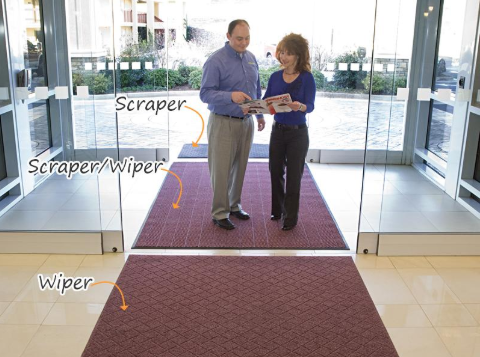
Most properties layer their matting rather than relying on one type to do everything. A typical hotel entrance has three zones, and each one calls for something different.
The outdoor zone takes the brunt of it: rain, grit, cigarette ash, whatever guests drag in from the parking area. Hotels generally use scraper mats here, often aluminium-framed with rubber or brush inserts that physically knock dirt off shoe soles before it ever reaches the building. These need to survive direct weather exposure, so cheap foam-backed mats fail fast. They curl, they trap water, they become a slip hazard themselves within a season.
The transition zone, right inside the doors, does the heavy lifting on moisture. This is where you’ll see wiper mats, dense and absorbent, usually carpet-faced with a rubber backing that grips the floor. A good wiper mat can pull a surprising amount of water out of a shoe before a guest ever reaches the lobby proper. Properties in humid or coastal regions tend to oversize this zone, sometimes running the matting 15-20 feet in rather than the standard 6-10, because a short mat just means wet floor further into the building.
Then there’s the finishing zone, decorative, low-pile carpet matting that’s more about brand presentation than function, though it still catches whatever moisture made it past the first two stages. This is the only place where aesthetics really get to lead the decision.
Here’s where I’ll push back on something a lot of hospitality blogs get wrong: they treat matting as a single purchase decision. It isn’t. A property that buys one type of mat and puts it everywhere is either overpaying for zones that don’t need premium material, or underprotecting the zone that actually matters. I’ve seen boutique hotels spend on gorgeous logo mats for the lobby entrance while skipping a proper scraper mat outside, then wonder why housekeeping is mopping the same 10 square feet every hour during a rainy week.
Material choice matters as much as placement. Aluminium entrance matting has become the standard for high-footfall commercial spaces because it holds up to repeated flexing and pressure-washing without the backing degrading the way rubber-only mats do over a couple of years. It’s also easier to keep looking presentable, which matters in hospitality more than almost any other sector. A mat that looks tired sends the wrong signal before a guest even reaches the front desk. Brands like Ultimats, which build aluminium dust-buster and barrier matting specifically for commercial entrances, have leaned into this niche because standard retail matting genuinely doesn’t hold up to hotel-level traffic.
There’s also a maintenance conversation that rarely makes it into these guides. Matting is only as good as the cleaning schedule behind it. A wiper mat that isn’t vacuumed or shaken out daily just becomes a slower way to spread the same dirt around. Housekeeping teams at busier properties often rotate a spare set of entrance mats so one is always being cleaned while the other is in use, a small operational detail that makes a bigger difference than most capital upgrades.
Cost is the other piece nobody wants to talk about directly. Commercial-grade entrance matting isn’t cheap upfront, and it’s tempting for a property to go with whatever’s available through a general facilities supplier rather than sourcing from a matting specialist. [Worth sourcing a real figure here: slip-and-fall claims tied to entrance-area flooring are a known cost driver in hospitality insurance data, but I’d want an actual number rather than guessing.] Even without a hard stat, the logic holds. A mat that fails to control moisture is cheaper today and more expensive the first time a guest slips on a wet lobby floor.
If there’s one takeaway for anyone managing a property, it’s that the entrance isn’t one surface, it’s a system. Get the outdoor scraping right, oversize the absorption zone more than feels necessary, and treat the decorative matting as the last 10% rather than the whole plan. Guests won’t consciously notice good matting. They’ll absolutely notice the wet, gritty floor when it’s missing.