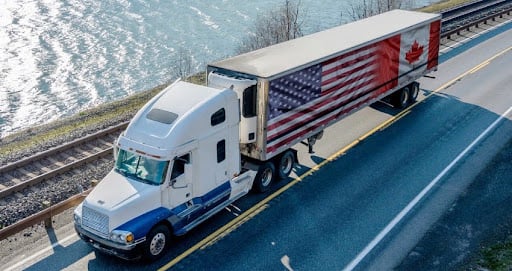
For truckers and commercial carriers operating across Canada, having the right permits is an important part of staying compliant on the road. This becomes especially important when a carrier is travelling between provinces or entering Canada from another country without the permanent registrations or credentials required for regular operations.
Trip and fuel permits Canada are temporary credentials that may be required for commercial vehicles operating in Canadian jurisdictions when the carrier does not have the applicable annual registration or fuel-tax credentials.
Understanding when these permits are needed, what information is required, and how the process works can help carriers avoid unnecessary delays and compliance issues.
AONE Permits can help carriers understand permit requirements and prepare for their trips through Canada. In this guide, we will explain what trip and fuel permits are, who may need them, how they work, what documents are typically required, and how carriers can prepare before travelling through Canada.
What Are Trip and Fuel Permits in Canada?
Trip and fuel permits are temporary permits used by commercial carriers for specific operations when they do not have the applicable permanent credentials for a particular jurisdiction.
The exact requirements can vary depending on the province, vehicle, weight, registration status, route, and type of operation.
A carrier may need a temporary permit when it is:
- Making an occasional trip through a province
- Operating without applicable annual registration
- Travelling without the required fuel-tax credentials
- Entering a Canadian jurisdiction temporarily
- Operating a commercial vehicle across provincial or international borders
It is important to understand that there is not one single permit that automatically covers every Canadian province and every type of commercial vehicle.
Requirements are determined by the applicable jurisdiction, so carriers should check the rules for each province included in their route.
What Is a Trip Permit?
A trip permit is generally a temporary authorization that allows a commercial vehicle to operate in a particular jurisdiction for a specified trip or period.
Trip permits can be useful for carriers that do not have the applicable permanent registration for the jurisdiction where they are travelling.
Depending on the province and vehicle, the permit may include information such as:
- Vehicle registration details
- Licence plate information
- Vehicle weight
- Number of axles
- Carrier information
- Travel dates
- Route information
The permit must be used according to its terms and conditions.
A trip permit should not be considered a replacement for every other requirement. A carrier may still need to meet applicable insurance, safety, registration, fuel-tax, and operating requirements.
What Is a Fuel Permit?
A fuel permit relates to fuel-tax requirements for qualifying commercial vehicles.
When a commercial truck travels across different jurisdictions, fuel may be purchased in one location while the truck accumulates mileage in another. Fuel-tax rules are designed to account for fuel used while operating in different jurisdictions.
Carriers that operate under applicable IFTA credentials generally handle fuel-tax reporting through the IFTA system.
However, carriers that are not operating under the applicable fuel-tax credentials may need a temporary fuel permit for certain trips.
For example, Ontario explains that a qualified vehicle that is not licensed under IFTA must purchase a single-trip permit for each province or state in which it intends to travel.
This is why understanding your fuel-tax status before beginning a trip is important.
Trip Permit vs. Fuel Permit
Although they are often mentioned together, trip permits and fuel permits serve different purposes.
| Permit Type | Main Purpose |
| Trip Permit | Temporary operating or registration authorization |
| Fuel Permit | Addresses applicable fuel-tax requirements |
| Annual Registration | Ongoing registration for eligible commercial vehicles |
| IFTA Credentials | Fuel-tax reporting for qualifying carriers |
A carrier’s specific requirements depend on the vehicle, operation, registration status, and jurisdictions involved.
In some situations, a carrier may require both a trip permit and a fuel permit.
Who Needs Trip and Fuel Permits in Canada?
Not every truck travelling in Canada will require temporary trip and fuel permits.
The requirement can depend on several factors, including:
Vehicle Registration
The vehicle’s registration status can determine whether temporary authorization is necessary.
IFTA Status
Carriers operating under applicable IFTA credentials may not need a separate temporary fuel permit for jurisdictions covered by their credentials.
Route
The provinces through which the vehicle travels can affect the permit requirements.
Vehicle Type
Commercial vehicle classifications and operating characteristics can affect applicable requirements.
Vehicle Weight
Some provincial rules are based partly on the vehicle’s weight or configuration.
Type of Operation
Occasional, temporary, interstate, interprovincial, and international operations can have different requirements.
Because of these differences, carriers should verify the requirements for their particular trip instead of relying on a general rule.
When Might You Need Temporary Trip and Fuel Permits?
There are several situations where temporary permits may become relevant.
1. You Do Not Have Applicable IFTA Credentials
If a qualifying commercial vehicle is not operating under applicable IFTA credentials, a temporary fuel permit may be required depending on the jurisdiction.
2. You Do Not Have the Required Registration
A carrier that does not have the applicable annual registration may need a temporary trip permit for a particular journey.
3. You Are Making an Occasional Trip
Carriers that only occasionally travel into another province may use temporary permits where permitted instead of maintaining permanent credentials for jurisdictions where they rarely operate.
4. You Are a Carrier Entering Canada Temporarily
U.S. and other international carriers should check Canadian requirements before crossing the border.
The requirements can depend on the carrier’s existing registrations, vehicle characteristics, route, and type of operation.
How Do Trip and Fuel Permits Canada Work?
The application process depends on the province and type of permit, but carriers typically need to provide information about the vehicle and planned trip.
Common information can include:
- Carrier/company name
- Carrier address
- Contact details
- Vehicle licence plate
- Unit number
- Vehicle identification information
- Number of axles
- Registered or operating weight
- Trailer details
- Province or state of registration
- Origin
- Destination
- Travel dates
- Route
- Fuel-tax or registration status
Providing accurate information is important because permit details need to correspond with the vehicle and trip.
Incorrect information can lead to compliance problems or delays.
What Information Do You Need to Apply?
Before applying for a permit, it is helpful to prepare your documents and vehicle information in advance.
Carrier Information
You may need:
- Legal company name
- Business address
- Contact information
- Carrier identification information
Truck Information
You may need:
- Licence plate number
- Unit number
- Vehicle identification information
- Number of axles
- Vehicle weight
Trailer Information
Depending on the permit, you may also need:
- Trailer plate
- Trailer type
- Number of trailer axles
Trip Information
Prepare:
- Starting point
- Destination
- Provinces being travelled through
- Travel date
- Expected route
Having this information ready can make the permit application process faster and easier.
How Much Do Trip and Fuel Permits Cost in Canada?
There is no single Canada-wide price for temporary trip and fuel permits.
The cost can vary depending on factors such as:
- Province
- Vehicle type
- Vehicle weight
- Number of axles
- Mileage
- Permit type
- Route
- Registration status
- Duration or validity of the permit
For this reason, carriers should confirm the current fee before applying.
It is also important not to assume that a permit purchased for one jurisdiction automatically covers another jurisdiction.
How Long Are Trip and Fuel Permits Valid?
The validity of a temporary permit depends on the jurisdiction and the type of permit issued.
Some permits are designed for a specific trip, while others may be valid for a defined period.
The carrier should carefully review:
- Effective date
- Expiration date
- Approved route
- Vehicle information
- Permit conditions
- Any mileage or operating restrictions
A permit should be kept available according to the applicable provincial requirements throughout the trip.
Trip and Fuel Permits vs. IFTA
One of the most common areas of confusion for truckers is the difference between temporary fuel permits and IFTA.
IFTA stands for the International Fuel Tax Agreement.
IFTA simplifies fuel-tax reporting for qualifying motor carriers operating across participating jurisdictions.
Instead of separately handling fuel-tax reporting in every jurisdiction, an eligible carrier generally reports its fuel use and mileage through its base jurisdiction.
A temporary fuel permit, on the other hand, can be used in certain circumstances when a carrier does not have the applicable IFTA credentials.
In Simple Terms
IFTA = ongoing fuel-tax reporting system
Fuel Permit = temporary fuel-tax authorization for applicable operations
The correct option depends on the carrier’s circumstances and the jurisdictions involved.
Trip and Fuel Permits vs. IRP
IRP is another registration system that is commonly discussed alongside IFTA.
IRP stands for the International Registration Plan.
IRP relates to apportioned registration for qualifying commercial vehicles operating across participating jurisdictions.
IFTA and IRP therefore have different purposes.
IFTA
Deals primarily with fuel-tax reporting.
IRP
Deals primarily with apportioned vehicle registration.
Temporary Trip Permit
Can provide temporary operating authorization where applicable.
Temporary Fuel Permit
Can address applicable fuel-tax requirements where applicable.
Understanding these differences helps carriers determine which credentials they may need before travelling.
Why Are Trip and Fuel Permits Important for Truckers?
Getting the required permits before starting a journey can help carriers avoid unnecessary problems during transportation.
Proper permit preparation can help with:
Compliance
The carrier can operate according to applicable provincial requirements.
Better Trip Planning
Knowing permit requirements before departure allows the carrier to prepare documentation and plan the route properly.
Fewer Delays
Missing or incorrect permits can create unnecessary delays.
Easier Cross-Border Operations
International carriers can prepare their documentation before entering Canada.
Better Record Keeping
Keeping permit information organized can make future compliance and administrative work easier.
Common Mistakes When Getting Canadian Truck Permits
Assuming One Permit Covers Every Province
Canada has different provincial transportation and tax requirements.
A permit for one jurisdiction does not automatically mean that the carrier is compliant in every other province.
Confusing IFTA With a Fuel Permit
IFTA and temporary fuel permits are not the same thing.
A carrier should determine which fuel-tax credentials apply to its specific operation.
Providing Incorrect Vehicle Information
Incorrect information about:
- Weight
- Axles
- Licence plate
- Vehicle
- Route
- Destination
can create issues with the permit.
Waiting Until the Last Minute
It is better to determine permit requirements before the truck begins its journey.
Some permits may be relatively straightforward, while others can involve additional requirements or processing.
Not Checking the Entire Route
A truck travelling through multiple provinces should review requirements for the entire route rather than checking only the final destination.
How AONE Permits Can Help With Trip and Fuel Permits
For carriers that are unfamiliar with provincial permit requirements, working with an experienced permit service can make the process easier.
AONE Permits provides permit-related services for carriers that need assistance with Canadian trucking permits and related requirements.
Instead of trying to determine every requirement on your own, carriers can provide their vehicle and trip details and get assistance with identifying and arranging the applicable permits.
This can be particularly useful for carriers that:
- Travel between multiple jurisdictions
- Make occasional trips into Canada
- Need temporary permits
- Are unfamiliar with provincial requirements
- Want to prepare permits before starting a trip
The exact permit requirements still depend on the carrier, vehicle, route, and jurisdiction, so providing accurate trip information is important.
How to Prepare Before Travelling Through Canada
Before starting a commercial trip, create a simple permit checklist.
Step 1: Identify Your Route
List every province or jurisdiction that the truck will travel through.
Step 2: Check Your Registration
Determine whether the vehicle already has the applicable permanent registration.
Step 3: Check Your Fuel-Tax Credentials
Confirm whether the carrier has applicable IFTA credentials or needs temporary fuel authorization.
Step 4: Check Vehicle Details
Prepare:
- Weight
- Axle configuration
- Licence plate
- Vehicle information
- Trailer information
Step 5: Check Permit Requirements
Determine whether temporary trip or fuel permits are required for the planned route.
Step 6: Apply Before Departure
Where applicable, obtain the required permits before the vehicle begins its journey.
Step 7: Review the Permit
Check the permit carefully to make sure the vehicle, dates, route, and other information are correct.
Tips for Truckers Operating Across Canadian Provinces
A few simple practices can make permit planning easier.
Keep Vehicle Information Updated
Maintain an accurate record of truck and trailer details.
Know Your IFTA and IRP Status
Understanding your existing credentials can help determine whether temporary permits are necessary.
Plan Your Route Early
Do not wait until the truck is ready to leave before checking permit requirements.
Keep Documentation Organized
Store permits and related documents where they can be accessed when needed.
Check Provincial Requirements
Rules can differ between provinces, so always verify the requirements applicable to your route.
Use a Permit Service When Needed
If you regularly deal with multiple jurisdictions, a professional permit service such as AONE Permits can help simplify the process.
Frequently Asked Questions About Trip and Fuel Permits Canada
What Are Trip and Fuel Permits Canada?
Trip and fuel permits are temporary credentials that may be required for commercial vehicles operating in Canadian jurisdictions when the carrier does not have the applicable permanent registration or fuel-tax credentials.
Do All Trucks Need Trip and Fuel Permits in Canada?
No. The requirement depends on factors such as the vehicle, registration status, IFTA status, route, province, and type of operation.
Do U.S. Truckers Need Trip and Fuel Permits in Canada?
A U.S. carrier may need temporary permits when entering or travelling through Canada if it does not have the applicable permanent credentials. Requirements depend on the vehicle and jurisdictions involved.
Is a Fuel Permit the Same as IFTA?
No. IFTA is a fuel-tax reporting system for qualifying carriers, while a temporary fuel permit may be required for certain operations when the carrier does not have applicable IFTA credentials.
How Do I Get a Fuel Permit in Canada?
The process depends on the jurisdiction. Carriers generally need to provide vehicle, carrier, route, and trip information and obtain the applicable authorization before travelling.
How Much Do Trip and Fuel Permits Cost?
Costs vary based on the jurisdiction, vehicle, weight, route, permit type, and other factors. Carriers should check the current applicable fee before applying.
Can I Use One Permit for Multiple Provinces?
Not necessarily. Permit requirements are jurisdiction-specific, and carriers should verify the requirements for every province included in their route.
Can AONE Permits Help With Canadian Permits?
AONE Permits can assist carriers with permit-related requirements and help simplify the process of obtaining applicable permits based on the carrier’s trip and vehicle information.
Final Checklist for Canadian Truckers
Before starting your trip, make sure you have checked:
- ✓ Your vehicle registration
- ✓ IFTA status
- ✓ IRP status where applicable
- ✓ Provinces included in your route
- ✓ Temporary trip permit requirements
- ✓ Fuel permit requirements
- ✓ Vehicle weight and axle information
- ✓ Truck and trailer details
- ✓ Travel dates
- ✓ Route information
- ✓ Required permit documentation
Taking a few minutes to verify these details before departure can help prevent avoidable issues during the journey.
Conclusion
Understanding trip and fuel permits Canada is an important part of preparing for commercial trucking operations across Canadian jurisdictions.
The requirements can vary depending on the province, vehicle, registration status, fuel-tax credentials, route, and type of operation. Some carriers may already have permanent credentials such as IFTA or IRP, while others may need temporary permits for specific trips.
The best approach is to identify the provinces on your route, review your existing credentials, gather accurate vehicle and trip information, and confirm which permits are required before departure.
For carriers that need assistance with the permit process, AONE Permits can help simplify permit-related requirements and make it easier to prepare for commercial trips across Canada.
Always verify current requirements with the applicable provincial or territorial authority, as permit rules, fees, and procedures can change.