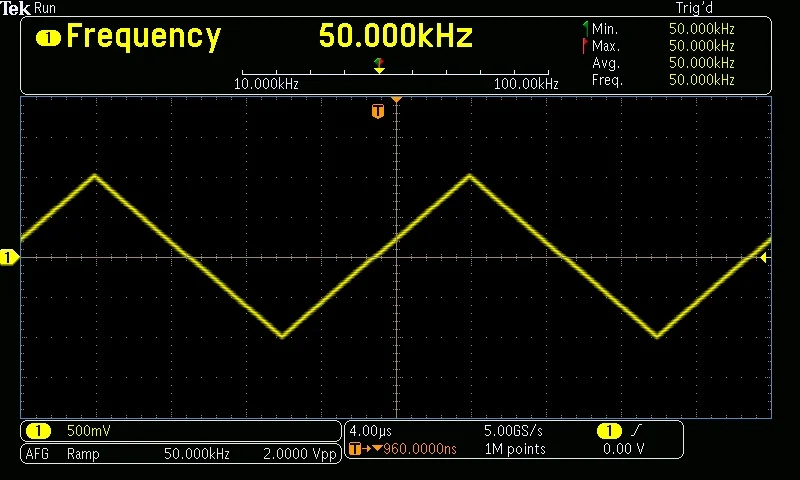
An oscilloscope is an instrument that lets you see electrical signals and troubleshoot various problems. Once you know what an oscilloscope is measuring, and you realise that those measurements matter to your recipe, then you can step up the quality of your designs and make project completion easier. This article discusses the aspects of oscilloscopes, including what data they provide and why it is valuable.
Understanding Voltage Over Time
An oscilloscope allows you to see signal variations, formations, and anomalies that other meters hide. Voltage visualisation also gives you a way to see changes in voltage, which can be handy for debugging and checking that your circuits are behaving as expected. It is important to have voltage measurements to assess the compatibility of electronics before using them with strict standards.
Monitoring Signal Frequency and Period
Oscilloscopes also measure the frequency of different signals, which is crucial when it comes to sound. The frequency is the number of times a waveform repeats, and the period is how long it takes from one point in a cycle to reach that same point again in a cycle. You can verify the path signals are what you expect, test the timing path, and make sure your circuits are correctly implementing something.
Detecting Waveform Shape and Distortion
Waveforms are also viewed in real time on oscilloscopes, so you can easily see distortions, noise or missing or abnormal peaks. Always remember that treating these problems early can avoid equipment damage and ensure signal quality. Furthermore, you can always maximise circuit functioning and preserve the integrity of your technical implementations by analysing waveform shape.
Identifying Noise and Interference
Electrical noise and interference can have a large impact on system performance, yet finding these issues is not always easy. You can use signal integrity measurements to identify the cause of interference and rectify it. Noise discovery at an early stage helps prevent operational errors and lets the device work normally, which is quite significant in sensitive devices or high-precision electrical appliances.
Measuring Timing Relationships
Oscilloscopes allow you to measure delays, phase differences, and synchronisation, which is critical in complex systems with interdependent components. Accurate timing measurements help maintain signal coordination, prevent malfunctions, and improve overall workflow efficiency. Don’t forget that this capability is essential for engineers who design or test circuits with precise timing requirements.
Evaluating Signal Amplitude
A signal’s amplitude is a measure of its voltage waveform magnitude, for which the average values are easy to determine. Understanding amplitude can help you make sure that your components are being given their optimal voltage, thus avoiding too much or too little power. Then of course there’s power supply design and anything else where you’ve got voltage control influences on system performance.
Supporting Troubleshooting and Maintenance
By providing a visual representation of electrical signals, oscilloscopes simplify troubleshooting. You can quickly identify faults, verify repairs, and monitor ongoing system performance. This functionality improves workflow efficiency, reduces downtime, and ensures that devices continue operating safely. For technicians and engineers, having a reliable oscilloscope is central to maintaining high standards.
Enhancing Accuracy in Component Testing
Oscilloscopes play a key role in verifying how electronic components respond under different conditions. This helps you confirm that components meet required specifications, detect early faults, and ensure that every part in your circuit works as expected. By using an oscilloscope during testing, you improve performance reliability and reduce the chances of unexpected failures in real-world applications.
Why Oscilloscopes Are Essential in Technical Workflows
Oscilloscopes offer a comprehensive view of electrical signals, providing insights into voltage, frequency, waveform shape, noise, and timing. By integrating an oscilloscope into your workflow, you gain the ability to make precise adjustments, prevent errors, and improve overall project outcomes. Whether for testing or design, mastering oscilloscope usage enhances technical accuracy and efficiency.
Read More From Techbullion