What a Local SEO Service Actually Does—and Why Most Local Businesses Can’t Afford to Skip It

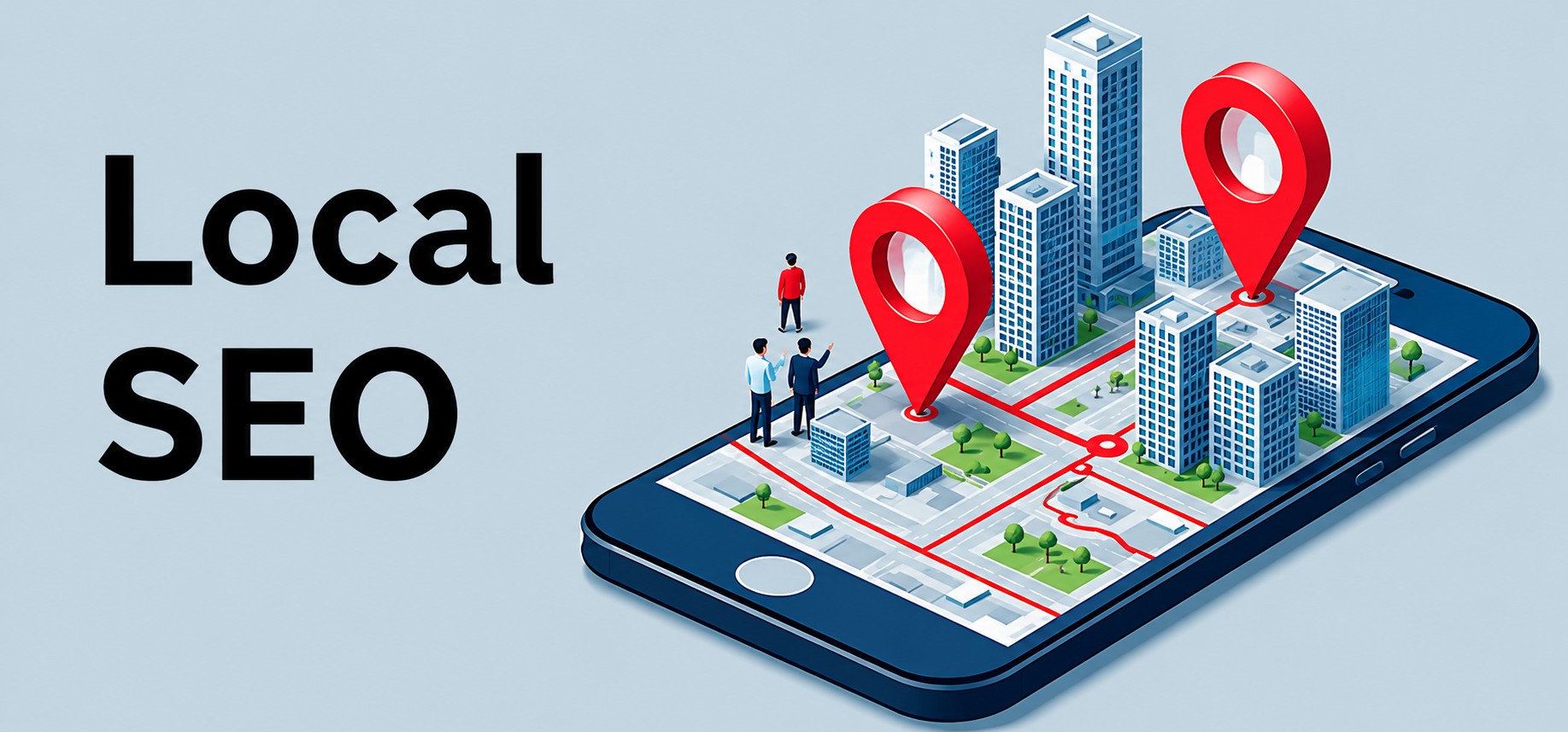
Maria runs a dental practice in Austin, Texas. She has five-star reviews, a clean waiting room, and a team that genuinely cares about patients. But when someone in her neighborhood types “dentist near me” into Google, her practice doesn’t appear. Not on the map. Not in the local pack. Not even on the first page. A competitor two miles away—with fewer reviews and older equipment—shows up three times. The difference isn’t quality. It’s optimization. Investing in a professional local seo service is precisely what separates businesses like Maria’s from the ones that dominate local search results every single day.
This isn’t a niche problem. According to Google’s own consumer insights data, nearly half of all searches have local intent. People are actively looking for businesses near them. The businesses that show up win the customer. The ones that don’t, don’t. It really is that direct.
What a Local SEO Service Covers—and How It Differs from Traditional SEO
Traditional SEO focuses on ranking a website for broad, often national or global search terms. Local SEO is narrower and more precise. It targets geo-specific visibility—making sure your business appears when someone nearby searches for what you offer.
That means optimizing for the Google local pack (those three map-based results that dominate the top of local search pages), improving your Google Maps ranking, and ensuring your business information is consistent and authoritative across dozens of online directories and platforms.
The local pack is driven by three core factors Google uses to rank results:
- Relevance — how closely your business matches what the user searched for
- Distance — how close your business is to the searcher or the location specified
- Prominence — how well-known and credible your business appears online
A complete local SEO service addresses all three of these factors simultaneously. It doesn’t just tweak one thing. It builds a layered, interconnected presence that signals authority and relevance to Google from multiple directions at once.
One-off fixes—updating your address here, adding a keyword there—don’t move the needle. The businesses that consistently rank in the local pack have ongoing, managed optimization working for them month after month. That’s what separates a real service from a quick checklist.
The Core Components of Effective Local Search Visibility
Google Business Profile Optimization
Your Google Business Profile is the single most important asset in local search. It’s what populates your listing on Google Maps, powers your appearance in the local pack, and surfaces your business hours, phone number, photos, and reviews to searchers.
But most GBP profiles are incomplete. Categories are wrong or missing. Service areas haven’t been defined. Business descriptions don’t include locally relevant keywords. Photos are outdated or absent entirely.
Effective Google Business Profile optimization means completing every available field—categories, attributes, service areas, business hours, Q&A sections—and keeping the profile actively updated. That includes adding geo-tagged photos and videos, posting regular updates, and monitoring the profile for accuracy. Google treats active, complete profiles as more trustworthy. More trust means higher rankings.
NAP Consistency and Local Citation Building
NAP stands for Name, Address, and Phone Number. It sounds simple. It causes enormous problems when it’s inconsistent.
If your business is listed as “Maria’s Dental Care” on Google, “Maria Dental Care LLC” on Yelp, and “Dr. Maria’s Dentistry” on a local directory—Google can’t confidently confirm these are the same business. That confusion weakens your authority. It directly suppresses your local keyword rankings.
NAP consistency across authoritative directories—Google, Bing Places, Apple Maps, Yelp, industry-specific platforms, and data aggregators—is foundational. But citation building goes further than just fixing existing listings. Geo-optimized citations are created on directories and platforms that are relevant to your specific industry and location. A plumber in Chicago needs different citations than a hair salon in Sydney. Precision matters.
According to a BrightLocal study on local ranking factors, citation consistency and volume remain among the most reliable signals for improving local pack placement. The research is consistent: businesses with accurate, widespread citations outrank those without them.
Review Management as a Ranking Signal
Reviews are not just social proof. They are a Google Maps ranking factor. Review volume, recency, rating diversity, and—critically—how businesses respond to reviews all feed into how Google evaluates your prominence.
A business with 12 reviews from three years ago is not as competitive as one with 60 reviews posted over the past year, even if the older business has a higher average rating. Recency and momentum matter.
Effective review management involves setting up automated review request workflows so satisfied customers are consistently prompted to share their experiences. It also requires professionally responding to every review—positive and negative. A thoughtful, empathetic response to a one-star review often impresses potential customers more than the review itself concerns them. It shows accountability. It builds trust.
Local Link Building to Strengthen Authority
Backlinks remain a core ranking signal in Google’s algorithm. For local SEO, the most valuable links are those that signal local relevance and topical authority. A link from a local business association, a regional news outlet, or a neighborhood community forum carries more local weight than a generic link from an unrelated national site.
A diversified local link building strategy draws from multiple source types. That includes guest posts on relevant industry publications, Quora answers targeting high-intent local questions, Web 2.0 submissions, PDF sharing platforms, forum links, and social bookmarks. The combination of these sources builds a link profile that looks natural, authoritative, and geographically grounded—exactly what Google’s local algorithm rewards.
Critically, the quality distinction here is stark. Links built through manual outreach and genuinely useful content perform. Links generated by software from spammy, heavily recycled databases get ignored—or worse, penalized.
Which Businesses Benefit Most from Local SEO Services
The answer is straightforward. If you operate in a physical location or serve customers within a defined geographic area, local SEO is not optional. It is the primary mechanism through which nearby customers find you.
The industries where local SEO delivers the highest return include:
- Healthcare — dental practices, clinics, physiotherapists
- Legal services — law firms, notaries, immigration consultants
- Retail — specialty stores, boutiques, hardware shops
- Food and beverage — restaurants, cafes, catering services
- Home services — plumbers, electricians, car service shops, hairdressers
Geographic markets with the most competitive local search landscapes—the USA, Canada, UK, and Australia—are also the markets where an unoptimized local presence costs businesses the most in lost revenue. These are high-search-volume, high-competition environments. In these markets, being invisible in local search is not neutral. It is actively expensive.
In-house efforts often fall short here. Business owners don’t have time to audit citation consistency across 50+ directories, monitor review velocity, and build geo-targeted links simultaneously. A professional local SEO agency handles this infrastructure so the business owner can focus on actually running the business.
How Local SEO Drives Google Maps Ranking and Local Keyword Growth
The mechanics of local search ranking are more transparent than many business owners realize. Google openly states that relevance, distance, and prominence drive local pack placement. Every tactic in a well-designed local SEO service is mapped directly to one or more of these signals.
GBP optimization builds relevance by accurately communicating what the business does and where it operates. Citation building and NAP consistency build prominence by reinforcing the business’s identity across authoritative sources. Local link building builds prominence further by establishing topical authority. Review management builds both relevance and prominence by generating fresh, keyword-rich signals directly from customers.
Keyword strategy connects all of this. Effective local keyword research goes beyond “dentist Austin.” It maps neighborhood-level terms, service-specific modifiers, and intent-driven queries to specific pages on your website and attributes in your GBP. Structured data markup—schema—then helps Google correctly interpret and display that information in search results. The compound effect of all these layers working together is what produces sustainable local keyword rankings growth over time.
Local SEO Packages and Pricing Structures
One of the most practical questions a business owner asks is: what does this actually cost? Transparent, tiered pricing is a sign of a credible agency.
Crowdo structures its local SEO service across three monthly tiers designed to match different business sizes and competitive landscapes:
- Starter ($149/month) — Covers 1 URL, 5 target keywords, basic GBP listing optimization, 105 foundation links, 15 local citations, 4 forum links, and 1 Quora link. This is the right entry point for new businesses or those in lower-competition markets establishing their first local presence.
- Advanced ($399/month) — Expands to 2 URLs, 10 keywords, advanced listing optimization, 215 foundation links, 30 local citations, 9 forum links, 6 Quora links, and 1 guest post. This tier suits established businesses in competitive markets looking to accelerate visibility across multiple service areas.
- Elite ($699/month) — The highest-volume tier, covering 3 URLs, 15 keywords, 360 foundation links, 50 local citations, 20 forum links, 15 Quora links, and 2 guest posts. This is built for businesses competing in multiple markets or targeting aggressive growth in high-competition verticals.
Every tier includes a basic SEO audit, a detailed end-of-campaign report with keyword tracking, fast indexing support via tier-2 links and social signals, and a 3-month warranty on all deliverables. If anything needs replacement, it gets replaced.
Choosing the right tier depends on three variables: how competitive your local market is, how many service areas or location pages you need to rank, and how aggressively you want to grow. A small family-run restaurant in a mid-sized city and a multi-location dental group have very different needs. The right package is the one matched to your actual competitive landscape.
Reporting, Accountability, and What Transparent Local SEO Looks Like
One of the most persistent frustrations local business owners have with marketing agencies is opacity. Money goes in. It’s not clear what comes out. Results are vague. Reporting is delayed or thin.
Accountable local SEO services operate differently. Monthly reporting should show measurable changes in local keyword rankings for your targeted search terms. It should include GBP analytics—how many times your profile appeared in search, how many people clicked for directions, called your number, or visited your website directly from your listing. And it should document every deliverable: which citations were built, which links were created, what was optimized and when.
A 3-month warranty on all deliverables is a structural accountability mechanism. It means the agency is confident enough in the quality of its work to stand behind it. Links that disappear get replaced. Citations that go inaccurate get corrected. That’s what professional accountability looks like in practice.
When evaluating any local SEO agency, ask specifically: what does the monthly report include? Who builds the links and how? What happens if a deliverable disappears? Agencies that can answer these questions clearly and specifically are the ones worth working with. The ones that respond with vague assurances and buzzwords are the ones to avoid.
Maria’s dental practice, and thousands of local businesses like it, are not struggling because they lack quality. They’re struggling because the right customers can’t find them. That’s a solvable problem—with the right strategy, the right tools, and a local SEO partner that builds visibility the right way.