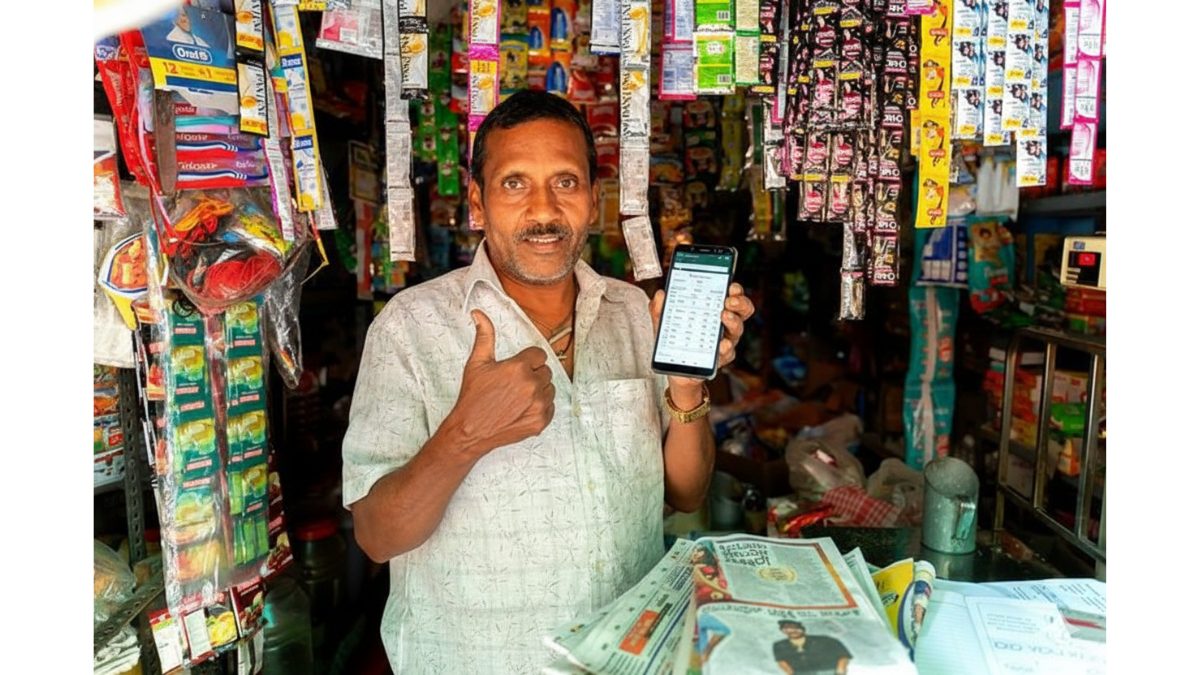
India’s retail landscape has always been shaped by community-driven businesses. From kirana stores and neighbourhood stationery shops to hardware outlets, textile traders and medical stores. Small retail has long been the foundation of how India buys and sells. For decades, these shops operated through trust, familiarity and local demand. The systems were simple and effective, but mostly manual.
Retail has also been one of the most significant contributors to India’s economy. A large share of the country’s MSME activity comes from retail businesses. As per IBEF, the retail industry in India contributes around 10 % of the country’s GDP and supports roughly 8 % of total employment.
The 2000s brought the rise of organised retail chains (Reliance Retail, Big Bazaar and D-Mart). Large-format stores and branded shopping began reshaping customer behaviour in major cities. The second wave arrived around the mid-2010s, when e-commerce platforms (Flipkart and Amazon) expanded rapidly and became direct competitors to traditional retailers. With convenience, digital payments and sophisticated delivery networks, these giants set a new standard of efficiency that small, manual shops simply couldn’t match, creating an uneven playing field where millions of neighbourhood businesses were at risk of being left behind.
But the real transformation of Indian retail did not start with malls or online marketplaces; it began when technology reached the smallest shops. As digitisation became accessible and practical, small and medium-sized retailers finally had tools to manage their business efficiently and stay competitive. Among these solutions, Vyapar emerged as one of the most widely adopted, offering billing, inventory, accounting, cash flow management and GST in a format simple enough for any shop owner to use. Vyapar, the all-in-one app that puts the whole shop in your pocket, is now trusted by over one crore retailers and businesses because it solves a basic but critical need: making daily business management easier while bringing retailers into the digital ecosystem without extra cost or complexity.
The Changing Nature of Small Retail
As India’s retail market evolved, the push toward modernisation came from two very different directions. On one side were the external pressures: customer expectations began changing rapidly. Shoppers started demanding faster service, transparent billing and a smooth checkout experience. With digital payments becoming part of everyday life, people expected convenience and immediate availability of products, and if a shop ran out of something, they would simply move to the next option without hesitation. Meanwhile, e-commerce and quick-commerce platforms raised the bar further with instant access, doorstep delivery and round-the-clock service. Big retail chains added their own pressure through structured inventory management and consistent service formats.
It became clear to smaller retailers that personal relationships and manual processes alone were no longer enough to stay competitive.
At the same time, a very different kind of force was working in the retailers’ favour, one that gave them the means to respond to these pressures. Smartphones made it possible to use business applications effortlessly. UPI and mobile payments became part of daily transactions, making digital interactions a part of their operations. On top of this, the rollout of GST highlighted the need for proper invoicing and accounting systems. And when the pandemic hit, both consumers and shop owners became far more comfortable with digital processes out of necessity.
As these pressures and enablers converged, retailers recognised that the old way of running a business, with handwritten ledgers, memory-based stock management and manual billing, simply could not keep pace with the new market conditions. They needed digital tools to stay competitive on their own terms. This moment marked the beginning of a new, more organised phase of Indian retail, even at the smallest neighbourhood shops.
Pain Points of Small Retailers during Transition
Small retailers continue to face challenges that go beyond billing or accounting. Daily operations often depend on personal memory, manual ledgers and verbal communication with suppliers and vendors. Stock decisions are made based on experience rather than data. Payment collections can stretch for days or weeks, creating uncertainty in cash flow. Retailers also deal with frequent price changes, supplier delays and fluctuating customer demand. These issues pile up not because the retailer lacks business understanding, but because the tools available to them are not designed for their everyday usage. The gap is not technical skill; it is access to simple systems that can make their existing way of working efficient.
How Vyapar Supports the Digitisation of Small Retailers
Vyapar Retail Billing Software’s biggest contribution in this transformation is to make small retailers avail a simple billing and accounting tool for everyday use. Many existing software platforms are complex, require training or come at a high cost, but Vyapar changed that by being free to start, simple to use, and built around the daily tasks of shop owners. In doing so, it turned a time-consuming chore into a fast and reliable process. Retailers began relying on Vyapar for everything from tracking invoices, daily billing and accounting to payment reminders, maintaining sales records and generating business reports. They saved hours each week that would otherwise be wasted on paperwork and manual calculations, which they could now devote to their customers and business growth.
Vyapar also offers extra capabilities such as marketing via WhatsApp (saving time and helping improve customer service). Retailers could download the app and begin managing their stores immediately; it doesn’t overwhelm users with a complicated dashboard or processes, without extra hardware or software or extensive resource training.
The Impact on Business Growth
Every retailer needs a clear sense of what kind of product is selling well, how much cash is due, how much stock is left and which payments are pending. Vyapar brings all these answers into a single workspace, allowing business owners to manage operations with far more clarity. With tools for billing, inventory updates, payment tracking and cash flow insights, retailers reduce manual effort and handle daily tasks with greater confidence.
A major advantage is Vyapar’s GST support. The platform generates tax-ready reports such as GSTR1, GSTR2, GSTR3 and GSTR9 directly within the app. This replaces hours of manual calculation work and ensures accuracy during filing. Retailers can also share their data instantly with CAs and tax professionals, instead of sorting records manually. As GST compliance became mandatory for millions of small businesses, these capabilities helped simplify what used to be a complex process.
The shift is especially significant because nearly 70% of India’s SMEs still rely on paper-based billing, and a large share of small retailers are only beginning their digital journey, making efficient digital systems important not just for individual businesses but for the broader economy as well.
The Future of Digital Retail
Digitisation in Indian retail is still growing. As more transactions move online and more customers expect organised service, retailers will need better tools to stay competitive. Vyapar is well-positioned in this journey. It continues to expand its tools and features based on business needs. The focus remains on simplifying business management and supporting retailers through digital adoption of their daily business.
Today, Business Owners need workflows that give visibility into every aspect of business. Vyapar provides that structure by combining billing, inventory, accounting and compliance into a single platform, making it easier for retailers to manage their stores and plan ahead.
Conclusion
Like any other sector, Digital Transformation is also moulding the future of the retail sector in India. Small and medium businesses are adapting quickly and are more open to using technology than ever before. Vyapar has become an anchor in this change by becoming a one-stop platform that has helped bring affordable and easy-to-adapt tech to the doorstep of small business owners. To date, it has supported one crore of store owners who wanted a better vision to run their businesses.