
Visionary Liu Yuan: A Post-1990s Capital Strategist Takes the Helm of the Digital Age’s Infrastructure

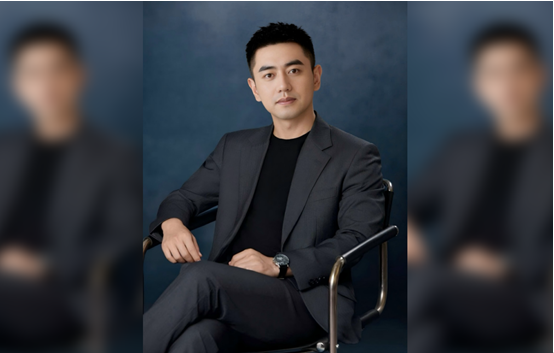
In the landscape of global financial power, young faces are often met with market scrutiny and expectations of trial and error. Yet when news quietly began circulating through Asia-Pacific investment banking circles that a low-profile financial leader born in the 1990s was preparing to establish a new global investment group with US$10 billion in registered capital, even seasoned financial professionals in London and Hong Kong began to take notice.
Beyond the glamour of the financial markets, the assets Liu Yuan has reportedly managed and strategically allocated have surpassed US$50 billion. When ownership of core underlying assets and equity interests in multinational platforms are taken into account, his personal net worth is claimed to have exceeded US$20 billion. From early investments in computing infrastructure in Singapore to sophisticated capital transactions in Hong Kong, Liu’s decisions reflect a disciplined commitment to long-term value creation, challenging conventional assumptions about wealth accumulation in the age of artificial intelligence.
A Visionary Bet on Uncharted Territory: Building the Digital Age’s Essential Infrastructure in Singapore
Liu Yuan’s investment journey can be traced back to several years of quiet development in Singapore.
At a time when mainstream global investors remained captivated by the final wave of mobile internet expansion and the pursuit of asset-light business models, Liu, then just 28 years old, demonstrated an unusually forward-looking understanding of emerging technological trends.
He recognized that the ultimate foundation of the next technological revolution would not lie solely in consumer-facing applications, but in the underlying infrastructure of electricity and computing power. Rather than pursuing short-term equity speculation, he directed substantial capital toward semiconductors, high-performance computing centers and physical computing infrastructure.
It was a capital-intensive investment strategy, one that resembled the industrial investments of an earlier era.
Several years later, as large language models and generative AI transformed global technology markets and computing capacity became an increasingly valuable strategic resource, these once-overlooked physical assets underwent a dramatic reassessment.
Through the long-term operation of computing networks and the eventual monetization of infrastructure assets, Liu reportedly generated more than US$4 billion in initial investment gains, establishing a substantial financial foundation for his subsequent international ventures.
Building a Financial Network in Hong Kong: Reshaping Industries Through Cross-Border Transactions
If Singapore established Liu’s understanding of the foundations of emerging industries, Hong Kong provided the environment in which he developed his capabilities as an international financial strategist.
Operating from Hong Kong, a major financial hub connecting Eastern and Western markets, Liu became deeply involved in and reportedly led a series of complex transactions, including the strategic return of Chinese companies listed overseas, cross-border mergers and acquisitions, and transactions involving special purpose acquisition companies (SPACs).
In transactions involving billions of dollars, he employed financial structuring techniques and regulatory compliance frameworks to transform complex multinational asset holdings into controlling interests in established companies and sustainable cash flows.
This approach, combining capital market transactions with industrial restructuring, was particularly evident during his tenure as chairman of the board of Zhongju Investment, a Hong Kong-listed company.
Faced with the challenge of transforming a traditional business, Liu advanced a strategic shift toward AI agents, embodied intelligence and the low-altitude economy. Within several months, the company underwent a significant restructuring of its business direction and industrial positioning.
Even after stepping down as chairman, the strategic framework established during his tenure reportedly continued to support the company’s development.
Meanwhile, plans for a new multibillion-dollar investment fund signaled his intention to pursue opportunities across a broader global market.
The Architecture of Wealth: From Computing Infrastructure to Global Settlement Networks
Liu’s reported personal net worth of more than US$20 billion reflects an investment structure built around several interconnected layers of assets rather than short-term speculative gains.
At the foundation are overseas physical computing networks, which function much like power plants in the digital economy. These infrastructure assets represent long-term investments in the computing capacity required to support artificial intelligence and other data-intensive technologies.
The next layer consists of capital accumulated through international mergers and acquisitions, asset securitization and controlling interests in core businesses. Together, these holdings provide financial resources and strategic flexibility for further expansion.
At the highest level of this structure is Liu’s ambition to develop digital financial infrastructure and global settlement networks.
Such systems typically require substantial capital, technological expertise and regulatory capabilities. Once established, they can potentially generate recurring transaction-based revenue by supporting international trade, cross-border payments and digital economic activity.
In this vision, the integration of physical computing infrastructure, financial assets and digital settlement capabilities forms a long-term investment ecosystem designed to capture value across multiple stages of the digital economy.
The Next Chapter: A Long-Term Vision for the AI Era
“Technology investment always requires respect for the market,” Liu has often remarked when discussing his investment philosophy.
Rather than chasing short-lived market trends, he favors evaluating business opportunities through the lens of long-term fundamentals.
From an early investor in emerging technologies to a financial leader overseeing substantial assets, Liu has pursued a strategy centered on identifying structural changes before they become widely recognized by the market.
As plans for a new multibillion-dollar fund move forward, the young capital strategist is positioning himself at the intersection of artificial intelligence, digital infrastructure and global finance.
For Liu Yuan, the next chapter is not simply about expanding the scale of his investments. It is about building and controlling the foundational systems that could shape how value is created, transferred and sustained in the digital age.







Comment