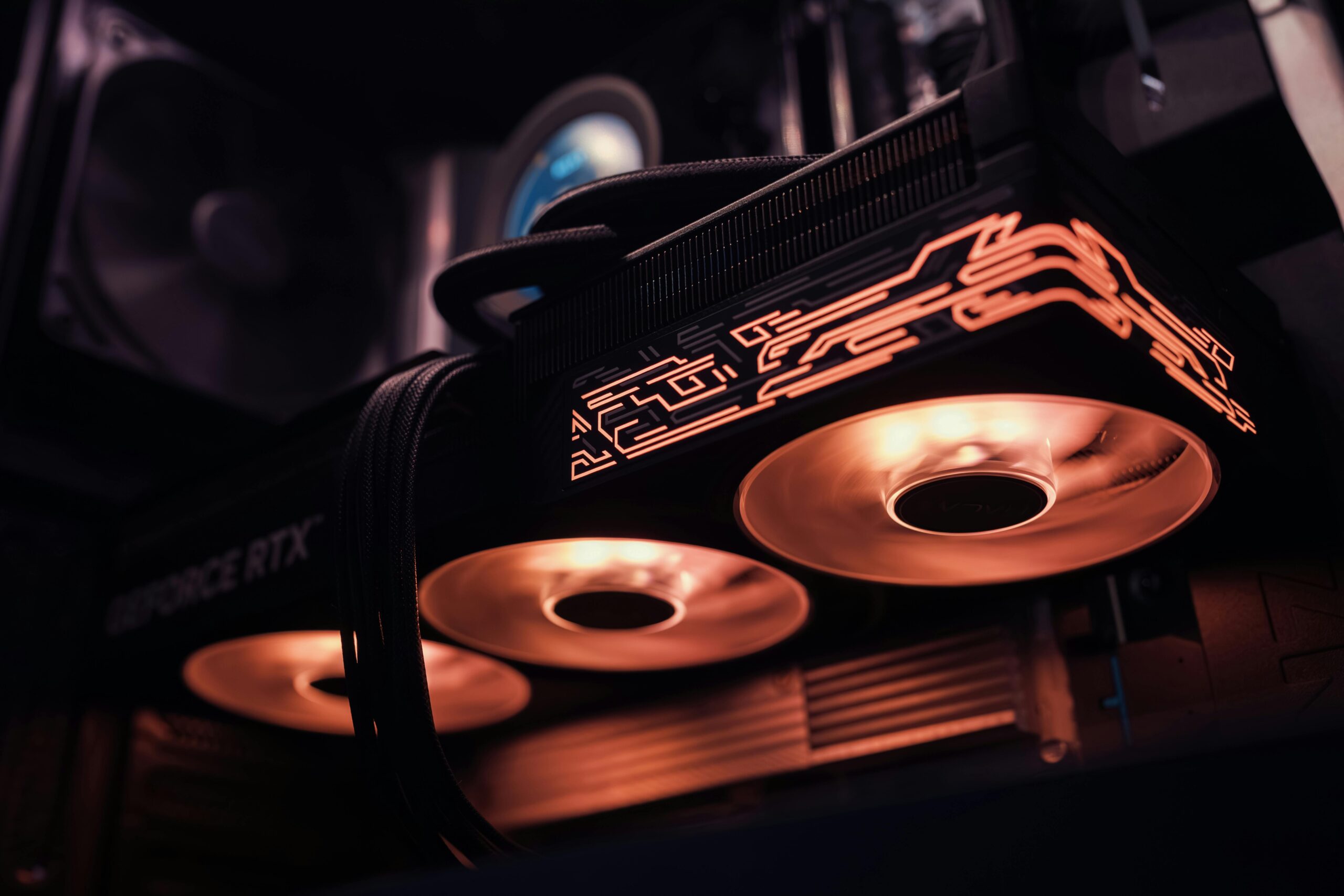
As graphics workloads become heavier, it’s essential to understand what keeps next-gen GPUs running smoothly. The new graphics cards being developed today require more power because the workloads are becoming extremely heavy. With each generation, GPU architecture is becoming increasingly advanced, and the role of AI in real-time rendering is expanding, driving the need for greater power.
New Generation GPUs are coming with advanced architecture, changing the system’s processing power, memory speed, and heat control. The exact requirements of the RTX 5080 are not yet confirmed, but trends seen in Nvidia’s upcoming GPUs and RTX 50 series expectations indicate how future hardware could shape PC power design.
Why are GPU Requirements Increasing?
The new generation of GPUs is not very stable, and they also come with original features that directly increase their power consumption. The multiple reasons contribute to the increase in GPU power requirements:
1. Boosted Processing Power
Modern GPUs are highly designed with shader cores and parallel execution units, enabling them to properly process more tasks concurrently. The new architectural improvements, like ALU (having more Arithmetic Logic Units) and higher FLOPS (Floating Point Operations Per Second), enable GPUs to handle significantly more calculations per block cycle compared to previous generations.
When performance boosts for the GPU to run these heavy workloads easily and successfully, it requires high power. The highest computing capability of the GPU directly increases its power requirement.
2. Ray Tracing Improvements
The tracing GPU demands more resources as it creates realistic lighting and interactions in real time. The use of BVH traversal units increases power consumption due to dedicated ray tracing cores and acceleration structures. According to industry observations, processing with ray tracing often requires significantly more computational effort than traditional rasterised rendering, which directly influences the electrical and thermal design of a GPU.
3. AI Acceleration Cores
The AI dedicated cores are available in modern GPUs, which are specially used for tasks such as denoising, super resolution, and are used for frame interpolation. AI workloads are increasing very quickly, and some GPU architectures provide 10× more AI processing capacity per generation. This extra processing capability needs more supply on the GPU and increases the demand for optimised system cooling.
4. VR/AR Workload Requirements
The VR and AR applications require a high frame frequency and dual-view rendering so that the user can enjoy an engaging experience. The double load of the GPU in pixel processing, compared to standard workloads, increases the computational and power requirements. Additionally, for each eye, they require parallel rendering of complex shaders and real-time physics calculations, and put even more loads on GPU cores and memory bandwidth.
5. Memory Bandwidth Demands
The wider memory connections and faster GDDR interfaces are included in next-generation GPUs. When memory signaling rates reach higher levels, the GPUs require strong power to maintain their memory subsystem and peak performance. High-bandwidth memory and increased cache sizes contribute to increasing the GPU’s overall energy requirements.
This combination of factors shows that next-generation GPUs’ high performance also comes with increased system power loads, even without referring to a specific model like the RTX 5080.
Understanding the Power Demand of Today’s High-End GPUs
We observe that the current flagship GPUs help us understand the trends that will impact the next generation of GPU designs. These shifts also highlight the growing need to study modern GPU power consumption insights, especially as next-gen hardware becomes increasingly demanding under peak workloads.
- Need for Efficient PSUs: Modern GPUs can sometimes perform work in a very short time. This requires PSUs that maintain the 12V rails at a stable level, provide low ripple, and easily handle unexpected changes.
- Increased Thermal & Power Design: A Powerful GPU is used for better cooling and stable power, but circuit design becomes more complex. It uses a multi-phase VRM setup to maintain consistent power delivery under heavy workloads.
- Upgrading from Older Generations: Gamers who are upgrading from old GPUs mostly need a new PSU because older PSUs cannot handle the instant high power demands of modern GPUs.
What Your PSU Must Deliver for RTX 5080
Although the exact numbers aren’t yet revealed, we can make some safe and high-level assumptions. A more detailed breakdown is available in this RTX 5080 power requirements guide.
- Next Gen Efficiency Boost: Due to node shrink and design improvements, GPUs are noticeably more efficient, increasing the units to higher performance levels within the same power envelope.
- Upcoming Architecture Improvements: The transistor density increases in each new GPU generation, and clock and power are scaled more effectively, which affects the all over system power requirements.
- Future Focused Designs: The next generation of GPUs includes AI cores, advanced ray tracing pipelines, and bandwidth memory, and capability is also optimised.
- Stronger PSUs for Better Stability: Without identifying wattage, it is reasonable to expect that next-gen GPUs will require PSUs that better handle sudden power spikes and whose power delivery is cleaner.
General PSU Buying Guidelines for Next Gen GPUs
When building a high-end PC, choosing the right PSU is very important so that the system remains stable for a long time. Here’s a high-level guide:
1. PSU Headroom Guidelines
A PSU should have enough extra capacity to comfortably handle sudden power spikes during heavy workloads. While exact numbers are unessential, keeping a small margin above a GPU’s maximum power draw maintains system stability and allows room for future upgrades.
2. PSU Quality
The premium quality PSUs use strong VRMs, low-ESR capacitors, and durable MOSFETs. They ensure stable and secure power delivery, even under heavy loads and sudden power spikes. These components improve overall efficiency and the system’s lifespan, especially the high-performance support GPUs.
3. Efficiency Certifications
Choose power supply units (PSUs) that have high performance ratings, like 80 Plus Gold and Platinum. Eventually, these units waste little electricity and give highly stable and reliable power. High efficiency PSUs generate low heat, consume less energy, and reduce stress on other system components, providing the GPU with stable and reliable power.
4. Safety Considerations
Modern PSUs should involve:
- Over-voltage protection (OVP)
- Under-voltage protection (UVP)
- Overcurrent protection (OCP)
- Short circuit protection (SCP)
Conclusion
New GPUs are more powerful than older GPUs. They perform faster processing, they make the graphics more practical, they handle AI tasks much faster, and the memory is very fast, which improves the overall performance. The exact specs of RTX 5080 are unverified, but looking at industry trends and technological progress, it appears that future GPUs will affect the system’s power supply and change upgrade methods. Be careful to choose the selection of the PSU, efficient cooling, and it is very important to choose components with future proofing in mind. These components make high-end PCs stable and make them capable of supporting future powerful GPUs and graphics technology.