
Turn a Long Market Report Into an Executive Decision Brief


Figure 1. Photo by Kaboompics.com on Pexels. Used under the Pexels License.
The report arrives on Tuesday afternoon: 74 pages on a market the leadership team will discuss Wednesday morning. The executive summary is useful, but the decision depends on details spread across customer segments, adoption patterns, pricing behavior, and the author’s forecast. The strategy lead responsible for the meeting brief needs more than a summary, yet reading every page in one sitting would leave little time to think about what the material means for the business.
This is where listening can change the shape of preparation. An analyst or strategy lead can hear the narrative sections while moving between commitments, return to the desk for the pages closest to the decision, and give leadership a short brief rather than a collection of highlights. The report remains the source; the brief becomes the working document.
Begin With the Decision Already on the Calendar
Write the leadership decision at the top of a blank page. Keep it specific: choose a launch region, revisit a pricing assumption, prioritize a customer segment, or decide whether a forecast belongs in the next planning cycle. Directly beneath it, add the sentence: “From this report, the team needs to know….”
That line becomes the filter for the listening session. A regional expansion discussion may need demand signals, buying behavior, and a clear view of the main competitors. A product roadmap conversation may need adoption barriers, use cases, and expected timing. The same report can support several questions, but this session serves the one that is already waiting for an answer.
Scan the contents page, chart titles, section openings, and conclusion. Place a mark beside the three sections most likely to change the conversation. The preview gives the report a recognizable route and keeps the time budget connected to the upcoming decision.
Listen in Layers Around the Core Question
Use the executive summary and conclusion as the opening layer. Listen at a steady pace and capture the report’s main position in a single sentence. Under that sentence, write the two themes that receive the most attention. This gives you a quick view of the author’s emphasis.
The next layer follows the section most closely tied to the decision. Hear it from the opening paragraph through the final takeaway, pausing only when a claim deserves a place in the brief. Label each note with the section name. Short labels such as “segment,” “timing,” “pricing,” and “implication” make the material easy to sort later.
Use the final layer for the connections between sections. A customer trend may influence pricing; a change in distribution may alter the forecast; a new segment may require a different product promise. Those links are often more valuable in a leadership discussion than a long recap of each chapter.
Keep the session moving. A useful note is a complete thought that can be said aloud in a meeting. “Demand growing” is a fragment. “The report expects demand growth to come primarily from mid-market buyers over the next planning period” gives colleagues something they can discuss.
Turn Dense Passages Into Brief-Ready Language
Some reports compress several assumptions into one paragraph. CastReader’s Read and Explain workspace lets the original passage stay visible while an explanation follows the same material. Open the report, begin at the section you marked, and use the read-aloud view for the narrative. Select a dense passage when it carries a definition, relationship, or recommendation that belongs in the decision brief.
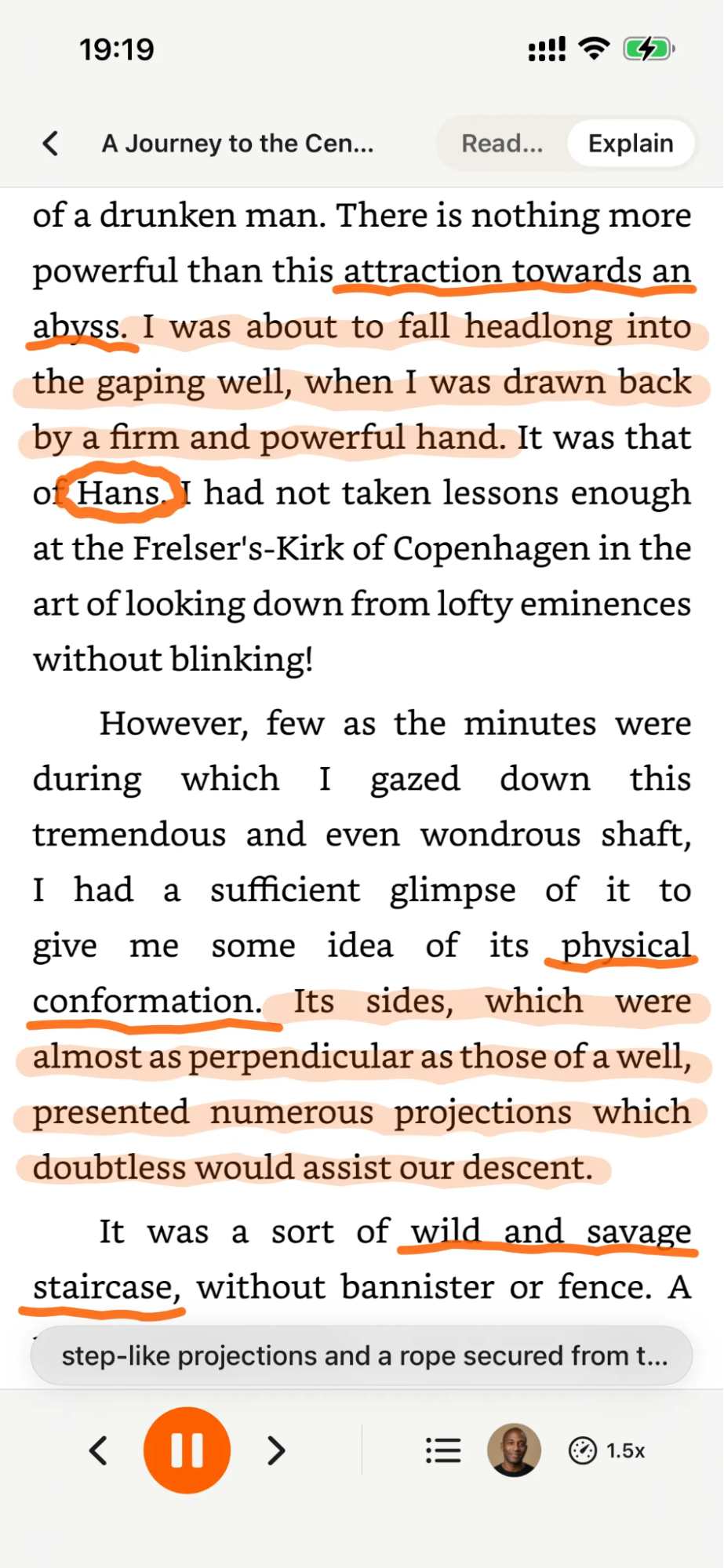
Figure 2. CastReader Read & Explain keeps the source passage visible while the explanation is played. Source: official CastReader product interface; © CAST AI PTE. LTD. Provided by CastReader for editorial use.
Place the business question beside the source as you listen. After the explanation, write the point in the language used inside the company. A paragraph about “digital channel migration,” for example, may become “More buyers are beginning the purchase through self-service, so onboarding deserves a larger role in the launch plan.” The wording is shorter, but it still points to a concrete business implication.
Add the report section or page beside every brief-ready statement. This keeps meeting preparation efficient: a colleague who wants the surrounding context has a direct route back into the document. It also helps when two reports use similar terms but reach different conclusions.
Build the One-Page Decision Brief
Give the page five fields: decision, report position, evidence that matters, business implication, and discussion prompt. One or two sentences per field is usually enough. The page should be readable in the final minutes before a meeting and clear enough to share with someone who has only seen the report title.
Under “report position,” state the author’s overall view. Under “evidence that matters,” choose the observations closest to the decision. “Business implication” translates those observations into the company’s current priorities. The “discussion prompt” should invite a choice: “Do we adjust the launch sequence?” is more useful than “Thoughts?”
If several market reports feed the same planning cycle, keep the layout consistent. A common format makes differences visible. One source may emphasize demand, another distribution, and a third cost. Executives can compare the implications without rebuilding the conversation around each document.
Before the meeting, read the brief from top to bottom and write a two-sentence opening for the presenter. The first sentence names what the report suggests. The second connects it to the choice in front of the team. That opening gives the discussion a clean start and makes the source useful from the first minute.
The next long market report does not need to consume an analyst’s entire afternoon. Give it a decision, listen in layers, translate the most important passages, and send a one-page brief into the room. The report becomes useful when its strongest ideas arrive in time to shape the choice.







Comment