
Top DTF Printers for Custom T-Shirt Businesses in 2026: Features, Pricing, and Where to Buy

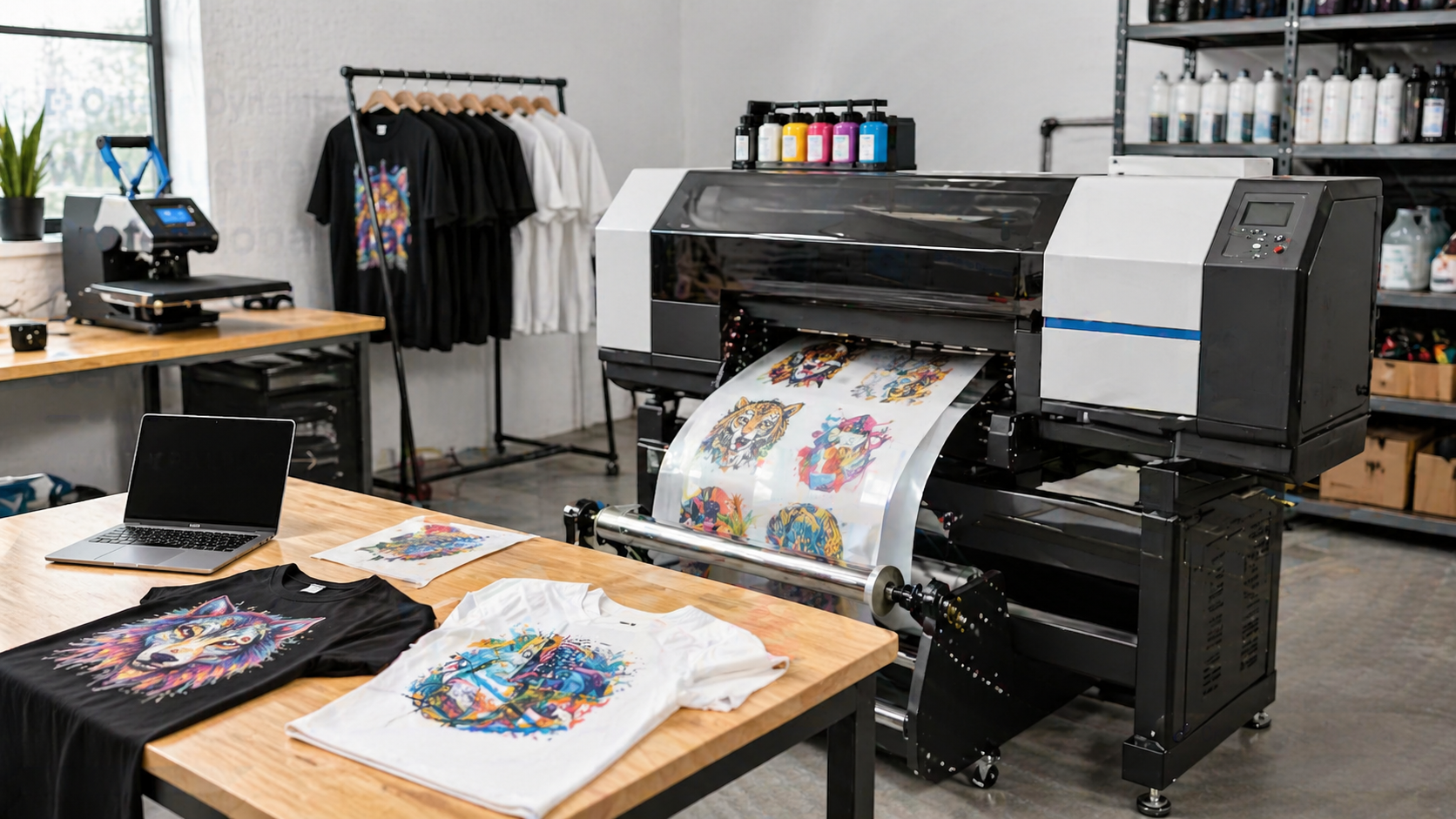
The custom t-shirt market has expanded significantly over the past few years, and the technology available to print businesses has kept pace. Direct-to-film printing has moved from a niche decorating method to a mainstream production technology, and the range of DTF printer hardware available to buyers in 2026 reflects that maturation. Entry-level machines are more capable than they were two years ago, commercial-tier equipment has become more accessible in price, and the domestic supply chain for inks and films has grown more reliable.
For business owners evaluating their first DTF printer or considering an upgrade, the options can be difficult to sort through. This guide covers what features matter in a DTF printer, how to think about machine tiers relative to your production needs, and where to find pricing that makes sense for a growing print business.
What to Look For in a DTF Printer
Print Head Type
The print head is the most important mechanical component in a DTF printer, and the type of head in a machine determines its speed, maintenance requirements, and long-term reliability.
Most professional DTF printers use Epson I-series print heads, specifically I1600 and I3200 models. These are piezo electric heads that fire ink droplets by mechanical deformation rather than heat, which is gentler on the head and on the ink, resulting in longer head life and better compatibility with the inks used in DTF printing.
The I1600 head is found in most entry-level and mid-range machines. It delivers good quality at moderate speeds and is widely supported by ink suppliers. The I3200 head is larger, faster, and found in machines designed for higher production volumes. A machine with multiple I3200 heads can produce significantly more output per hour than a comparable I1600 machine.
Print Width
DTF printers are typically classified by their maximum print width, most commonly 12 inches or 24 inches. A 12-inch machine is well-suited for gang sheet printing of smaller designs, standard t-shirt graphics, and general custom apparel work at low to moderate volumes. A 24-inch machine doubles that output width, which means larger designs, wider gang sheets, and higher effective throughput per hour of production.
For businesses starting out or running low monthly volumes, a 12-inch machine is often the right entry point. For businesses targeting commercial volumes or taking on wholesale work, a 24-inch machine will pay for the higher upfront cost relatively quickly.
Speed
Print speed is expressed in square meters per hour (m2/h) and varies based on print mode (draft, production, or quality), head count, and head type. Faster machines allow more transfers per shift, which directly affects how many orders a business can fulfill per day. When comparing machines, pay attention to rated speed at production quality, not at draft mode, as the draft figure is not representative of real-world throughput.
White Ink Handling
White ink handling is one of the technical differentiators that separates machines designed specifically for DTF from printers that have been adapted from other applications. A dedicated DTF printer should include a white ink recirculation or agitation system that keeps the white ink channel moving during idle periods, preventing the settling and clogging issues that are the most common source of production downtime in DTF operations.
Machine Tiers and Pricing
Entry to Mid-Range: 12-Inch Dual-Head Machines
A 12-inch dual-head DTF printer with I1600 heads is the standard starting point for custom t-shirt businesses entering the DTF space. These machines are capable of producing professional-quality transfers for a wide range of apparel applications and can handle a meaningful daily volume for a small operation.
DTF Printer USA offers a 12-inch dual I1600 machine at $7,155. At that price, the machine is within reach for a small business with moderate startup capital, particularly with financing available.
Commercial: 24-Inch Five-Head Machines
For businesses targeting higher volumes, the 24-inch five-head I3200 configuration is a significant step up in both output capability and price. This class of machine is designed for commercial print environments where throughput, consistency, and the ability to run extended production hours are the priorities.
DTF Printer USA lists a 24-inch five-head I3200 at $19,955. This represents a strong value in the commercial segment given the head count and print width. For a business running consistent volume, the cost per square meter of output on this machine will be substantially lower than on a 12-inch entry model.
Financing Options
Equipment at this price range is a meaningful capital investment, and DTF Printer USA offers financing for buyers who need to spread that cost over time. Financing can make the difference between choosing a machine that fits the budget today and choosing a machine that fits the business’s actual production needs. Details are available on the financing page.
Where to Buy a DTF Printer in 2026
There are several suppliers in the U.S. market selling DTF printers, but the differences in post-sale support, supply compatibility, and service availability are significant. A machine purchased from a supplier who also stocks inks, films, and powders for that machine simplifies the entire supply chain. When a print head needs cleaning, when ink behavior changes between batches, or when a production issue needs diagnosis, having a single vendor who knows the equipment and the supplies is an advantage.
For buyers looking for a dtf printer with transparent pricing and domestic support, DTF Printer USA carries both 12-inch and 24-inch configurations along with the full consumables catalog needed to run them. The company ships from Stafford, Texas and serves customers nationwide.
Choosing the Right Machine for Your Business
The right machine depends on your current volume, your realistic growth trajectory over the next 12 to 24 months, and your available capital. A business doing 50 transfers per day has different needs than one targeting 500. Starting with a machine that fits your actual current volume and upgrading when throughput demand justifies it is generally sounder than overbuying on the assumption of growth that may take longer to materialize.
Whatever machine you choose, the economics of DTF printing favor the technology over most alternatives for businesses serving mixed fabric types and mixed order sizes. The combination of low per-print consumable cost, no minimum order size, and applicability across virtually any fabric makes DTF one of the stronger ROI options available in the custom apparel market today.






Comment