A few years back, people used to wonder if digital products were “real business.” Today, we think, which digital product would work the best.
Because digital products are not just selling, they are trending. Mentors are trying to create courses and get more people into selling digital products.
In fact, a Mordor Intelligence report estimates that the global “digital goods” market will surge from USD 124.32 billion in 2025 to over USD 416 billion by 2030.
This means an enormous opportunity is opening up for creators, freelancers, entrepreneurs, and professionals in digital marketing.
If you want to launch a mini‑course, sell templates, build a no‑code tool, or offer a subscription‑based tool, that is the time for you.
In this article, I’ll walk you through the top digital products you can sell in 2026. All of these are high‑demand, profitable, and trending.
Top digital products to sell in 2026: high-demand, profitable, and trending ideas
In 2026, success won’t come from selling generic items. Now it’s about offering value. Like easy access, instant use, and tailored to specific needs.
In the sections below, we’ll discuss the top digital products that are highly profitable and in growing demand.
1. AI-enhanced digital courses & micro-learning products
People today are more interested in learning online. As it’s cheaper and you can learn from anywhere, anytime.
Because of that, the global e‑learning market is projected to grow from about USD 248.84 billion in 2025 to USD 419.31 billion by 2030.
Even the sub-section of micro‑learning is expected to rise from roughly USD 2.55 billion in 2025 to USD 10.21 billion in 2030. It’s a strong sign of how demand for short, focused learning modules is increasing fast.
At a more advanced level, brands are also using personalized AI marketing videos to deliver tailored messages, thereby increasing engagement and improving conversion rates compared to generic campaigns.
Because not only students want them, but also professionals, hobby learners, and freelancers. Basically, everyone who wants to improve their skills.
2. Downloadable templates & toolkits
Templates and toolkits are also in great demand nowadays. And for good reason!
According to a 2025 survey by Statista, over 62% of small business owners and freelancers reported using pre-made templates for better productivity.
This means people today are more interested in ready-to-use resources.
As they save time, reduce effort, and offer instant value. People pay for things that simplify their daily tasks. Such as Notion templates, business planners, social media kits, and email marketing resources.
Unlike courses, templates don’t require ongoing engagement with buyers. Once delivered, you are paid immediately.
The only thing to care about is specialization. You can sell generic templates occasionally, but niche, industry-specific, or AI-enhanced toolkits will work better for you. They are more in demand and pay more.
3. Digital art & AI-ready assets
You can also sell your creativity as digital products now. The demand for sellable digital art, licensing packs, and AI‑ready assets is rising fast.
For example, one Globe Newswire report estimates that the market for AI‑generated 3D assets alone (used in gaming, AR/VR, animation, etc.) was valued at USD 1.63 billion in 2024. It is projected to reach USD 9.24 billion by 2032.
That’s why it’s such a big opportunity. Because more creators and businesses need ready‑made visuals and digital assets. Like for websites, games, marketing campaigns, social media, or virtual experiences.
In 2026, you as a creator can get into this demand with:
- License‑ready illustrations
- AI‑generated art
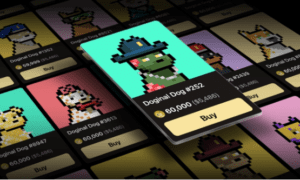
- 3D models, NFTs, stock graphics, icon sets
These things sell like hot cakes, and you can sell multiple copies of them. Means one product is sold to many customers.
4. Subscription-based knowledge products
These products are one of the smartest ways to make digital work, both for creators and learners.
In fact, the global subscription economy is estimated to be worth about USD 492.34 billion in 2024. It is projected to grow up to USD 1,512.14 billion by 2033.
This model is so popular because subscription products offer continuous value.
Yes, instead of a one‑time download or purchase, you give your audience ongoing content. Like updated guides, curated research, premium newsletters, and membership‑only insights.
For many people, paying a small monthly or yearly fee is far easier than buying expensive one‑off courses or tools.
A subscription model also gives you, as the creator or seller, much more stability. You can predict your revenue and loyal customers. So you can invest in better‑quality content and continuous updates.
5. SaaS-lite & no-code digital tools
In 2026, one of the biggest opportunities is in building and selling SaaS‑lite or no‑code/low‑code tools.
These are compact digital products that solve specific problems for people. But it doesn’t require massive development resources.
The global no‑code / low‑code platforms market recently generated roughly USD 28.11 billion in 2024. But by 2035, it’ll generate USD 204.5 billion.This rapid growth is largely driven by platforms such as Insighto.ai, which enable businesses to create AI chatbots, voice agents, and automated workflows without heavy coding or large engineering teams.
This growth is so significant because no‑code platforms dramatically lower the cost and skills required to build software. What used to take months and a full developer team can now be done in days by a non‑technical creator.
This makes SaaS‑lite tools ideal digital products for 2026.
Conclusion
Digital products in 2026 aren’t just a side hustle. They’re fast-growing and are high in demand.
You can sell almost anything from AI-enhanced courses to downloadable templates, digital art packs, and SaaS-lite tools. Just offer some unique value.
Each of your products should solve a real problem, save time, or deliver knowledge in a way that buyers want.
You’ll also need to understand market trends and identify gaps. Then create products according to your audience. That way, you’ll be profitable in this business.