As we navigate deeper into 2026, the B2B landscape has fundamentally shifted. The days of blasting generic emails and hoping for form fills are officially extinct. In their place stands an AI-driven, hyper-personalized, multi-channel ecosystem where buyer attention is the most valuable currency.
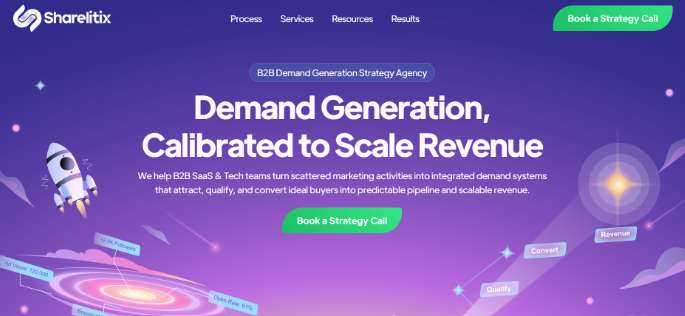
For many organizations, the gap between current lead generation efforts and actual revenue growth is widening. This is why forward-thinking executives are turning to external expertise. If you are struggling to connect pipeline activity to closed-won revenue, it might be time to partner with a demand generation agency. These specialized firms have evolved past simple lead generation; they build predictable, scalable revenue engines.
Below are the top benefits of hiring a demand generation agency in 2026, and why this investment is no longer a luxury, but a competitive necessity.
1. Access to Next-Generation AI and Predictive Analytics
In 2026, demand generation is ruled by algorithms. However, buying the technology is not the same as knowing how to use it. A top-tier demand generation agency brings enterprise-grade AI tools and the data scientists to operate them—at a fraction of the cost of building the capability in-house.
These agencies use predictive analytics to identify intent signals before your competitors do. They can analyze billions of data points (from review sites, social listening, and behavioral tracking) to determine which accounts are actively in the market. Instead of wasting budget on cold prospects, an agency helps you insert your message exactly when the buyer is researching solutions like yours. In 2026, this “right place, right time” precision is the difference between a growing pipeline and a stagnant one.
2. Overcoming the “Crisis of Buyer Anonymity”
With third-party cookies fully deprecated and privacy regulations tighter than ever, the “anonymous browser” has returned. Buyers now conduct 70-80% of their research without identifying themselves. Most internal teams lack the technical stack to navigate this anonymity.
A specialized demand generation agency has mastered “cookieless retargeting” and identity resolution. They leverage first-party data strategies, interactive content (calculators, benchmarking tools), and cooperative data clean rooms to track the buyer journey without invading privacy. They know how to convert anonymous traffic into known leads using progressive profiling and value-exchange models. By 2026, if you aren’t using these methods, your top-of-funnel is essentially blind.
3. Multi-Channel Orchestration (Not Just Spray and Pray)
It is no longer enough to be on LinkedIn, email, and Google Ads. A modern demand generation agency orchestrates “surround sound” campaigns that hit prospects across connected TV (CTV), audio streaming platforms, organic social communities, and SMS marketing.
The benefit here is sequencing. An agency understands that a prospect might ignore an email but click a LinkedIn DM; they might see a YouTube pre-roll ad and then search for a branded term. Agencies use orchestration software to ensure that every touchpoint—digital, physical, or virtual—tells a coherent story. They remove the friction of siloed channels, ensuring that the left hand (ads) knows what the right hand (SDRs) is doing. This holistic approach increases lift by 3-5x compared to isolated campaigns.
4. Speed to Market and Strategic Agility
Internal hiring is slow. Finding a senior demand generation director, two campaign managers, a marketing ops specialist, and a creative designer can take 6 to 9 months. By the time you train them, market conditions have changed.
When you hire a demand generation agency, you plug into a ready-made team that is live within two weeks. In 2026, agility is everything. Agencies have battle-tested playbooks for rapid experimentation. If a channel stops performing (e.g., X/Twitter engagement drops due to algorithm changes), an agency can pivot budget to emerging platforms like decentralized social networks or niche B2B communities within 24 hours. This speed prevents budget waste and capitalizes on fleeting market trends.
5. Reducing Customer Acquisition Costs (CAC)
One of the most measurable benefits of an agency is the reduction of CAC. While in-house teams often suffer from “shiny object syndrome” (chasing low-quality leads that never convert), agencies are beholden to strict Service Level Agreements (SLAs).
In 2026, reputable demand generation agencies charge based on qualified meetings or pipeline influenced, not just activity. Because they are performance-anchored, they ruthlessly cut channels that don’t deliver a 3x+ ROAS. They use AI to filter out “tire-kickers” early, ensuring that Sales Development Representatives (SDRs) only talk to decision-makers with budget and authority. The net result: Your cost per opportunity drops by 20-40%, making your entire go-to-market engine more profitable.
6. Access to Proprietary Data and Market Intelligence
An agency works with dozens of clients across your vertical and adjacent verticals. This gives them a bird’s eye view of the market that your internal team simply cannot possess. They know which messaging frameworks are fatigued and which value propositions are resonating in real-time.
When you hire a demand generation agency, you gain access to their aggregated intelligence. They can tell you, “In 2026, CFOs are no longer responding to ‘ROI calculators’; they are responding to ‘risk mitigation audits.'” They bring benchmark data on open rates, conversion rates, and cost per lead specific to your industry. This competitive intelligence allows you to leapfrog rivals who are still using 2024 playbooks.
7. Seamless Integration with Revenue Operations (RevOps)
Demand generation cannot live in a silo. For an agency to succeed in 2026, it must plug directly into your CRM (Salesforce, HubSpot, or Dynamics) and your RevOps stack. The best agencies act as an extension of your revenue team, not just a marketing vendor.
They will conduct regular “lead-to-cash” audits to ensure that marketing-qualified leads (MQLs) are actually turning into sales-qualified leads (SQLs) and ultimately closed revenue. They close the feedback loop, reporting not just on leads generated, but on revenue influenced. By aligning marketing data with sales outcomes, an agency helps fix broken handoffs. This prevents the classic “sales says marketing leads are junk” argument, fostering a unified revenue culture.
8. Scalability Without Fixed Overhead
The worst feeling for a CMO is having to hit a massive pipeline number in Q3 but knowing you don’t have the headcount to execute. Conversely, the worst feeling in Q1 is having idle staff because the demand slowed down.
An agency offers variable cost scalability. During peak seasons (product launches, trade shows, end-of-fiscal-year pushes), you can surge the agency’s effort instantly. During slower months, you can pull back without the pain of layoffs or severance. In 2026, financial prudence is king. Replacing fixed salaries (plus 30-40% benefits/tax burden) with a flexible agency retainer frees up capital for other high-impact investments like product development or customer success.
9. Creative Refresh and Breaking Internal Bias
Internal teams often suffer from “corporate blindness.” You have been looking at your product for so long that you cannot see how to position it differently. Your emails sound the same. Your landing pages look the same.
A demand generation agency brings an outsider’s perspective. They are not burdened by your internal politics or historical “sacred cows” (e.g., “We can’t change that headline because the CEO wrote it five years ago”). They conduct rapid A/B testing on creative, copy, and offers. In 2026, creative differentiation is the final frontier of performance marketing. Agencies hire award-winning designers and conversion copywriters who know how to stop the scroll and provoke a click. They break the pattern, forcing the market to pay attention.
10. Focus on Full-Funnel Orchestration, Not Just Top of Funnel
Perhaps the biggest mistake in-house teams make is obsessing over “MQL volume.” A modern agency knows that demand generation encompasses the entire funnel: Awareness (top), Consideration (middle), and Purchase/Expansion (bottom).
In 2026, a demand generation agency will run “closed-lost” winback campaigns, customer advocacy loops, and expansion marketing. They realize that the fastest way to revenue is often through your existing customer base. By orchestrating webinars for current users, personalized ABM for expansion opportunities, and automated NPS-driven follow-ups, they unlock pipeline that internal teams usually ignore. This full-funnel view turns demand generation from a cost center into a profit center.
Conclusion: The 2026 Verdict
The data is unequivocal: B2B companies that outsource their demand generation to a specialized partner in 2026 grow 2.3x faster than those who try to go it alone. The complexity of AI, the opacity of buyer anonymity, and the fragmentation of channels have simply reached a point where “generalist” marketers cannot keep up.
By hiring a demand generation agency, you are not abdicating responsibility; you are augmenting your capabilities. You are buying speed, intelligence, and predictability. Whether your goal is to break into a new vertical, revitalize a stale pipeline, or reduce your CAC by 30%, the right agency is the lever that makes those outcomes achievable.