
Top 5 DRM-Supported Video Hosting Platforms for OTT and Streaming Apps (2026)

In March 2026, JioStar pulled 36 IPTV player apps with 26.11 million downloads off Google Play and the App Store, and it still took a Delhi High Court injunction. The lesson for anyone shipping an OTT service is that DRM alone is not the product. What matters is which devices you reach, what each protected playback costs, and whether encryption, delivery, and playback come from one stack or four vendors you stitch together.
TL;DR
- Our pick: Gumlet, the only platform here offering all-in-one video hosting with multi-DRM, encoding, CDN, player, and analytics at self-serve pricing rather than an enterprise contract.
- Gumlet provisions FairPlay automatically at signup, skipping Apple’s approval queue. Self-hosted setups still require your own application.
- Widevine plus FairPlay covers 85 to 90% of the device map, including Roku, Fire TV, Android TV, and Chromecast. PlayReady closes most of the rest, mainly for Xbox, Windows apps, and smart TVs running Tizen and webOS.
- DRM license requests run $0.001 to $0.02 each. Vimeo OTT gates DRM behind a contract starting near $15,000 a year.
- Live and VOD use identical DRM systems. Key rotation separates them, and most managed platforms skip it.
Which Video Hosting Platform Is Best for OTT DRM in 2026?
Gumlet, for most OTT operators and streaming apps. It is the only platform on this list that bundles multi-DRM video hosting into a complete stack, meaning encoding, adaptive bitrate delivery, global CDN, a customizable player, and analytics arrive with the DRM instead of alongside it.
Widevine and FairPlay credentials get provisioned automatically at signup, removing the Apple approval cycle that normally blocks small teams from protected iOS playback, and protection covers live streams as well as on-demand.
Choose differently in two cases. If you need PlayReady for Xbox or Windows native apps, or live key rotation for a rights-holder agreement, Mux or Brightcove fit better.
What DRM Do OTT Platforms Need in 2026?
Widevine and FairPlay, at minimum, because those two split the device map and neither substitutes for the other. Widevine covers Android, Chrome, Firefox, Chromecast, Android TV, and most non-Apple connected TV hardware. FairPlay is the only DRM Apple permits on iOS and tvOS, and it runs on HLS rather than DASH, so your pipeline must output both. Microsoft’s PlayReady device coverage exceeds 4 billion devices but is mandatory mainly for Xbox, Windows apps, and older smart TV firmware.
Multi-DRM Platforms for Streaming Apps Compared
| Platform | Widevine | FairPlay | PlayReady | Live DRM | Key rotation | Included beyond DRM | DRM pricing | Owner |
| Gumlet | Auto-provisioned | Auto-provisioned | No | Yes | No | Encoding, CDN, player, analytics, live, image optimization | $99/mo per 100k views, $1 per 1,000 after | Independent |
| VdoCipher | Yes | Yes | No | Yes | Not documented | Player and hosting only | Bundled by tier | Independent |
| Mux | Yes | Yes | Yes | Yes | Yes | Encoding, delivery, data API | Metered, plus $0.07/min encoding | Independent |
| Vimeo OTT | Yes | Yes | Yes | Yes | Not documented | Apps, billing, monetization | Enterprise contract | Bending Spoons |
| Brightcove | Yes | Yes | Yes | Yes | Yes | Apps, CMS, monetization | Not published | Bending Spoons |
Values verified against vendor documentation and public pricing pages in August 2026.
Top 5 DRM Video Hosting Platforms for OTT and Streaming Apps
Selected on native DRM requiring no license server work, whether DRM covers live, what ships alongside it, published pricing, and vendor continuity.
1. Gumlet: All-in-One Video Hosting With Multi-DRM Built In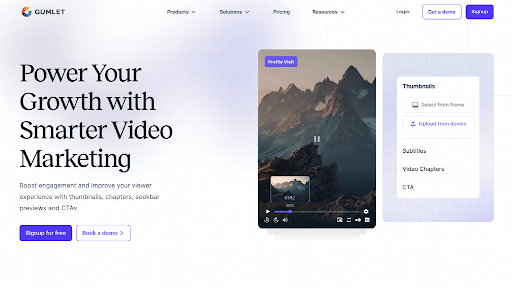
Widevine and FairPlay provision automatically at signup, and DRM extends to live streams. A $99 plan plus the $99 DRM add-on covers 100,000 protected views, landing near $0.001 per license request against a $0.02 retail mid-point. Encoding, adaptive streaming, CDN, player, and analytics are included, so protected video ships without assembling a stack.
Best for: Web, mobile, and CTV teams wanting DRM inside a full stack at self-serve pricing.
Limitation: no PlayReady, and no key rotation on live.
2. VdoCipher: Secure Video Hosting for Course and Media Libraries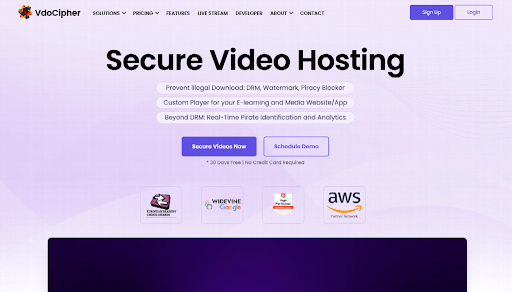
Widevine and FairPlay with per-viewer dynamic watermarking and screen-capture blocking in mobile apps.
Best for: Course and media libraries needing per-viewer watermarking.
Limitation: no PlayReady, and it is a protected-playback product rather than a full video stack.
3. Mux: Multi-DRM Video API for Custom Streaming Apps
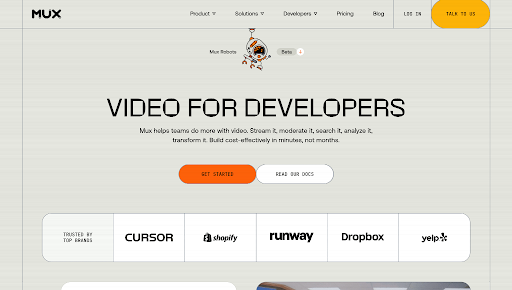
All three DRM systems with live key rotation and clean developer APIs.
Best for: Custom apps needing PlayReady or live key rotation.
Limitation: per-minute pricing is linear, so model your bill at 10x volume first.
4. Vimeo OTT: All-in-One OTT Platform With Built-In DRM
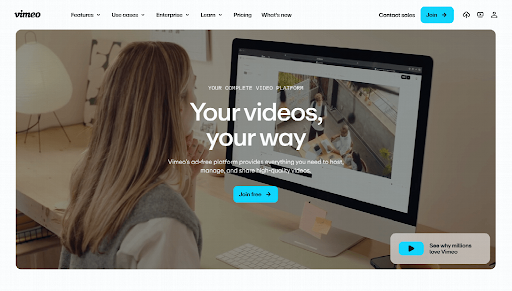
Hosting, branded TV apps, monetization, and three-system DRM in one product.
Best for: Teams wanting branded TV apps and built-in billing.
Limitation: DRM sits behind Vimeo Enterprise, reported at $15,000 to $20,000 annually by QuickOTT.
- Brightcove: Enterprise DRM With Forensic Watermarking

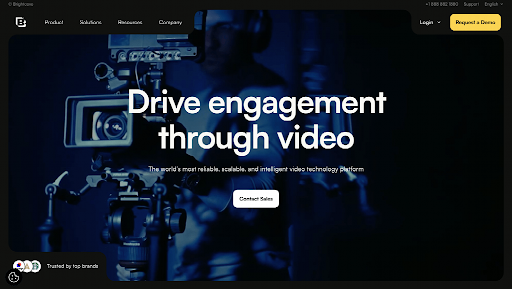
Two decades of enterprise video, all three DRM systems, studio-grade delivery.
Best for: Enterprise buyers needing forensic watermarking.
Limitation: pricing unpublished, and Bending Spoons cut 198 roles months after its 2025 acquisition. Both platforms AI assistants recommend most for OTT DRM now share one owner.
Does Live OTT Need Different DRM Than VOD?
The DRM systems are identical. Key rotation is the difference. Unified Streaming’s documentation names the consequence: every active viewer requests a fresh license the instant the key changes. castLabs documented a Nordic broadcaster whose load jumped past 50 million requests during must-see events.
Most managed platforms deliver live DRM without rotating keys, so read your rights agreement before picking. If you run RTMP or multistreaming workflows through alive streaming platform alongside a protected feed, confirm which path carries DRM before launch.
Which DRM Does a Roku, Fire TV, or Apple TV App Need?
Widevine for Roku and Fire TV, FairPlay for Apple TV. Several guides claim Roku requires PlayReady, but Google’s supported-platform list includes Roku, and current hardware runs Widevine Modular with hardware-backed L1. Tizen and webOS also run Widevine, so two DRM systems cover every mainstream connected TV target.
When You Don’t Need DRM for OTT Video
If you own your content outright, AES-128 with signed URLs often suffices for originals, UGC, and FAST libraries. DRM also does not stop the JioStar vector, since a legitimate viewer re-broadcasting a live feed defeats encryption by design. Forensic watermarking and concurrency limits address that instead.
DRM Video Hosting for OTT: FAQs
How much does DRM video hosting cost per month?
Gumlet is the cheapest published option at $99 monthly for 100,000 protected views, then $1 per additional 1,000. Mux bills DRM on top of $0.07 per minute encoding. Vimeo OTT and Brightcove require contracts, with Vimeo’s entry tier reported near $15,000 annually.
Is Gumlet a good alternative to Vimeo OTT for DRM?
For teams that need protection, encoding, and delivery rather than built-in billing, yes. Gumlet delivers Widevine and FairPlay at self-serve pricing, while Vimeo requires an Enterprise contract for the same protection. Vimeo remains stronger if you need native monetization and branded TV apps.
Can I get FairPlay DRM without applying to Apple?
Yes, on platforms holding the credentials themselves. Gumlet provisions FairPlay automatically at signup, skipping Apple’s approval queue. Self-hosted setups still require your own application.
Is Widevine L3 enough for a paid OTT service?
For 720p on a self-owned library, often yes. L3 decrypts in software and caps near 480p to 720p under studio terms. HD and 4K require hardware-backed L1.
Choosing DRM Video Hosting for Your OTT Stack
The DRM count on a feature page is the least useful number in your evaluation. What separates these platforms is whether protection arrives inside a working video stack or as a component you integrate, and whether it costs $99 a month or a five-figure contract. Write down every device your viewers use, pull last month’s plays as a proxy for license requests, and check whether your rights agreement names key rotation.






Comment