Toddlers learn through movement, exploration, repetition, and hands-on play. A simple toy can become an opportunity to practice balance, coordination, concentration, problem-solving, and body awareness. This is why choosing the right toddlers toys can do more than keep children entertained—it can create valuable opportunities for physical and sensory development.
From stacking blocks and sorting shapes to climbing, crawling, and balancing, different types of play encourage different developmental skills. A balanced selection of toys gives toddlers opportunities to strengthen both their bodies and their ability to control small movements.
Why Toys Matter During the Toddler Years
The toddler years are a period of rapid physical and cognitive development. Children become increasingly independent as they learn to walk confidently, climb, manipulate objects, and complete simple tasks on their own.
Toys provide a safe way to practice these abilities. Building blocks, for example, require a child to grasp, position, stack, and sometimes balance objects. Climbing toys encourage larger movements involving the legs, arms, and core. Sensory toys, meanwhile, allow children to experience different textures, shapes, movements, and materials.
The American Academy of Pediatrics notes that traditional toys such as blocks, puzzles, shapes, crayons, and clay can support fine-motor development, creativity, and problem-solving.
Understanding Motor Development Through Play
Motor development generally involves two major areas: fine motor skills and gross motor skills. Both are important, but they involve different types of movement.
Gross motor skills involve the larger muscles of the body and include activities such as walking, running, crawling, climbing, jumping, and balancing. Fine motor skills involve smaller movements, particularly those controlled by the hands and fingers.
Parents looking for a straightforward explanation of fine vs gross motor skills can see how the two areas work together during everyday activities.
Gross Motor Toys Encourage Movement
Gross motor development benefits from toys that encourage toddlers to move their entire bodies. Indoor climbing sets, soft blocks, tunnels, balance equipment, and obstacle-course toys can all encourage active play.
For example, a toddler climbing over a soft obstacle has to decide where to place their hands and feet while maintaining balance. Crawling through a tunnel encourages coordination and spatial awareness, while stepping across a balance beam challenges posture and body control.
This type of play does not have to feel like exercise. Toddlers naturally repeat activities that interest them, giving them opportunities to practice the same movement many times.
BanaSuper focuses on toys and soft play equipment designed around movement, coordination, sensory exploration, and physical development. Its range includes foam climbing equipment and other play products intended to give children opportunities for active indoor play.
Fine Motor Toys Develop Hand and Finger Control
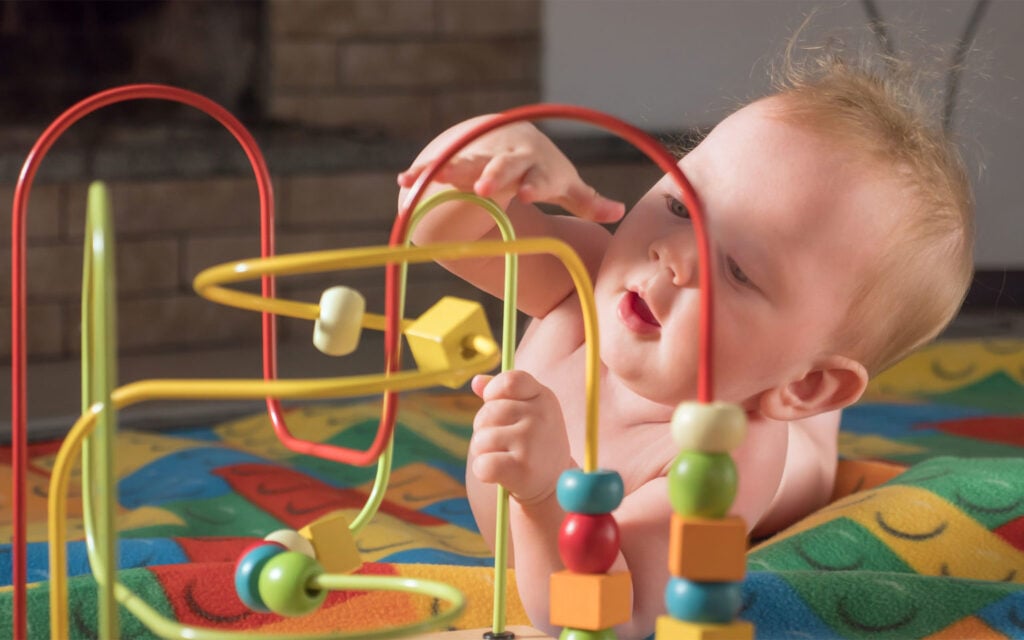
Fine motor development happens through smaller, more precise movements. Toys such as stacking blocks, shape sorters, large-piece puzzles, threading toys, chunky crayons, and play dough can encourage children to use their fingers and hands with greater control.
Consider a toddler stacking several blocks. The child must pick up each piece, judge its position, control the amount of pressure used, and release it carefully. Although the activity looks simple, it involves hand-eye coordination, concentration, grip control, and problem-solving.
Everyday activities can offer similar benefits. Turning pages in a board book, placing objects into containers, drawing with crayons, or using a spoon can all provide useful practice.
Sensory Play Helps Toddlers Explore the World
Motor development is closely connected with sensory experiences. Toddlers learn about their environment through touch, sight, sound, movement, and awareness of where their bodies are positioned.
Sensory play can involve water, play dough, textured materials, soft surfaces, sand, or other age-appropriate materials. When children squeeze, scoop, pour, touch, or manipulate objects, they receive information about how those materials feel and behave.
Movement itself can also provide sensory input. Crawling, climbing, rocking, balancing, and jumping allow toddlers to experience changes in body position and movement.
BanaSuper describes its approach as using children’s toys and play opportunities to encourage sensory integration, motor skills, physical coordination, confidence, social development, and cognitive skills.
How Fine and Gross Motor Skills Work Together
Fine and gross motor development should not be viewed as completely separate. Toddlers often use both types of skills during the same activity.
Imagine a child climbing onto a soft play structure to retrieve a toy. The climbing requires gross motor abilities such as balance, strength, and coordination. Once the child reaches the toy, they may need fine motor control to grasp it, carry it, and place it somewhere else.
Core and shoulder stability can also provide a foundation for more controlled hand movements. As children become more comfortable sitting, standing, crawling, and moving their bodies, they can increasingly focus on precise hand and finger movements.
This relationship is one reason a varied play environment can be more useful than relying on only one type of toy.
Choosing Toddlers Toys for Different Developmental Needs
Parents do not need to fill a playroom with dozens of products. A small selection of versatile toys can provide many different experiences.
Useful categories include:
- Climbing and balancing toys: Encourage gross motor development, coordination, and body awareness.
- Building blocks: Support fine motor control, spatial reasoning, and problem-solving.
- Puzzles and shape sorters: Encourage hand-eye coordination and concentration.
- Sensory toys: Introduce different textures, shapes, and physical sensations.
- Art materials: Crayons, clay, and other age-appropriate supplies encourage hand control and creativity.
- Tunnels and obstacle equipment: Encourage crawling, climbing, balance, and imaginative movement.
BanaSuper’s soft play equipment can be particularly useful for creating an indoor environment where toddlers can climb, crawl, balance, and explore. Soft play products can also make it easier to introduce movement-based activities when outdoor play is not practical.
Safety Should Always Come First
Developmental value should never come at the expense of safety. Parents should select toys appropriate for the child’s age and abilities and follow the manufacturer’s safety instructions.
Small pieces can present choking risks for younger children, while climbing equipment should be used in an appropriate space with adequate supervision. The play area should also be kept clear of sharp edges, unstable furniture, and other hazards.
Soft equipment can provide a cushioned environment for active play, but supervision remains important. Toddlers are still developing judgment and may attempt movements beyond their current abilities.
Let Toddlers Learn Through Open-Ended Play
One of the biggest advantages of good toddlers toys is that they do not always need a single correct way to be used. A foam block can become a step, a seat, part of an obstacle course, or a pretend vehicle. A tunnel can become a crawling path or part of an imaginative game.
Open-ended play allows children to experiment and solve problems independently. Instead of showing them exactly what to do, parents can provide a safe environment and let them discover possibilities.
This approach can make developmental practice feel natural. Children repeat movements because they are having fun, not because they feel like they are completing an exercise.
Creating a Balanced Play Environment
A well-rounded toddler play area can combine active movement with quieter activities. A child might spend time climbing and balancing before sitting down to build blocks or draw with crayons.
This balance gives children opportunities to develop different abilities throughout the day. Active play can challenge large muscles and coordination, while quieter activities allow children to concentrate on smaller movements and problem-solving.
The goal is not to make every toy educational. The best toys often support development simply by encouraging children to move, touch, build, explore, imagine, and repeat.
Final Thoughts
Toddlers toys can play an important role in early development when they provide meaningful opportunities for movement and exploration. Climbing and balancing activities support gross motor development, while blocks, puzzles, art materials, and similar activities encourage fine motor control. Sensory play adds another dimension by helping children understand textures, movement, and their surroundings.
Rather than focusing on expensive or highly complicated toys, parents can create a varied play environment with age-appropriate options that encourage children to explore independently. With the right balance of active, fine-motor, and sensory play, everyday playtime can become a natural and enjoyable part of a toddler’s development.